


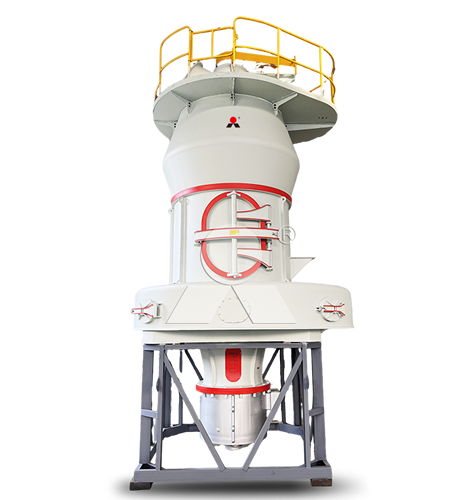
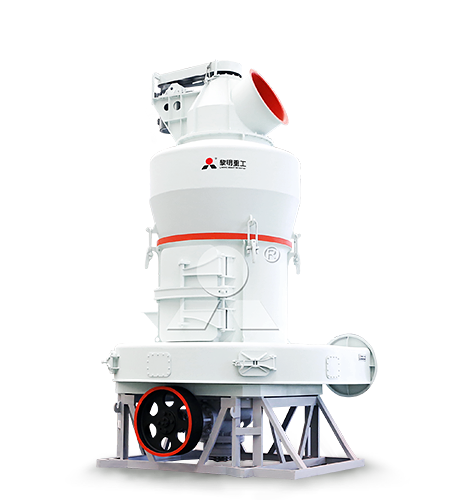
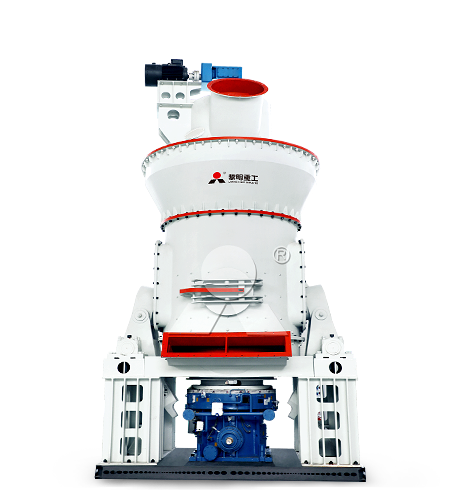
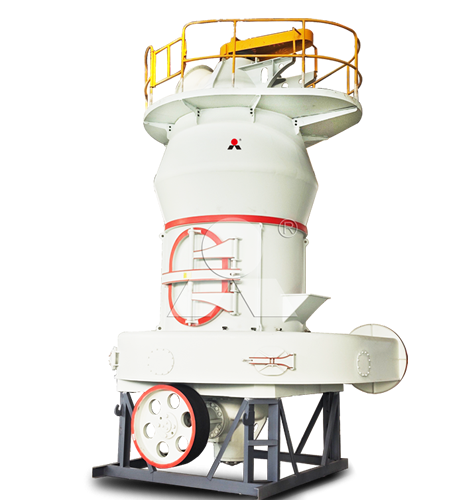
The LM Vertical Roller Mill provides an integrated solution for large-scale processing of drilling minerals, particularly barite used as a weighting material in oil and gas drilling fluids. It combines grinding, drying, classification, and pneumatic conveying in a single system, helping producers maintain stable powder output while reducing unnecessary material transfers between separate process stages.
For drilling-fluid mineral production, the objective is not simply fine powder. The mill must produce a controlled particle-size distribution while preserving the inherent quality of the raw mineral. For drilling-grade barite, this means achieving a suitable balance between coarse and ultrafine particles, maintaining the required specific gravity, controlling moisture, and ensuring each production batch remains consistent.
Why Use an LM Vertical Roller Mill
Large drilling-fluid powder plants require a process that can operate continuously, handle variable feed conditions, and maintain repeatable product quality. The LM Vertical Roller Mill is suitable for this type of application because it brings several major processing functions into one main unit.
Crushing and feed-size reduction within the grinding process.
Simultaneous drying and grinding for materials with moisture.
Internal classification for control of finished-powder fineness.
Pneumatic conveying of qualified powder to the collection system.
Closed-circuit operation, with coarse material returning to the grinding zone.
Centralized automatic control for more stable operating conditions.
In an LM vertical-mill system, the feed material enters the mill and is distributed onto the grinding table. Grinding rollers apply pressure to reduce the material into fine powder. Airflow lifts the ground material to the separator. Qualified fine powder moves to the dust-collection system, while larger particles fall back to the table for additional grinding. This circulation supports stable product fineness and avoids sending oversize particles into the finished-powder silo.
The LM Vertical Roller Mill can also use hot air or suitable waste-gas heat for drying. Liming Heavy Industry states that its vertical-mill system can handle feed moisture of up to 15% and control finished-product moisture below 1% under applicable operating conditions.
Barite Processing for Drilling Fluids
Barite is the primary mineral processed in many drilling-fluid powder plants. Its high density makes it suitable for increasing drilling-mud density and balancing formation pressure during well construction. However, the raw ore must have sufficient barium sulfate content and inherent density before it enters the mill.
Conventional drilling-grade barite is commonly supplied as 4.2-grade or 4.1-grade material. The 4.2-grade product requires a specific gravity of at least 4.20 g/cm³. In addition, the material retained above 75 μm is limited to 3% by mass, while particles below 6 μm are limited to 30% by mass.
These limits show why vertical-mill operation must be controlled carefully. If grinding is insufficient, the finished barite may contain too much coarse material. If the mill operates with excessive grinding intensity or an unsuitable separator setting, the powder may contain an overly high ultrafine fraction. Either condition can affect dispersion, suspension behavior, fluid rheology, and mud-weight consistency after the powder is blended into a drilling-fluid system.
| Barite Quality Factor | Importance for Drilling Fluids | LM Vertical Roller Mill Control Point |
|---|---|---|
| Specific gravity | Determines the weighting efficiency of the finished mineral powder. | Confirm raw ore quality before processing; grinding cannot increase the natural density of barite. |
| Coarse-particle residue | Excessively large particles can settle more easily in a drilling-fluid system. | Adjust feed rate, roller pressure, airflow, and separator operation. |
| Ultrafine content | Too many ultrafines can raise surface area and alter drilling-fluid rheology. | Prevent unnecessary overgrinding through balanced mill loading and classification. |
| Moisture | High moisture can reduce powder flowability and complicate storage and loading. | Use controlled hot-gas drying and monitor mill outlet conditions. |
| Batch stability | Consistent powder supports predictable mud-density adjustment. | Maintain stable feed blending, operating parameters, and routine product testing. |
Integrated Drying and Grinding
Moisture is one of the most important factors in mineral powder processing. Barite from different mining areas, stockpiles, or seasons can have significantly different water content. Wet feed may block chutes, stick to conveying equipment, reduce classifier efficiency, and create buildup inside downstream storage equipment.
The LM Vertical Roller Mill is designed to dry and grind material in the same process. Hot air enters the grinding system and contacts the material while it is being milled. As the mineral is reduced in size, the large contact area helps moisture evaporate. The air stream then carries the ground powder toward the classifier and collection equipment.
This integrated arrangement is valuable for a drilling-mineral project because it reduces the need for separate material handling between drying and milling. It can also help maintain more stable finished-product moisture, which supports powder storage, bulk loading, bagging, and downstream blending.
For materials with substantial or highly variable moisture, the thermal balance of the complete system should be calculated in advance. The available heat source, inlet-gas temperature, drying-air volume, feed moisture, ambient conditions, and required output all influence the final configuration.
Classification Determines Product Quality
In a drilling-barite plant, the classifier is as important as the grinding table and rollers. The mill reduces mineral particles; the classifier determines whether those particles are accepted as finished product or returned for another grinding cycle.
The LM Vertical Roller Mill uses an internal separator to divide fine powder from coarse particles. Material that meets the required fineness is carried by airflow to the collection system. Coarse particles fall back onto the grinding table and are reground. This process helps maintain a closed production circuit and gives operators a practical way to control the finished-powder distribution.
For example, if laboratory testing shows that the residue above 75 μm is rising, the plant may need to review feed size, grinding pressure, mill loading, separator adjustment, airflow, or wear of the rollers and table. If the fraction below 6 μm becomes too high, the operating team should avoid simply increasing grinding intensity. A more balanced adjustment of classifier operation, feed rate, airflow, and grinding force can help control the fine fraction without allowing coarse particles to enter the final product.
Suitable Drilling Mineral Applications
The LM Vertical Roller Mill can be configured for the dry processing of several minerals used in drilling-fluid systems. The final plant design should be based on the hardness, density, abrasiveness, moisture behavior, and finished-powder requirement of each raw material.
Barite: Processed into controlled fine powder for drilling-fluid density adjustment.
Hematite: Processed for selected high-density drilling-fluid applications, with attention to wear resistance because of its hardness and abrasiveness.
Bentonite: Processed where consistent fine grinding and moisture control are required for drilling-fluid formulations.
Attapulgite and sepiolite: Processed for applications requiring suspension and rheological support, particularly in saltwater systems.
Calcium carbonate: Processed into defined particle-size grades for bridging and seepage-loss-control applications.
Although these minerals can share certain upstream equipment, they should not automatically use identical grinding settings. A barite line prioritizes density retention and particle-size control. A bentonite line may focus more strongly on moisture management and preservation of mineral performance. A hematite line may require enhanced attention to wear parts and maintenance planning.
Complete Plant Configuration
An LM Vertical Roller Mill should be installed as part of a complete mineral powder processing line rather than treated as an isolated machine. The reliability of the finished product depends on every stage from raw material receiving to final delivery.
| System Section | Main Purpose |
|---|---|
| Raw ore storage | Separates and protects different mineral grades before processing. |
| Crushing and screening | Produces a stable feed size suitable for vertical grinding. |
| Metering and feeding | Maintains a continuous and controlled feed rate to the mill. |
| Hot-air system | Provides drying energy when feed moisture requires thermal treatment. |
| LM Vertical Roller Mill | Completes grinding, drying, classification, and internal material circulation. |
| Powder collection system | Separates finished mineral powder from the air stream and recovers valuable fines. |
| Finished-product silo | Provides buffer storage before packaging or bulk dispatch. |
| Bagging and bulk loading | Prepares the final product for delivery in bags, big bags, or bulk tankers. |
| Laboratory and sampling station | Verifies density, moisture, screen residue, particle-size distribution, and batch conformity. |
Liming Heavy Industry describes LM vertical-mill installations as integrated systems covering crushing, drying, grinding, classification, and conveying. The company also identifies automatic process monitoring and control of parameters such as particle size, drying temperature, and finished-powder fineness as part of the broader vertical-mill solution.
Operational Points for Stable Production
A high-capacity vertical-mill line achieves reliable drilling-mineral powder production when operating conditions remain stable. The following practices are important for long-term performance:
Use representative raw-material testing before deciding the final mill configuration and operating target.
Keep barite ore from different density grades separated or blend it under controlled conditions.
Maintain a uniform feed size and steady feed rate to reduce fluctuations in mill load.
Monitor feed moisture and adjust the drying-air system according to actual material conditions.
Check classifier settings regularly to control both coarse residue and ultrafine content.
Inspect rollers, grinding tables, separators, and conveying components according to a planned maintenance schedule.
Use enclosed conveying and efficient dust collection to reduce material loss and keep the production area clean.
Test finished powder by batch for specific gravity, moisture, particle-size distribution, and screen residue.
For large-scale barite and drilling-mineral powder production, the LM Vertical Roller Mill offers a compact and integrated process route. When the system is designed around actual raw-material conditions and the required finished-powder specification, it can support continuous production of mineral powder for demanding drilling-fluid applications.
Related Oil & Gas Mineral Processing


Liming Heavy Industry at bauma CONEXPO INDIA 2026 | Booth 5-C6
2026-09-07

Turnkey Raw Mill Cement Plant in Saudi Arabia: Design and Installation
2026-09-03
Cement Raw Mill Supplier in Indonesia: Cost and Configuration Analysis
2026-09-01
Liming Heavy Industry to Exhibit at the 24th Global Gypsum Conference & Exhibition in Turkey
2026-08-31
Complete Calcium Carbonate Grinding and Coating Plant Solution
2026-08-29
Complete Mineral Processing Solutions
Convenient Reliable Professional Efficient Get Your Quote
Please feel free to submit your inquiry information to us. We will contact with you as soon as possible.
Our team will contact you as soon as possible.