


Select a grinding mill for drilling minerals by starting with the required powder specification, then matching the mill to the raw material, moisture level, production capacity, and quality-control target. For drilling-fluid applications, the most important question is not “How fine can the mill grind?” but “Can the system continuously produce the required particle-size distribution with stable quality?”
This is especially important for barite, the main weighting mineral used in drilling mud. Drilling-grade barite must combine high density with controlled particle sizes. For conventional 4.2-grade barite, the minimum specific gravity is 4.20 g/mL, material retained above 75 μm must not exceed 3.0% by mass, and particles below 6 μm must not exceed 30% by mass.
Start with the Finished Powder
A grinding project should be designed from the finished product backward. Before choosing a mill, define the mineral type, required grade, target particle-size distribution, hourly output, packing format, and applicable customer specification.
For example, a barite supplier may need powder for high-density drilling fluids. In that case, the plant must preserve the density of the raw mineral, remove or control unsuitable impurities, limit oversize particles, and avoid creating too many ultrafines. A mill selected only according to nominal mesh size may produce powder that appears fine but does not perform consistently after it enters the drilling-fluid system.
| Selection Question | Why It Matters | What to Confirm |
|---|---|---|
| Which mineral will be processed? | Barite, bentonite, hematite, calcium carbonate, and clay minerals have different density, hardness, abrasiveness, and moisture behavior. | Mineral composition, hardness, specific gravity, abrasiveness, and impurity content. |
| What powder specification is required? | The specification determines the required grinding and classification performance. | Target fineness, upper particle-size limit, ultrafine fraction, moisture, density, and chemical requirements. |
| What is the raw feed size? | Feed that is too large or irregular can reduce mill efficiency and cause unstable operation. | Maximum feed size, average size, particle-size range, and crushing requirement. |
| How much moisture is in the material? | High moisture can block equipment, reduce classifier efficiency, and affect powder flow. | Average moisture, maximum seasonal moisture, and drying requirement. |
| What is the required capacity? | Installed capacity affects mill type, auxiliary equipment, energy use, and plant layout. | Hourly output, annual output, operating hours, peak demand, and future expansion plan. |
| How will the powder be delivered? | Bulk loading, big bags, and valve bags require different storage and conveying arrangements. | Silo capacity, packing method, truck-loading method, and dust-control requirements. |
Match the Mill to the Material
Drilling minerals are not processed in exactly the same way. Barite is dense and may contain hard, abrasive gangue. Hematite is also dense and can create substantial wear in the grinding circuit. Bentonite and other clay minerals can have higher moisture sensitivity and may become difficult to handle if drying is inadequate. Calcium carbonate may require several particle-size grades, from relatively coarse bridging material to fine powder.
Raw-material testing should be completed before equipment selection. A representative sample should be checked for moisture, hardness, bulk density, true density, mineral composition, particle-size distribution, and impurities. For barite, the specific gravity of the ore is particularly important. No grinding mill can raise the inherent density of an unsuitable barite deposit to the required drilling grade.
When the ore source varies, the plant should include separate stockpiles or blending capacity. Mixing high-density and lower-density barite without control can lead to unstable finished-product quality, even when the grinding system itself is operating normally.
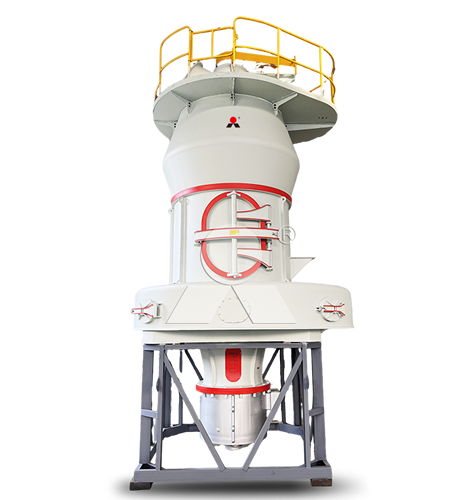
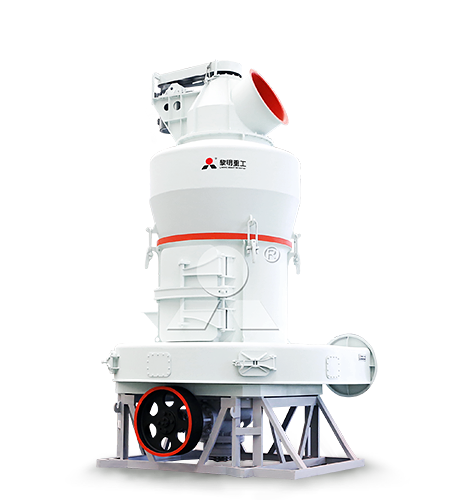
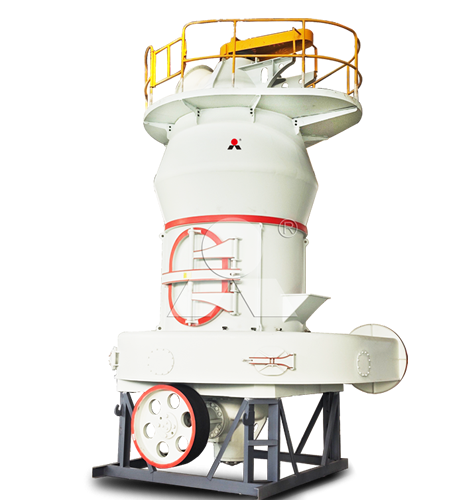
LM Vertical Roller Mill or MTW Mill
For drilling-mineral powder projects, the choice between an LM Vertical Roller Mill and an MTW European Trapezium Grinding Mill usually depends on capacity, feed moisture, plant layout, and the level of process integration required. Both can be configured for barite powder production, but they are suited to different operating conditions.
| Comparison Item | LM Vertical Roller Mill | MTW European Trapezium Grinding Mill |
|---|---|---|
| Suitable project scale | Large and continuous powder-production projects. | Small-to-medium and flexible-capacity powder-production projects. |
| Process arrangement | Integrates grinding, drying, classification, and pneumatic conveying in one main system. | Uses a structured grinding and air-classification circuit with supporting conveying and collection equipment. |
| Moisture handling | Well suited to feed requiring simultaneous drying and grinding. | Suitable for properly prepared dry feed; upstream drying can be added when feed moisture is high. |
| Plant footprint | Can reduce process transfers through integrated operation. | Offers a practical and organized arrangement for regional or phased projects. |
| Production objective | High-output, centralized supply and long-duration continuous operation. | Reliable fine-powder production with adaptable capacity and grade planning. |
| Recommended application | Large barite processing facilities with variable moisture and bulk-delivery demand. | Barite powder plants serving regional drilling-fluid producers or multiple customer grades. |
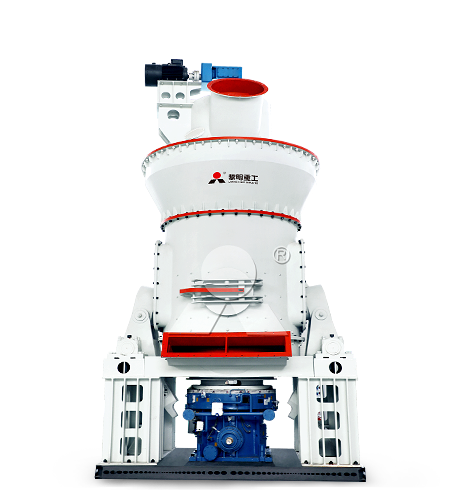
The LM Vertical Roller Mill is appropriate when the plant needs a highly integrated system and substantial throughput. Its process can combine drying and grinding, which is valuable when barite feed contains moisture or when seasonal mining conditions create variation in raw-material water content. The LM Vertical Roller Mill system is designed to perform drying and grinding simultaneously.
Inside the LM Vertical Roller Mill, material is fed onto the grinding table, ground by rollers, carried upward by airflow, and separated by the classifier. Fine powder proceeds to the collection system, while coarse particles return to the grinding area. For drilling-grade barite, the classifier is a critical part of the process because it helps control the amount of material above the coarse-particle limit.
The MTW European Trapezium Grinding Mill is a suitable choice where the project needs stable fine grinding but does not require the scale of a large integrated vertical-mill line. It can be combined with a crusher, elevator, feeder, classifier, dust collector, product silo, and packing system to form a complete barite powder plant. This arrangement is useful for producers that need controlled production capacity, flexible product scheduling, and convenient maintenance planning.
Focus on Classification, Not Only Grinding
A drilling-mineral mill should always be evaluated together with its classification system. Grinding reduces particle size; classification determines which particles are accepted as finished powder and which are returned for further grinding. Without effective classification, the plant may produce too many coarse particles or overgrind a large share of the feed into unwanted ultrafines.
For drilling-grade barite, both ends of the particle-size range matter. A high residue above 75 μm can indicate insufficient grinding, insufficient classification efficiency, unstable feed, or worn grinding components. An excessive proportion below 6 μm can indicate overgrinding, excessive residence time, improper separator adjustment, or an unsuitable operating balance between grinding pressure and airflow.
Consider a plant producing 200-mesh barite powder. If the operator simply increases grinding intensity to eliminate coarse particles, the mill may also create too much material below 6 μm. The better approach is to balance feed rate, grinding pressure, air volume, separator setting, and circulating load so that the coarse fraction is returned efficiently without overprocessing the entire material stream.
Evaluate the Complete Production Line
The mill is the center of the plant, but it cannot work effectively without correctly sized auxiliary equipment. A reliable drilling-mineral powder line requires coordinated operation from raw ore receiving through finished-product loading.
Crusher: Reduces raw mineral to a uniform mill-feed size and protects the grinding system from oversized rock.
Feeder: Provides steady, measurable material supply and helps maintain stable mill loading.
Drying system: Removes excess water from wet mineral feed and prevents material buildup in downstream equipment.
Grinding mill: Produces the required fine powder under stable mechanical and thermal conditions.
Classifier: Separates qualified product from coarse material and controls the finished particle-size distribution.
Dust collector: Recovers fine powder, protects the working environment, and reduces material loss.
Finished-product silo: Provides buffer storage before packing or bulk loading and helps maintain delivery continuity.
Packing or bulk-loading system: Matches the powder plant to customer delivery requirements, including bulk tankers, flexible intermediate bulk containers, and bags.
Laboratory equipment: Supports routine checks of density, moisture, sieve residue, and particle-size distribution.
A line that has an oversized mill but undersized conveying, collection, storage, or packing equipment will still become a production bottleneck. The same is true if the dust-collection system cannot handle the air volume generated by the grinding and classification circuit.
Practical Selection Checklist
Before confirming an LM Vertical Roller Mill or MTW European Trapezium Grinding Mill configuration, prepare a project data sheet containing the following information:
Mineral name and intended drilling-fluid application.
Laboratory analysis of the raw mineral, including specific gravity and moisture.
Maximum raw feed size and particle-size distribution after crushing.
Required finished-powder specification and target particle-size distribution.
Required hourly output, annual production plan, and expected operating schedule.
Maximum seasonal moisture and available drying conditions.
Local power supply, fuel availability, altitude, ambient temperature, and installation space.
Preferred finished-product storage, packaging, and loading method.
Required dust-control standard and available site infrastructure.
Future product grades or expansion requirements.
For high-capacity drilling-barite production with integrated drying and a compact process flow, the LM Vertical Roller Mill is generally the stronger option. For flexible-capacity barite grinding projects with a well-prepared feed and a conventional fine-powder production arrangement, the MTW European Trapezium Grinding Mill is a suitable solution.
The final decision should be confirmed through representative material testing. A properly selected mill is not defined by one capacity figure or one mesh number; it is defined by its ability to consistently turn the actual raw mineral into drilling-fluid powder that meets the required physical and particle-size standards.
Related Oil & Gas Mineral Processing


Liming Heavy Industry at bauma CONEXPO INDIA 2026 | Booth 5-C6
2026-09-07

Turnkey Raw Mill Cement Plant in Saudi Arabia: Design and Installation
2026-09-03
Cement Raw Mill Supplier in Indonesia: Cost and Configuration Analysis
2026-09-01
Liming Heavy Industry to Exhibit at the 24th Global Gypsum Conference & Exhibition in Turkey
2026-08-31
Complete Calcium Carbonate Grinding and Coating Plant Solution
2026-08-29
Complete Mineral Processing Solutions
Convenient Reliable Professional Efficient Get Your Quote
Please feel free to submit your inquiry information to us. We will contact with you as soon as possible.
Our team will contact you as soon as possible.