


Calcium carbonate powder is used in drilling, completion, and workover fluids as an acid-soluble bridging material and, in selected applications, as a weighting material. Unlike barite, which is mainly used to increase mud density, calcium carbonate is valued for its ability to bridge permeable formations, seal fractures or pore openings, reduce fluid losses, and be removed later by acid treatment when reservoir protection is important.
Its usefulness depends largely on particle-size distribution. Fine, medium, and coarse calcium carbonate grades perform different roles in the filter cake or loss-control plug. A well-designed calcium carbonate processing line must therefore produce not just one fine powder, but stable and clearly separated particle-size grades matched to the drilling application. Calcium carbonate is commonly supplied in fine, medium, coarse, and blended grades for loss-control work.
Role in Drilling Operations
When drilling through permeable, fractured, vuggy, or reservoir-bearing formations, drilling fluid may flow into the formation instead of returning fully to the surface. This condition is known as lost circulation. If it is not controlled, it can reduce mud volume, weaken pressure control, increase non-productive time, and complicate well construction.
Calcium carbonate particles help control this problem by bridging openings in the formation. Larger particles form the initial bridge across fractures or pore throats. Medium particles fill spaces between the larger particles, while fine powder helps reduce the remaining permeability of the packed structure. The result is a temporary, low-permeability barrier that reduces fluid loss.
A major advantage of calcium carbonate is acid solubility. High-quality drilling-grade calcium carbonate can dissolve in hydrochloric acid, allowing residual material near a producing formation to be removed after drilling or during completion operations. Baker Hughes describes its calcium-carbonate-based loss-circulation material as having a minimum solubility of 98% in 15% hydrochloric acid and being suitable for drilling reservoir intervals.
| Application | Function of Calcium Carbonate | Preferred Particle-Size Approach |
|---|---|---|
| Seepage-loss control | Helps reduce minor fluid invasion into permeable formations. | Fine calcium carbonate or a fine-dominant blend. |
| Bridging in reservoir drilling | Builds an acid-soluble bridge and filter cake across pore openings. | Fine and medium grades selected according to formation permeability. |
| Partial lost circulation | Reduces loss through fractures, voids, or highly permeable intervals. | A blend of fine, medium, and coarse calcium carbonate. |
| Severe lost circulation | Forms a stronger particulate plug across larger fractures and vugs. | Coarse particles for initial bridging, supported by medium and fine fractions. |
| Completion and workover fluids | Provides solids that can be removed by acid treatment where formation damage must be minimized. | High-purity, acid-soluble grades with a controlled particle-size distribution. |
Why Particle Size Matters
Particle size is the most important processing target for drilling-grade calcium carbonate. A single powder grade cannot effectively treat every loss zone because fractures, pores, and voids vary greatly in size. Fine calcium carbonate may pass through a large fracture without forming a bridge, while a coarse grade may be unable to enter a narrow opening.
For this reason, drilling operations often use a blend of coarse, medium, and fine calcium carbonate. The larger fraction establishes the bridge, the medium fraction fills structural gaps, and the fine fraction seals remaining voids. A field lost-circulation guide describes calcium carbonate treatments using fine material in the 5–10 μm range, medium material in the 50–150 μm range, and coarse material in the 200–600 μm range.
| Calcium Carbonate Grade | Typical Particle Range | Primary Function |
|---|---|---|
| Ultra-fine | Below 45 μm | Helps seal fine pore spaces and supports low-permeability filter-cake formation. |
| Fine | Approximately 45–150 μm | Used for seepage control, fine bridging, and void filling between larger particles. |
| Medium | Approximately 150–500 μm | Supports bridging across moderate pore openings and fractures. |
| Coarse | Approximately 500–2,000 μm | Provides the first bridge across larger fractures, vugs, and severe loss zones. |
| Multi-grade blend | Combination of fine, medium, and coarse fractions | Creates a broader and more tightly packed bridge where the loss-zone size is uncertain. |
Typical commercial drilling-grade limestone products identify coarse grades at 500–2,000 μm, medium grades at 150–500 μm, fine grades at 45–150 μm, and ultra-fine material below 45 μm. The exact size distribution should be selected according to formation characteristics and the drilling-fluid program.
Raw Material Requirements
Suitable calcium carbonate feed can come from high-purity limestone, marble, calcite, or other calcium-carbonate-rich mineral sources. The best raw material depends on the required finished grade, acid-solubility target, hardness, color requirements where applicable, impurity levels, and planned production method.
For reservoir-sensitive drilling applications, high acid solubility is especially important. Insoluble impurities such as silica, clay, iron-bearing minerals, or dolomite can reduce dissolution performance and may increase the risk of formation damage. Producers should therefore evaluate raw material before plant design through chemical analysis, acid-solubility testing, moisture measurement, hardness testing, and particle-size analysis.
Calcium carbonate content: High CaCO3 content supports stronger acid solubility and lower insoluble residue.
Acid solubility: The product should dissolve effectively in the acid concentration specified by the drilling or completion program.
Silica and clay content: Low insoluble content is important for applications near productive reservoir intervals.
Moisture: Stable low moisture improves crushing, grinding, screening, powder flow, and storage.
Hardness and abrasiveness: These properties influence crusher selection, mill configuration, wear-part planning, and operating cost.
Particle shape: A suitable particle shape can support bridging efficiency and packing behavior in the loss-control pill.
Processing Flow for Drilling Grades
Calcium carbonate processing for drilling fluids differs from ordinary fine limestone powder production because the plant may need to produce multiple size grades. Fine powder can be manufactured by grinding and classification, while medium and coarse grades may require crushing, screening, and carefully controlled separation rather than additional fine grinding.
Raw material receiving and inspection. Limestone, marble, or calcite feed is sampled for CaCO3 content, acid solubility, moisture, impurities, and size distribution. Different quarry zones should be separated when their quality differs.
Crushing. Large rock is reduced through primary and secondary crushing. The crushing circuit should provide consistent feed for downstream milling or screening while avoiding unnecessary fines when medium and coarse products are required.
Screening and grade separation. Crushed material can be separated into coarse and medium drilling grades through vibrating screens or other classification equipment. The screen arrangement should match the required product size ranges and provide low cross-contamination between grades.
Fine grinding. Material intended for fine or ultra-fine calcium carbonate grades enters the grinding system. The mill reduces particle size, while the classifier separates qualified fine powder from coarse particles returned for regrinding.
Powder collection. Fine calcium carbonate is collected from the process air by a dust collector and conveyed to dedicated product silos. Separate silos are recommended for each grade to prevent unwanted mixing.
Blending and packing. Fine, medium, and coarse fractions can be loaded separately or blended in defined ratios for specific loss-control formulations. Finished material may be supplied in bags, big bags, or bulk containers according to project requirements.
Quality verification. Each product grade should be tested for particle-size distribution, acid solubility, moisture, bulk density, and insoluble residue. For blended material, the blend ratio and particle-size curve should also be verified before dispatch.
LM Vertical Roller Mill for Fine Calcium Carbonate
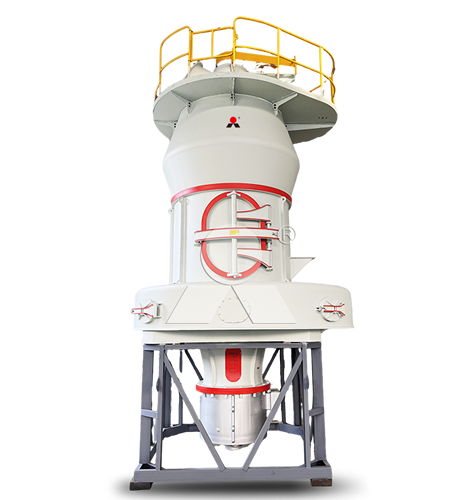
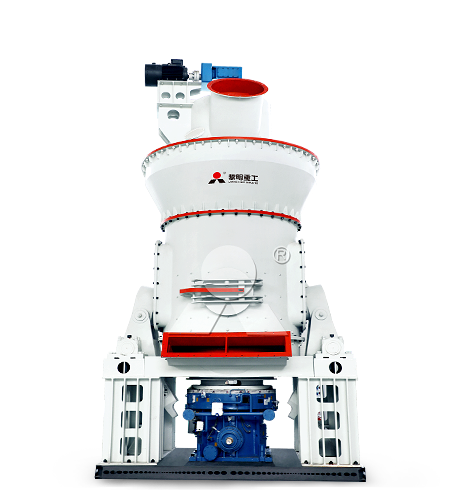
The LM Vertical Roller Mill is suitable for large-scale production of fine calcium carbonate powder used in drilling-fluid and completion-fluid applications. Its integrated design combines grinding, drying, classification, and pneumatic conveying, which can simplify the process flow for a high-capacity fine-powder section.
In the LM Vertical Roller Mill, prepared calcium carbonate feed enters the grinding table and is ground by rollers. Airflow carries the ground material upward to the internal separator. Powder that meets the required fineness moves to the collection system, while coarse particles return to the grinding table for further processing.
This closed internal circulation is useful for producing a stable fine grade because it allows the plant to control the upper particle-size limit without repeatedly overgrinding all feed material. If moisture is present, a suitable hot-air system can assist drying during milling, helping maintain free powder flow in the dust collector, finished-product silo, and packing section.
The LM Vertical Roller Mill is most suitable when the project requires continuous high output of fine calcium carbonate, integrated drying capability, centralized process control, and a compact arrangement for the fine-powder production section. Medium and coarse drilling grades should normally be produced through crushing and screening circuits rather than sent through the fine grinding mill.
MTW European Grinding Mill for Fine Grades
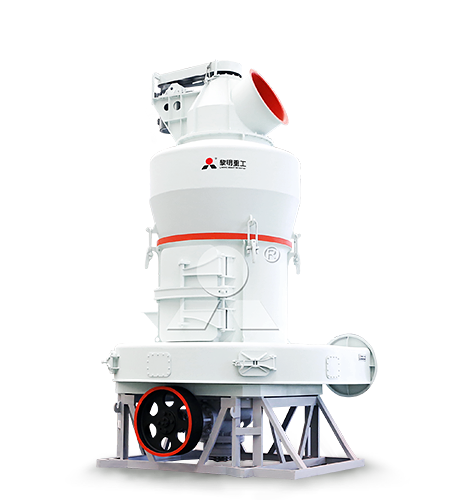
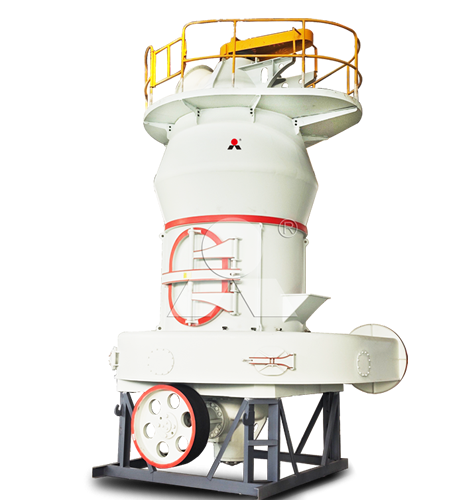
The MTW European Grinding Mill is a suitable option for fine calcium carbonate production where the project requires flexible capacity, controlled powder fineness, and a practical complete process arrangement. It can process prepared calcium carbonate feed into fine powder for drilling-fluid applications, including fine bridging material and finer components for multi-grade lost-circulation blends.
The mill uses rollers and a grinding ring to reduce material size. Airflow carries the powder to the classifier, where qualified particles proceed to the dust collector and oversize particles return to the grinding chamber. This closed-circuit process helps maintain controlled product fineness and reduces the amount of coarse material entering the finished fine-powder silo.
| Production Requirement | Recommended Processing Method | Suitable Equipment Focus |
|---|---|---|
| Coarse calcium carbonate for large fractures | Crushing, screening, and grade separation. | Crusher, vibrating screen, conveyors, and dedicated coarse-product storage. |
| Medium calcium carbonate for bridging support | Controlled crushing and screening, with limited grinding only when necessary. | Crusher, screen deck, classifier, and dedicated medium-grade silo. |
| Fine calcium carbonate for seepage control and packing | Fine grinding and air classification. | MTW European Grinding Mill with classifier, dust collector, and fine-product silo. |
| Large-volume fine-powder supply | Integrated drying, grinding, classification, and pneumatic conveying. | LM Vertical Roller Mill with a complete powder collection and storage system. |
| Custom multi-grade lost-circulation blend | Separate production of each size fraction followed by controlled batching and blending. | Screening system, fine grinding system, batch hoppers, weighing equipment, and blending unit. |
For a calcium carbonate drilling-material plant, the MTW European Grinding Mill should be used primarily for the fine-powder section. Coarse and medium grades should be preserved through controlled crushing and screening because excessive grinding can reduce their bridging effectiveness.
Production Control for Reliable Performance
Calcium carbonate for drilling fluids should be produced as a set of controlled particle-size products, not as undifferentiated mineral powder. The process must preserve the intended size fraction from the crushing stage through loading and delivery.
Use separate stockpiles for raw materials with different calcium carbonate content or acid-solubility performance.
Prevent uncontrolled fines generation during crushing when producing medium and coarse grades.
Use calibrated screens and regular screen inspections to maintain size separation.
Keep fine, medium, and coarse products in separate silos or clearly identified storage areas.
Control dust-collector return material to prevent ultrafine powder from contaminating coarse products.
Verify particle-size distribution for every finished grade rather than relying only on nominal mesh labels.
Test acid solubility and insoluble residue, especially for products intended for reservoir sections.
Use controlled weighing and blending when preparing multi-grade lost-circulation materials.
Calcium carbonate powder provides a valuable acid-soluble option for drilling and completion fluids where bridging efficiency and reservoir protection are both important. A complete line can produce coarse and medium grades through crushing and screening, then use the LM Vertical Roller Mill or MTW European Grinding Mill to manufacture controlled fine powder for seepage control and blended loss-circulation formulations.
The final process design should be based on raw-material testing, required acid solubility, target particle-size ranges, planned product grades, and the loss-control requirements of the intended drilling program.
Related Oil & Gas Mineral Processing


Liming Heavy Industry at bauma CONEXPO INDIA 2026 | Booth 5-C6
2026-09-07

Turnkey Raw Mill Cement Plant in Saudi Arabia: Design and Installation
2026-09-03
Cement Raw Mill Supplier in Indonesia: Cost and Configuration Analysis
2026-09-01
Liming Heavy Industry to Exhibit at the 24th Global Gypsum Conference & Exhibition in Turkey
2026-08-31
Complete Calcium Carbonate Grinding and Coating Plant Solution
2026-08-29
Complete Mineral Processing Solutions
Convenient Reliable Professional Efficient Get Your Quote
Please feel free to submit your inquiry information to us. We will contact with you as soon as possible.
Our team will contact you as soon as possible.