


In a limestone powder production plant, grinding is only part of the process. The classification stage determines which particles are accepted as finished product and which particles return to the grinding zone for further processing. For this reason, classification has a direct influence on limestone powder fineness, particle-size distribution, production stability, and final product quality.
This is particularly important when limestone powder is supplied to construction-material manufacturers, dry-mix plants, flue gas desulfurization systems, filler producers, and other industrial users that require a consistent powder specification.
What Does a Classifier Do in a Limestone Grinding Plant?
During grinding, limestone particles are not all reduced to exactly the same size. The grinding process produces a mixture of coarse, medium, and fine particles.
The classifier separates these particles according to their aerodynamic behavior. Fine particles that meet the required specification are carried out of the grinding system, while particles that are still too coarse are returned for additional grinding.
The basic circulation can be represented as:
Limestone Feed → Grinding → Classification → Qualified Powder + Coarse Return → Further Grinding
This continuous separation allows the grinding system to produce a controlled finished product instead of simply discharging every particle generated by the grinding process.
Why Classification Matters for Limestone Powder Quality
Two limestone grinding plants can use similar raw materials and grinding equipment but produce noticeably different powder characteristics if their classification conditions are different.
A well-controlled classifier helps maintain the required product fineness and reduces the amount of unwanted coarse material in the finished powder. This is especially important when the customer has a specific mesh or micron requirement.
For example, if a limestone powder is intended for a dry-mix formulation, excessive coarse particles may affect the behavior of the finished product. In an industrial filler application, an uncontrolled particle-size distribution may also influence mixing, surface characteristics, or downstream processing.
Therefore, product quality should be considered in terms of the complete grinding and classification system rather than the grinding mill alone.
Fineness and Particle-Size Distribution Are Not the Same
Fineness is often described using mesh or micron size, but a single fineness value does not completely describe a powder.
Particle-size distribution describes how the particles are distributed across different size ranges. Two limestone powders may both be described as 325 mesh products while having different proportions of fine and coarse particles.
This distinction matters when the powder is used in applications where particle-size distribution affects product performance.
A good grinding system therefore needs to achieve not only the required nominal fineness but also a particle-size distribution suitable for the customer's application.
How the Classifier Controls Finished Powder
The operating conditions of the classifier influence the size of particles allowed to leave the grinding circuit.
When the classification conditions are adjusted to obtain a finer product, more material may need to circulate through the grinding system before it becomes fine enough to be collected as finished powder.
When a coarser product is required, the classification conditions can be adjusted accordingly, allowing qualified particles to leave the system earlier.
This relationship means that product fineness and production capacity should always be considered together during equipment selection.
Finer Limestone Powder Requires More Careful Classification
As the target limestone powder becomes finer, classification becomes increasingly important.
For conventional fine limestone powder, the classifier needs to separate the product at the required size while maintaining stable airflow and material circulation. For finer products, small changes in classification conditions can have a greater influence on the final particle-size distribution.
This is one reason why fine and ultrafine limestone projects should not be designed simply by increasing grinding intensity. The classification system must also be suitable for the required product.
Classification and Grinding Capacity
A common misunderstanding is that the rated capacity of a grinding mill remains unchanged regardless of the finished-product fineness.
In practice, a grinding system producing a relatively coarse limestone powder can generally process material at a different rate from the same system producing a much finer powder.
When the target becomes finer, more material may need to circulate through the grinding and classification system before reaching the finished-product specification.
For this reason, a limestone project should always provide both:
Required production capacity
Required finished-product fineness
These two parameters are closely related when selecting the grinding mill and classifier.
How Classification Works with an LM Vertical Mill
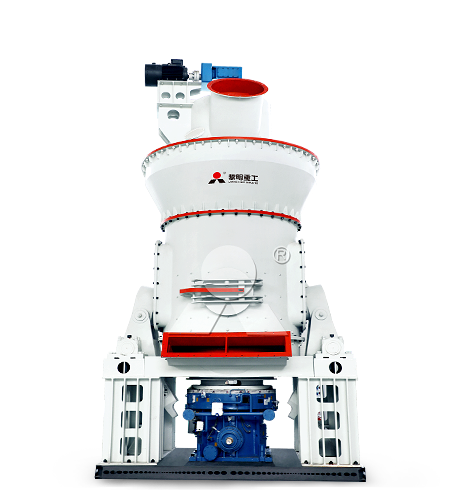
The Liming Heavy Industry LM Vertical Grinding Mill integrates grinding and classification into a continuous process. Limestone is ground on the grinding table, while airflow carries the ground particles toward the classifier.
The classifier separates qualified fine powder from coarser particles. The qualified powder continues to the collection system, while coarse material returns to the grinding area.
This arrangement is particularly useful for large-scale limestone plants because grinding and classification can operate as one coordinated system rather than as isolated processes.
Classification in an MTW Limestone Grinding System
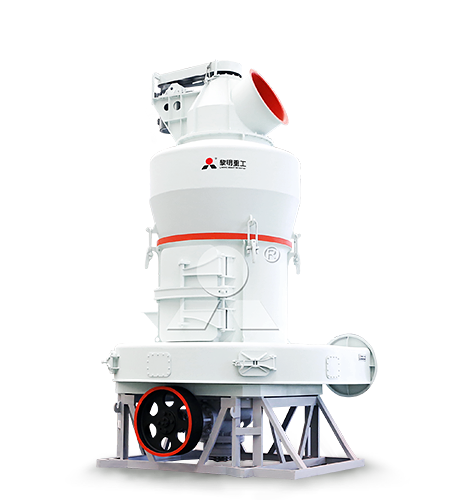
The Liming Heavy Industry MTW European Grinding Mill also uses a classification system to control finished-product fineness.
The MTW series is suitable for many conventional limestone powder applications where the required product is within the normal fine-grinding range. The classifier helps separate qualified powder from particles requiring additional grinding.
This makes the classification stage an important part of producing consistent limestone powder for applications such as construction materials, fillers, and flue gas desulfurization.
Classification for Ultrafine Limestone Powder
When limestone needs to be processed into ultrafine powder, the requirements become more demanding.
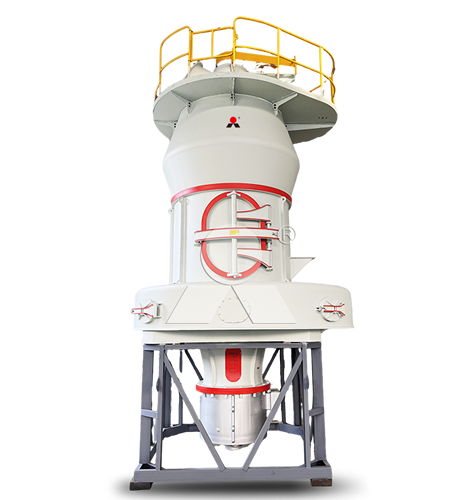
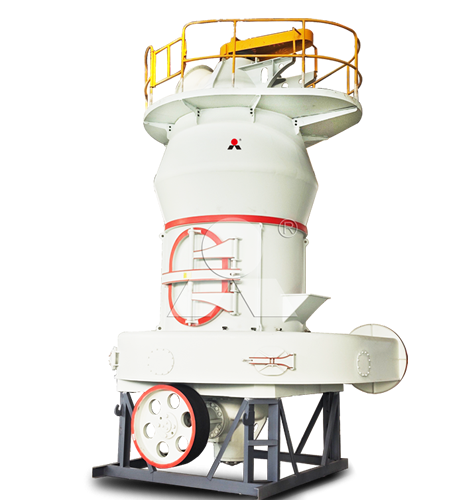
The Liming Heavy Industry MW Micro Powder Mill and LUM Ultrafine Vertical Grinding Mill are designed for finer powder applications where more precise classification is required.
In an ultrafine grinding system, the classifier must work closely with the grinding system to separate very fine particles from those that require additional processing. The final equipment selection should therefore be based on the required product specification rather than simply choosing a conventional mill and attempting to produce an ultrafine product with it.
What Happens When Classification Is Not Properly Controlled?
Several problems can appear when the classification system does not match the limestone grinding requirements.
Too Much Coarse Material
If the classifier allows excessive coarse particles to leave the grinding circuit, the finished limestone powder may fail to meet the required fineness or contain too large a proportion of oversized particles.
Excessive Internal Circulation
If the classification conditions are too restrictive, a large amount of material may remain in circulation and return repeatedly to the grinding zone. This can affect production efficiency and increase the load on the grinding system.
Unstable Product Fineness
Changes in airflow, feed rate, material characteristics, or classifier operating conditions can cause fluctuations in finished-product fineness if the system is not properly controlled.
Capacity Does Not Match the Target
A plant designed around an expected capacity without considering the required product fineness may fail to achieve the planned output when a finer product is required.
Factors That Influence Limestone Classification
Classification performance is affected by more than the classifier itself. The complete grinding system needs to be considered.
Raw-material characteristics: Limestone hardness and grindability influence how easily the required particle size is achieved.
Feed size: Stable feed preparation helps maintain consistent grinding conditions.
Moisture: Excessive moisture can affect material flow, grinding, and classification.
Feed rate: The amount of limestone entering the system affects the grinding and classification load.
Airflow: Air circulation is an important part of transporting and separating fine particles.
Classifier settings: Operating conditions influence the particle size of material leaving the grinding circuit.
Grinding conditions: Classification cannot compensate for an unsuitable grinding system.
Why Stable Feed Helps Maintain Particle-Size Distribution
A classifier can only perform consistently when the grinding system itself operates under stable conditions.
If limestone feed fluctuates significantly in size or quantity, the grinding load can change. This may alter the amount of fine and coarse material entering the classifier and consequently affect the finished powder.
For large-scale limestone plants, stable crushing, screening, feeding, and material storage before the grinding stage can therefore contribute to more consistent powder production.
Classification and Different Limestone Applications
Construction and Dry-Mix Materials
Limestone powder used in dry-mix mortar, plaster, tile adhesive, and related products may require a controlled particle-size distribution to achieve consistent formulation and processing.
The appropriate classification setting depends on the specific product and the role of limestone powder in the formulation.
Flue Gas Desulfurization
For limestone used in flue gas desulfurization, the powder needs to meet the requirements of the downstream slurry preparation and desulfurization process.
Stable fineness is important because significant variation in particle size can affect how the limestone behaves during slurry preparation and reaction.
Industrial Fillers
Filler applications can have more specific requirements for particle-size distribution. In these projects, simply achieving a nominal mesh specification may not be sufficient.
The grinding and classification system should therefore be designed according to the actual particle-size requirements of the final product.
Choosing the Right Liming Grinding Mill
The required fineness and production capacity provide the starting point for selecting the grinding system.
| Requirement | Liming Grinding Mill | Typical Consideration |
|---|---|---|
| Conventional fine limestone powder | MTW European Grinding Mill | Suitable for many general fine-powder applications |
| Large-scale limestone grinding | LM Vertical Grinding Mill | Suitable for high-capacity continuous production |
| Ultrafine limestone powder | MW Micro Powder Mill | Suitable for ultrafine powder applications |
| High-fineness vertical grinding | LUM Ultrafine Vertical Grinding Mill | Suitable for demanding ultrafine applications |
The specific model should be determined from the required capacity, feed size, limestone characteristics, moisture, final fineness, and application.
How to Evaluate Limestone Powder Quality
Before commissioning a limestone grinding plant, it is useful to define the finished-product requirements clearly.
Important quality indicators can include:
Target fineness
Particle-size distribution
Maximum allowable coarse particles
Production capacity
Material moisture
Consistency between production batches
For customers purchasing limestone powder for further processing, a stable product specification can be more important than simply achieving the highest possible grinding fineness.
Designing the Grinding and Classification System Together
Classification should not be selected independently from the grinding mill. The mill, classifier, fan or airflow system, dust collector, feeding equipment, and conveying system need to be matched as one process.
For example, a large-capacity limestone plant may require an LM Vertical Mill with a corresponding classification and collection system, while a smaller conventional fine-powder project may be better suited to an MTW European Grinding Mill.
If the required product enters the ultrafine range, MW or LUM should be evaluated instead.
Information Needed for Equipment Selection
For a limestone powder project, the following information provides a practical starting point for designing the grinding and classification system:
Raw limestone feed size
Required production capacity
Target powder fineness
Required particle-size distribution
Raw-material moisture
Final application
Expected operating hours
Packaging or bulk-storage requirements
With these parameters, the grinding and classification system can be designed around the actual finished-product requirements instead of selecting equipment based only on the desired mesh number.
Classification Is a Key Part of Limestone Powder Production
The classifier determines which particles become finished limestone powder and which particles return to the grinding process. As a result, classification has a direct influence on product fineness, particle-size distribution, production capacity, and operating stability.
For conventional limestone powder, the Liming Heavy Industry MTW European Grinding Mill and LM Vertical Grinding Mill provide solutions for different production requirements. For finer products, the MW Micro Powder Mill and LUM Ultrafine Vertical Grinding Mill can be considered.
A well-designed limestone grinding plant should therefore treat grinding and classification as one integrated process. By matching the mill, classifier, airflow, feeding, and collection systems to the required product specification, the plant can achieve more consistent limestone powder quality and more reliable continuous production.
Related Limestone Grinding Plant


Liming Heavy Industry at bauma CONEXPO INDIA 2026 | Booth 5-C6
2026-09-07

Turnkey Raw Mill Cement Plant in Saudi Arabia: Design and Installation
2026-09-03
Cement Raw Mill Supplier in Indonesia: Cost and Configuration Analysis
2026-09-01
Liming Heavy Industry to Exhibit at the 24th Global Gypsum Conference & Exhibition in Turkey
2026-08-31
Complete Calcium Carbonate Grinding and Coating Plant Solution
2026-08-29
Complete Mineral Processing Solutions
Convenient Reliable Professional Efficient Get Your Quote
Please feel free to submit your inquiry information to us. We will contact with you as soon as possible.
Our team will contact you as soon as possible.