


A limestone grinding plant is not complete when the grinding mill is selected. The way limestone moves through the plant and the way fine powder is collected can have a direct impact on production stability, product recovery, working conditions, and the overall operation of the plant.
Crushed limestone must be transferred reliably from the raw-material storage area to the grinding system, while finished powder needs to be separated from the process airflow and conveyed to storage or packaging. At the same time, fine limestone dust generated during crushing, grinding, classification, and conveying needs to be controlled.
For this reason, dust collection and material handling should be designed together with the grinding mill rather than added after the main equipment has been selected.
Where Dust and Material Movement Occur in a Limestone Plant
Fine limestone particles can become airborne at several points throughout the production process.
Limestone crushing and screening
Raw-material transfer points
Feeding into the grinding mill
Grinding and classification
Finished-powder collection
Powder conveying
Finished-product storage
Bagging and bulk loading
The quantity and characteristics of dust vary according to the limestone, production capacity, equipment configuration, and process conditions. A small grinding line and a large industrial plant therefore require different dust-control and material-handling arrangements.
How a Limestone Grinding and Collection System Works
A typical process can be organized as:
Crushed Limestone → Raw-Material Hopper → Feeder → Grinding Mill → Classifier → Dust Collector → Finished-Powder Conveying → Storage or Packing
During grinding, air carries the fine particles through the classification system. Qualified limestone powder is separated from coarse particles and then transported toward the powder collection system.
The dust collector captures the fine powder from the airflow. The recovered material becomes the finished product and can then be transported to a storage silo, intermediate hopper, packing machine, or bulk-loading system.
Why Dust Collection Is Important
Dust collection has several functions in a limestone grinding plant. It helps recover fine product, reduces material loss, keeps the production area cleaner, and supports compliance with applicable environmental requirements.
A well-designed collection system also helps maintain the intended airflow through the grinding circuit. This is particularly important for mills that rely on airflow to transport and classify fine particles.
The dust collector should therefore be regarded as part of the grinding process rather than simply an environmental accessory.
Dust Collection Around the Grinding Mill
The grinding mill generates a large quantity of fine particles. If these particles are not properly contained and collected, they can escape through equipment connections or accumulate around the production area.
For this reason, the grinding system should be designed as a relatively closed process. Ducting, equipment seals, airflow, the classifier, and dust collector should work together.
For Liming Heavy Industry grinding systems, the collection arrangement is selected according to the mill type, capacity, product fineness, airflow requirements, and plant configuration.
Dust Control During Limestone Crushing
Crushing takes place before grinding and can generate larger quantities of airborne particles, particularly when dry limestone is processed.
Dust-control measures may be required around crushers, screens, transfer points, and conveyors. The specific solution depends on the plant layout and local environmental requirements.
Enclosed transfer points, suitable extraction systems, and appropriate dust collectors can be incorporated into the crushing and raw-material handling section.
Keeping the crushing section properly controlled also helps prevent unnecessary dust from entering areas where workers and maintenance personnel need regular access.
Raw Limestone Handling Before Grinding
Stable material handling starts with the raw-material storage system.
Crushed limestone can be stored in a hopper, bin, or stockpile before entering the grinding line. The storage arrangement should provide a stable supply to the feeder and prevent interruptions caused by irregular material flow.
For larger plants, conveyors can transport limestone from the crushing section to intermediate storage and then to the grinding section. The storage capacity should be considered together with the expected production rate and operating schedule.
Why the Feeder Matters
The feeder controls how much limestone enters the grinding system. An unstable feed rate can cause fluctuations in mill loading and influence grinding and classification conditions.
A suitable feeder should therefore provide a controlled and continuous supply of limestone to the mill.
For a large-scale grinding plant, the feeder should be selected according to the required capacity, material characteristics, hopper arrangement, and control system.
Material Handling with the LM Vertical Grinding Mill
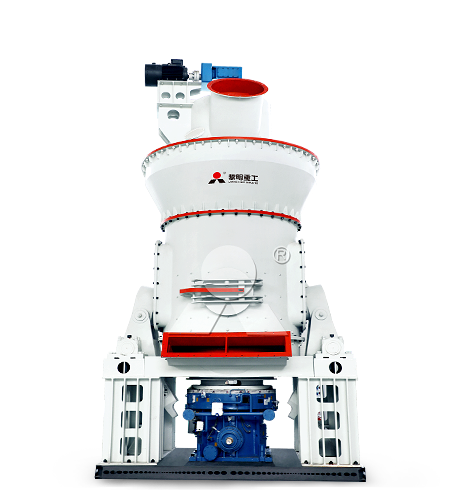
The Liming Heavy Industry LM Vertical Grinding Mill is designed for large-scale grinding applications and integrates grinding, classification, drying, and conveying functions within the main grinding system.
This integrated arrangement can simplify the movement of fine limestone through the grinding section. After classification, qualified powder is transported by the process airflow toward the collection system, while coarse material returns to the grinding area.
For large limestone plants, the LM system can therefore be connected with upstream crushers and feeders and downstream powder collection, conveying, storage, and packaging equipment to form a continuous production line.
Material Handling with the MTW European Grinding Mill
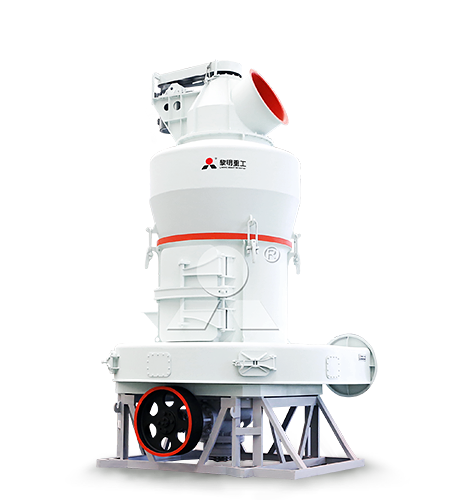
The MTW European Grinding Mill is suitable for many conventional limestone powder projects. A typical MTW system includes feeding, grinding, classification, airflow, powder collection, and conveying.
Finished limestone powder collected from the grinding system can be transferred to storage or packaging depending on the customer's production arrangement.
The MTW system can be considered for limestone powder plants serving construction materials, fillers, flue gas desulfurization, and other applications requiring conventional fine powder.
Handling Ultrafine Limestone Powder
Ultrafine limestone powder requires additional attention to powder conveying and collection because very fine particles are easily carried by air.
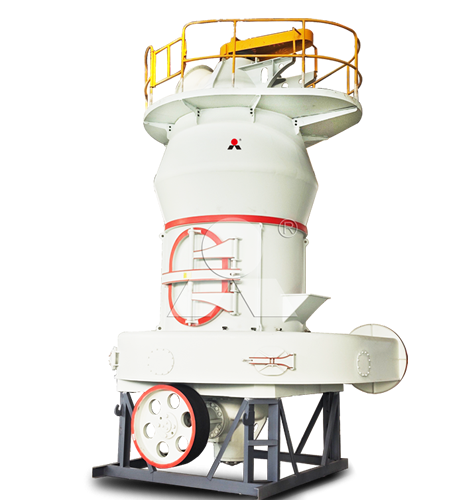
The Liming Heavy Industry MW Micro Powder Mill and LUM Ultrafine Vertical Grinding Mill are designed for applications requiring finer powder production. Their grinding and classification systems should be connected with suitable airflow, dust collection, and finished-product handling equipment.
For ultrafine projects, the conveying and storage system should be designed according to the actual powder characteristics rather than simply using the same arrangement as a conventional limestone grinding plant.
Finished Limestone Powder Collection
After classification, qualified limestone powder is separated from the process airflow through the powder collection system.
The collected powder can then be transferred through one of several routes:
Finished-product silo
Intermediate powder hopper
Automatic packing machine
Bulk loading system
Downstream production line
The appropriate arrangement depends on whether the plant sells limestone powder directly or uses the powder as an intermediate material for another production process.
Limestone Powder Storage
Storage is an important part of material handling because the grinding mill may operate continuously while packing, loading, or downstream consumption occurs intermittently.
A finished-product silo or hopper provides a buffer between powder production and final dispatch. The required storage capacity depends on production rate, shipping arrangements, packaging capacity, and operating schedule.
The storage system should also provide reliable discharge so that fine limestone powder does not accumulate or bridge inside the silo.
Powder Conveying After Collection
The conveying method should be selected according to the distance, elevation, powder characteristics, capacity, and plant layout.
In a compact grinding plant, the collected powder may move directly to a nearby storage hopper. In a larger facility, the powder may need to be transported over a longer distance to multiple silos or production areas.
The conveying system should be properly matched to the capacity of the grinding line so that it does not become a bottleneck after the mill.
Keeping Transfer Points Under Control
Transfer points are common locations for dust leakage because material changes direction or falls from one conveyor to another.
Where possible, transfer points should be enclosed and connected to an appropriate extraction system. Conveyor transitions should also be designed to minimize unnecessary material impact and powder dispersion.
This becomes increasingly important as plant capacity increases because a small leakage point can become a significant source of dust when operated continuously at high throughput.
How Material Handling Affects Production Stability
Grinding equipment cannot operate efficiently if material supply is inconsistent.
For example, insufficient raw-material storage can interrupt the mill when the crusher stops. An improperly selected feeder can cause unstable mill loading. An undersized finished-powder conveyor can restrict the output of the grinding system.
A complete limestone plant should therefore be balanced from the crusher through to the finished-product silo.
Matching Equipment Capacity Across the Plant
The main equipment should not be selected independently.
For example, if a limestone grinding system is designed for 100 t/h, the raw-material crusher, feeder, dust collector, powder conveyor, and finished-product storage system must all be capable of supporting the required production rate.
The actual design margin depends on the project, but the general principle is simple: material should be able to move continuously through every major section of the plant.
Dust Collection for Different Limestone Applications
Construction and Dry-Mix Materials
Limestone powder used in dry-mix mortar, plaster, tile adhesive, and other construction products is normally handled as a dry fine powder. The collection and conveying system should protect the powder from unnecessary contamination and provide reliable transfer to storage or the downstream mixing plant.
Flue Gas Desulfurization
Large FGD limestone grinding plants may require continuous powder production and direct transfer to limestone slurry preparation. In this case, the grinding, collection, storage, and slurry-preparation systems should be designed as a coordinated process.
Industrial Fillers
Filler-grade limestone powder may have tighter requirements for product consistency. The collection system should minimize material loss and prevent contamination during conveying and storage.
What Happens When Dust Collection Is Undersized?
An undersized or poorly matched dust collection system can create several problems:
Increased airborne dust around the production area
Loss of fine limestone powder
Unstable airflow through the grinding system
Reduced powder recovery
Higher cleaning and maintenance requirements
Difficulty meeting applicable environmental requirements
For this reason, the dust collector should be selected based on the complete grinding system rather than simply choosing a standard unit based on the mill name.
Designing a Complete Limestone Material-Handling System
A large limestone grinding plant may include the following material-handling sections:
Raw limestone receiving: limestone is delivered from the quarry or crushing plant.
Crushed-material storage: prepared limestone is stored before grinding.
Controlled feeding: a feeder supplies material to the grinding mill at a stable rate.
Grinding and classification: the selected Liming grinding mill produces the required powder.
Powder collection: the dust collection system separates finished powder from process air.
Finished-product conveying: powder is transferred to storage or the next process.
Storage and dispatch: limestone powder is stored, packed, or loaded in bulk.
This approach helps ensure that material flow and dust control are considered throughout the entire plant.
Which Liming Grinding Mill Should Be Used?
| Project Requirement | Liming Grinding Mill | Material Handling Consideration |
|---|---|---|
| Conventional fine limestone powder | MTW European Grinding Mill | Suitable for integrated feeding, classification, collection, and powder conveying |
| Large-scale limestone production | LM Vertical Grinding Mill | Suitable for high-capacity continuous material flow |
| Ultrafine limestone powder | MW Micro Powder Mill | Requires careful airflow, collection, and fine-powder handling |
| High-fineness vertical grinding | LUM Ultrafine Vertical Grinding Mill | Suitable for integrated ultrafine grinding and classification systems |
Information Needed for Plant Design
Before designing the dust collection and material-handling system, several basic project parameters should be confirmed:
Raw limestone feed size
Required grinding capacity
Finished-product fineness
Raw-material moisture
Final application
Operating hours
Required storage capacity
Packaging or bulk-loading method
Available plant space
Local environmental requirements
These details determine the required capacity of the conveyors, feeders, dust collectors, storage equipment, and other auxiliary systems around the grinding mill.
A Complete Approach to Limestone Grinding Plant Design
Dust collection and material handling are essential parts of a reliable limestone powder production line. Crushing, feeding, grinding, classification, powder collection, conveying, storage, and packing need to operate as one continuous process.
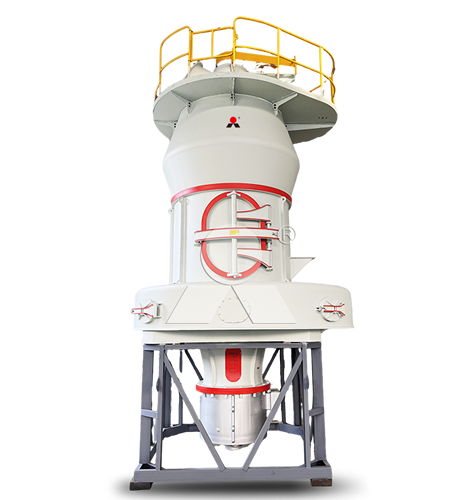
For conventional fine limestone powder, the Liming Heavy Industry MTW European Grinding Mill provides a practical solution for integrated grinding and powder handling. For large-capacity projects, the LM Vertical Grinding Mill can be used as the core grinding system. MW and LUM can be considered when the required limestone product enters the ultrafine range.
By designing dust collection and material handling together with the selected grinding mill, a limestone plant can achieve more stable material flow, better powder recovery, cleaner production areas, and a more practical overall process layout.
Related Limestone Grinding Plant


Liming Heavy Industry at bauma CONEXPO INDIA 2026 | Booth 5-C6
2026-09-07

Turnkey Raw Mill Cement Plant in Saudi Arabia: Design and Installation
2026-09-03
Cement Raw Mill Supplier in Indonesia: Cost and Configuration Analysis
2026-09-01
Liming Heavy Industry to Exhibit at the 24th Global Gypsum Conference & Exhibition in Turkey
2026-08-31
Complete Calcium Carbonate Grinding and Coating Plant Solution
2026-08-29
Complete Mineral Processing Solutions
Convenient Reliable Professional Efficient Get Your Quote
Please feel free to submit your inquiry information to us. We will contact with you as soon as possible.
Our team will contact you as soon as possible.