


The required fineness is one of the most important factors when selecting a limestone grinding mill. Limestone powder used for cement, construction materials, dry-mix mortar, fillers, agriculture, and other industrial applications can have very different particle-size requirements. A mill that is suitable for one limestone powder specification may not be the right choice for another.
For this reason, limestone grinding equipment should be selected by considering the target fineness together with production capacity, feed size, limestone characteristics, moisture, and the intended application.
Start With the Finished Limestone Powder
Before choosing a grinding mill, define the required finished product as clearly as possible. A useful specification should include the target fineness, production capacity, and application of the limestone powder.
For example, producing a relatively coarse limestone powder for construction applications is different from producing ultrafine calcium carbonate powder for a specialized industrial application. The two projects may use the same limestone as feedstock, but the grinding and classification requirements can be substantially different.
| Typical Fineness Range | Possible Limestone Applications | Equipment Direction |
|---|---|---|
| Coarse to fine powder | Construction materials, cement-related applications, general industrial use | LM Vertical Grinding Mill or MTW European Grinding Mill |
| Fine powder | Mineral fillers, dry-mix products, industrial materials | MTW European Grinding Mill or LM Vertical Grinding Mill |
| Ultrafine powder | Specialized fillers and high-fineness industrial applications | MW Micro Powder Mill or LUM Ultrafine Vertical Grinding Mill |
The final selection should be based on the actual required particle-size distribution rather than fineness alone.
For Limestone Powder Up to About 400 Mesh
Many conventional limestone powder applications fall within a fineness range that can be handled by standard fine grinding systems. In this range, both the Liming Heavy Industry LM Vertical Grinding Mill and MTW European Grinding Mill can be considered.
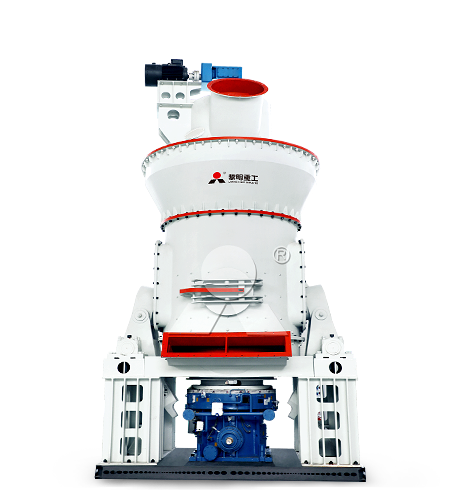
LM Vertical Grinding Mill
The LM Vertical Grinding Mill is designed for continuous large-scale powder production. It combines grinding, drying, classification, and conveying functions in an integrated system. This makes it suitable for limestone projects where production capacity and efficient plant layout are important considerations.
The LM mill can be considered when the project requires a relatively large output of limestone powder and a stable continuous grinding process.
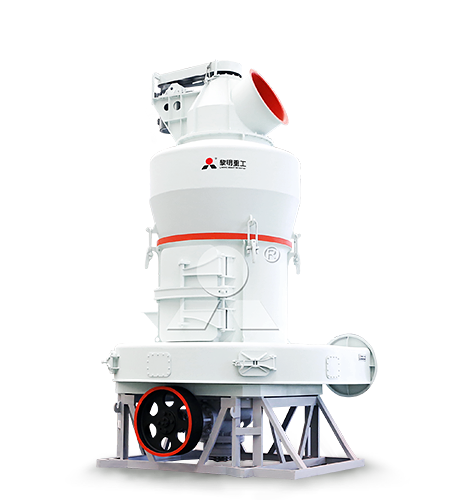
MTW European Grinding Mill
The MTW European Grinding Mill is suitable for a wide range of limestone powder applications. It uses an integrated grinding and classification system and can produce fine limestone powder with different fineness requirements.
MTW is particularly useful for projects where a conventional limestone grinding line is required with flexible capacity and product-size options.
When the Required Fineness Is Higher
As the target particle size becomes smaller, the grinding system needs more precise classification and stronger control over the finished powder. Simply increasing the operating intensity of a conventional mill is not always the appropriate solution.
For limestone applications requiring powder finer than the normal range of conventional grinding, ultrafine grinding equipment should be considered.
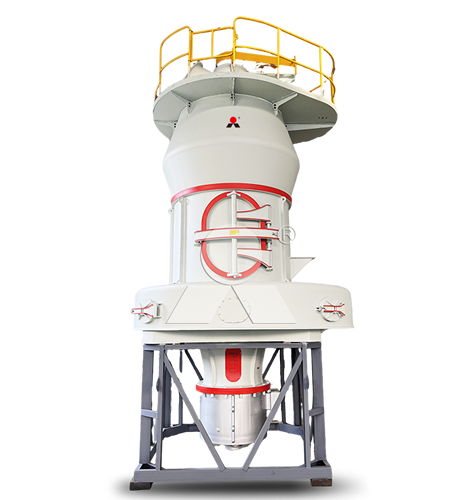
MW Micro Powder Mill
The Liming Heavy Industry MW Micro Powder Mill is designed for ultrafine powder processing. It can be considered for limestone projects requiring very fine products, particularly where the application places greater emphasis on powder fineness.
The MW system is suitable for projects with relatively moderate production capacity where ultrafine limestone powder is required.
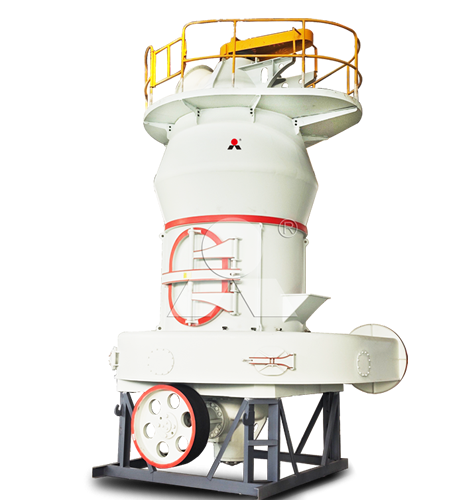
LUM Ultrafine Vertical Grinding Mill
The Liming Heavy Industry LUM Ultrafine Vertical Grinding Mill is intended for high-fineness powder production and precise classification. It is suitable for applications requiring very fine limestone powder and controlled particle-size distribution.
Compared with a conventional limestone grinding system, an ultrafine grinding line generally requires more attention to classification efficiency, powder collection, conveying, and system stability.
Do Not Select a Mill by Fineness Alone
Fineness is important, but it is only one part of the equipment selection process. Two limestone grinding projects with the same target fineness may require different equipment because their production capacities and raw-material conditions are different.
For example, a project producing several tons per hour of limestone powder and another project producing a much larger volume may require different mill configurations even if both require the same finished particle size.
The following factors should therefore be considered together:
Required limestone powder fineness
Required production capacity
Raw limestone feed size
Limestone hardness and grindability
Moisture content
Required product quality and particle-size distribution
Operating conditions and plant layout
Whether drying is required during grinding
Feed Size Also Affects Mill Selection
Limestone from a quarry is usually much larger than the feed size accepted by a grinding mill. A crushing stage may therefore be required before the grinding process.
A typical process can include a crusher, vibrating feeder, conveyor, grinding mill, classifier, dust collector, and finished-product conveying system.
If the limestone is already supplied in a sufficiently small size, the crushing system can be simplified. The actual feed size should always be confirmed before selecting the mill.
How Application Changes the Fineness Requirement
The desired fineness should be linked directly to the final use of the limestone powder.
For cement and some construction applications, the requirements may focus on stable production and suitable fine powder characteristics. Dry-mix mortar and building-material applications can require different particle-size specifications depending on the formulation. Mineral fillers may require a finer and more controlled powder, while specialized industrial applications can require ultrafine limestone products.
This means that asking only “How many mesh?” is not always enough. The intended application helps determine whether the specified fineness is technically appropriate for the final product.
Capacity and Fineness Must Be Considered Together
Grinding capacity generally changes when the required product becomes finer. A grinding system designed for a relatively coarse limestone powder cannot simply be assumed to maintain the same output when the target product becomes much finer.
When requesting a limestone grinding solution, it is therefore useful to specify both the desired fineness and the required hourly production. For example, “limestone powder at a certain mesh with a required capacity of several tons per hour” provides much more useful information than a fineness specification alone.
Which Liming Heavy Industry Mill Should Be Considered?
For practical limestone grinding projects, the equipment selection can be approached according to the required product range.
LM Vertical Grinding Mill: suitable for large-scale limestone powder production and integrated grinding systems.
MTW European Grinding Mill: suitable for a broad range of conventional fine limestone powder applications.
MW Micro Powder Mill: suitable when limestone needs to be processed into ultrafine powder.
LUM Ultrafine Vertical Grinding Mill: suitable for demanding ultrafine limestone applications requiring fine classification and controlled product size.
The final model should be selected after evaluating the required capacity, feed size, fineness, limestone characteristics, and application.
A Practical Way to Define Your Limestone Grinding Requirement
Before selecting a mill, prepare the following basic information:
Raw material: limestone and its general characteristics.
Feed size: the maximum size entering the grinding system.
Capacity: required production in tons per hour.
Fineness: target finished powder size.
Application: cement, dry-mix mortar, filler, agriculture, environmental use, or another application.
Moisture: approximate moisture content of the limestone.
With these parameters, the grinding process can be matched to the appropriate Liming Heavy Industry equipment instead of selecting a mill based on fineness alone.
Conclusion
Choosing a limestone grinding mill starts with the required finished powder, but the decision should also account for capacity, feed size, raw-material characteristics, moisture, and application. LM and MTW grinding mills are suitable directions for many conventional limestone powder projects, while MW and LUM equipment can be considered when ultrafine limestone powder is required.
A properly matched grinding system can provide stable product fineness and production while keeping the overall limestone powder production process practical. The most useful information for equipment selection is therefore the combination of fineness, capacity, feed size, limestone characteristics, and final application.
Related Limestone Grinding Plant


Liming Heavy Industry at bauma CONEXPO INDIA 2026 | Booth 5-C6
2026-09-07

Turnkey Raw Mill Cement Plant in Saudi Arabia: Design and Installation
2026-09-03
Cement Raw Mill Supplier in Indonesia: Cost and Configuration Analysis
2026-09-01
Liming Heavy Industry to Exhibit at the 24th Global Gypsum Conference & Exhibition in Turkey
2026-08-31
Complete Calcium Carbonate Grinding and Coating Plant Solution
2026-08-29
Complete Mineral Processing Solutions
Convenient Reliable Professional Efficient Get Your Quote
Please feel free to submit your inquiry information to us. We will contact with you as soon as possible.
Our team will contact you as soon as possible.