


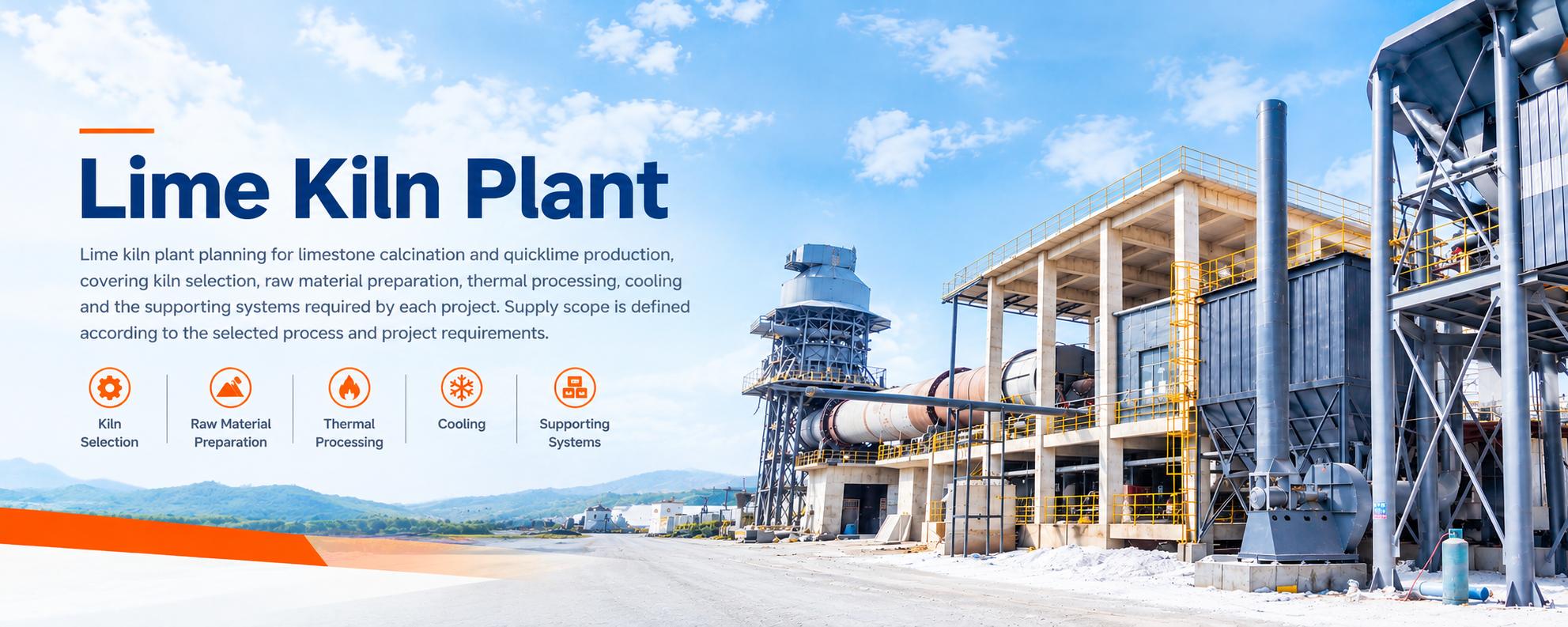
Lime kiln temperature control depends on matching heat input, limestone feed, airflow, and residence time. The objective is to complete calcination throughout the stone without exposing the finished lime to excessive heat. Insufficient thermal treatment leaves residual limestone, while excessive temperature or prolonged exposure can reduce quicklime reactivity. Product consistency therefore depends on the material’s complete heating history—not one temperature reading.
A practical control strategy connects process measurements with laboratory results. Stable readings are useful, but they only become meaningful when the plant knows how those readings relate to the quicklime it produces.
Why One Temperature Cannot Describe the Whole Kiln
A lime kiln contains several temperatures at the same time: the combustion gases, the stone surface, and the stone core do not heat identically. Heat must move from the gases to the surface and then into the remaining limestone. Larger particles generally require more time for this transfer than smaller particles.
This creates an important distinction between a measured process temperature and the condition of the product. A hot burning zone does not automatically prove that the largest stones have fully calcined. Equally, a normal average reading can conceal uneven heating across the material bed.
Every temperature measurement should therefore have a defined purpose. Operators need to know where it is taken, what it represents, and which operating changes it can reasonably support.
Set a Product-Based Operating Window
There is no single temperature setting suitable for every limestone and lime kiln. The appropriate operating window depends on limestone composition and structure, particle size, kiln arrangement, and the required product. Studies of limestone calcination show that both temperature and exposure time influence lime reactivity, with excessive thermal treatment promoting crystal growth and reducing reaction speed.
For example, standard parallel-flow regenerative kiln designs have been described as completing calcination at average burning-zone temperatures around 950–1,050°C. This is a design-specific reference, not a universal setpoint for rotary kilns, conventional shaft kilns, or every twin-shaft installation.
During commissioning, establish the acceptable operating window using representative limestone and agreed product tests. Define:
The process temperatures and measurement locations to be monitored.
The feed, fuel, and production conditions under which those readings are valid.
The required degree of calcination and permitted residual carbonate.
The required lime reactivity and its test method.
The approved adjustment limits and alarm responses.
The target is consistency: repeatable product performance under defined operating conditions, rather than the highest temperature the equipment can reach.
Five Factors That Shape the Temperature Profile
1. Limestone Size and Raw-Material Variation
A wide particle-size distribution creates competing heating requirements. Conditions sufficient for the largest particles can expose smaller particles to unnecessary thermal treatment. Controlled sizing helps reduce the risk of unburned large particles and overburned small particles appearing in the same product stream.
Changes in quarry source also deserve attention. Limestone mineralogy and chemical composition influence calcination behavior and the resulting lime reactivity. A temperature profile established for one supply should not automatically be applied to a substantially different stone.
When quality changes, check the actual kiln feed before changing the firing conditions. Compare current sizing and raw-material analysis with the conditions used to establish the normal operating window.
2. Fuel Distribution and Local Heat Release
Total fuel consumption does not show whether heat is distributed uniformly. In a multi-lance kiln, uneven delivery can produce differences between firing locations. A documented lime-plant improvement project used a temperature-monitoring network to support more precise fuel distribution to the lances and improve product uniformity.
For a Liming Heavy Industry lime kiln project, the combustion review should address both total fuel control and distribution within the selected firing arrangement. Check the specified fuel conditions, delivery measurements, and inspection provisions before treating additional fuel as the solution to incomplete calcination.
3. Airflow and Combustion Conditions
Temperature control must be interpreted alongside combustion performance. Oxygen and carbon monoxide monitoring provide information that temperature readings alone cannot supply. Continuous monitoring of these gases is an important part of lime-kiln combustion control and safety.
The operating procedure should define the approved relationship between fuel, air, and kiln draft. If combustion indicators move outside their permitted range, follow the established response rather than attempting to recover temperature through unrestricted fuel increases.
4. Residence Time and Material Movement
Temperature and residence time work together. A stone needs sufficient time for heat to reach its center and for decomposition to progress. Raising temperature can accelerate calcination, but excessive temperature can damage the reactivity the plant is trying to preserve.
Changes in feed rate, discharge rate, or material movement should therefore be reviewed as thermal changes, not merely production adjustments. A higher output target needs a verified operating plan that preserves the required calcination conditions.
5. Measurement Quality and Interpretation
Temperature-control decisions are only as useful as the measurements behind them. In a parallel-flow regenerative kiln, crossover-channel temperature can serve as an important indicator of calcination conditions, and accurate measurement at that location is specifically significant.
Include measurement checks in the maintenance plan:
Confirm that each instrument is installed at its designated location.
Inspect protective components and optical viewing arrangements where applicable.
Apply the specified calibration and verification procedures.
Compare related measurements before accepting an unexpected reading as a real process change.
Record instrument maintenance so apparent process shifts can be investigated correctly.
Connect Temperature Trends with Product Tests
Product testing closes the control loop. Temperature profiles can be evaluated against loss-on-ignition results and lime reactivity to understand how operating conditions affect conversion and burning severity. These measurements provide different information: a low-reactivity product is not necessarily an incompletely calcined product.
| Quality Observation | Possible Interpretation | Useful Checks |
|---|---|---|
| Residual carbonate increases. | Some material may be receiving insufficient thermal treatment. | Feed size, limestone changes, residence time, heat distribution, and instrument reliability. |
| Reactivity declines while conversion remains acceptable. | Excessive burning or a raw-material change may be involved. | Temperature history, exposure time, local hot spots, and limestone characteristics. |
| Results vary substantially between samples. | The product or the sampling procedure may be inconsistent. | Feed distribution, combustion distribution, material flow, and sampling practice. |
| Temperature readings appear stable, but quality changes. | The measured locations may not capture the relevant change. | Additional process trends, feed analysis, instrument condition, and product-test repeatability. |
These observations identify investigation routes rather than automatic diagnoses. The correct response depends on the combined evidence from process conditions, raw materials, and product testing.
Account for the Delay Between an Adjustment and Its Result
Material leaving the kiln has experienced conditions over a period of time. A product sample taken immediately after an adjustment should not automatically be attributed to the new setting.
The operating record should connect sample collection times with the relevant production history. Include feed changes, fuel changes, operating interruptions, and major setpoint adjustments. This makes the relationship between temperature profiles and laboratory results more useful and helps avoid repeated corrections before the previous change can be evaluated.
Apply the Control Strategy to the Selected Kiln
The monitoring arrangement for a Liming Heavy Industry rotary lime kiln should reflect its firing and material-movement system. A vertical shaft kiln requires attention to conditions across the descending material bed, while a twin-shaft regenerative kiln also requires interpretation of its alternating operating phases.
For a new installation or upgrade, request a control description identifying measurement locations, normal operating ranges, interlocks, trend displays, and product-verification procedures. These details are more informative than a general statement that the kiln has automatic temperature control.
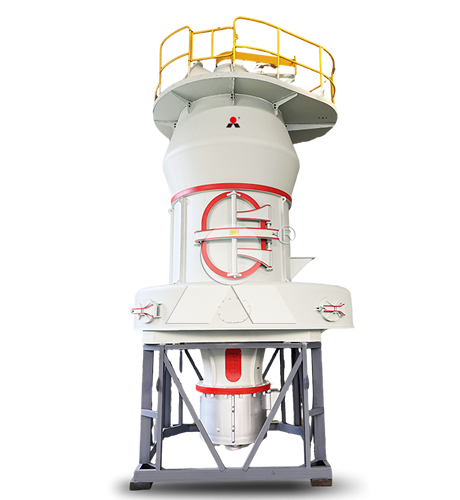
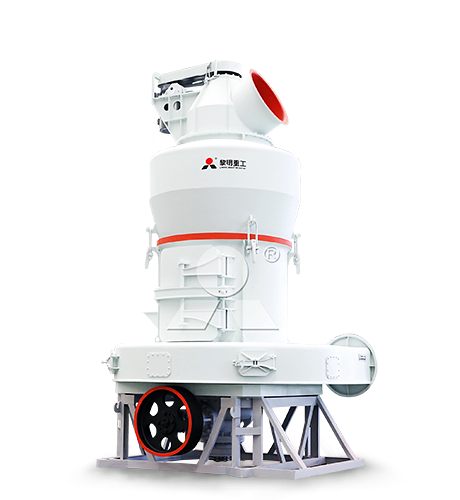
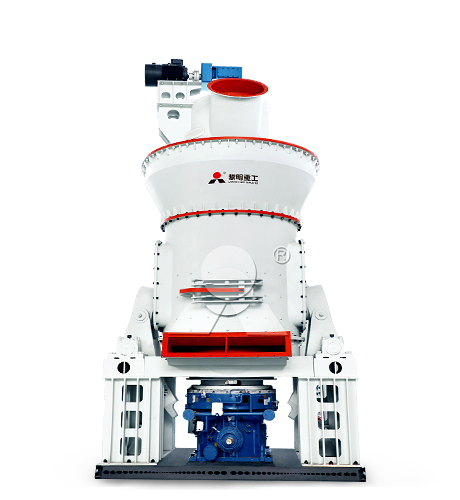
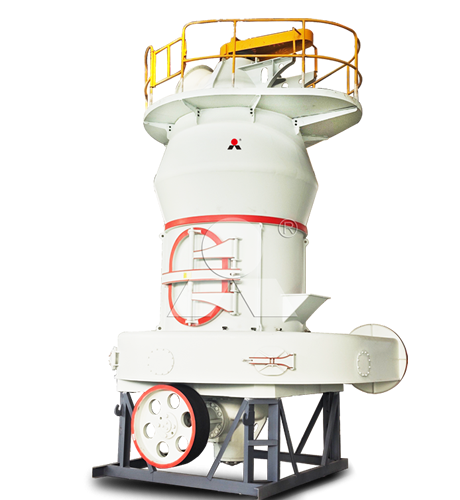
If the finished quicklime will be processed in a Liming Heavy Industry grinding mill, confirm calcination quality before milling. Particle-size reduction performs a different duty and cannot replace correct thermal treatment in the kiln.
A Repeatable Method for Stable Quicklime Production
Establish a baseline using representative limestone, approved fuel, and a stable production rate.
Relate the temperature profile to agreed product-quality measurements.
Control feed sizing and raw-material variation within the approved limits.
Monitor combustion, material movement, and temperature together.
Investigate deviations before changing multiple settings.
Verify each adjustment against the relevant product results and operating history.
Reliable lime kiln temperature control is a coordinated operating practice. The most dependable system combines appropriate measurements, consistent feed preparation, controlled combustion, and product testing to keep calcination within the window the limestone and customer specification require.
Related Lime Kiln Plant


LIMING Heavy Industry to Participate in SIREXE 2026 in Abidjan, Côte d'Ivoire
2026-10-26

LIMING at MiningMetals Uzbekistan 2026 | Booth B94
2026-10-22
LIMING Heavy Industry at MINEXPO Africa 2026 | Booth 133
2026-10-22
Liming Heavy Industry to Exhibit at bauma CHINA 2026 – Visit Us at Booth E6.510
2026-10-15
Meet Liming Heavy Industry at the 140th Canton Fair 2026
2026-10-13
Complete Mineral Processing Solutions
Convenient Reliable Professional Efficient Get Your Quote
Please feel free to submit your inquiry information to us. We will contact with you as soon as possible.
Our team will contact you as soon as possible.