


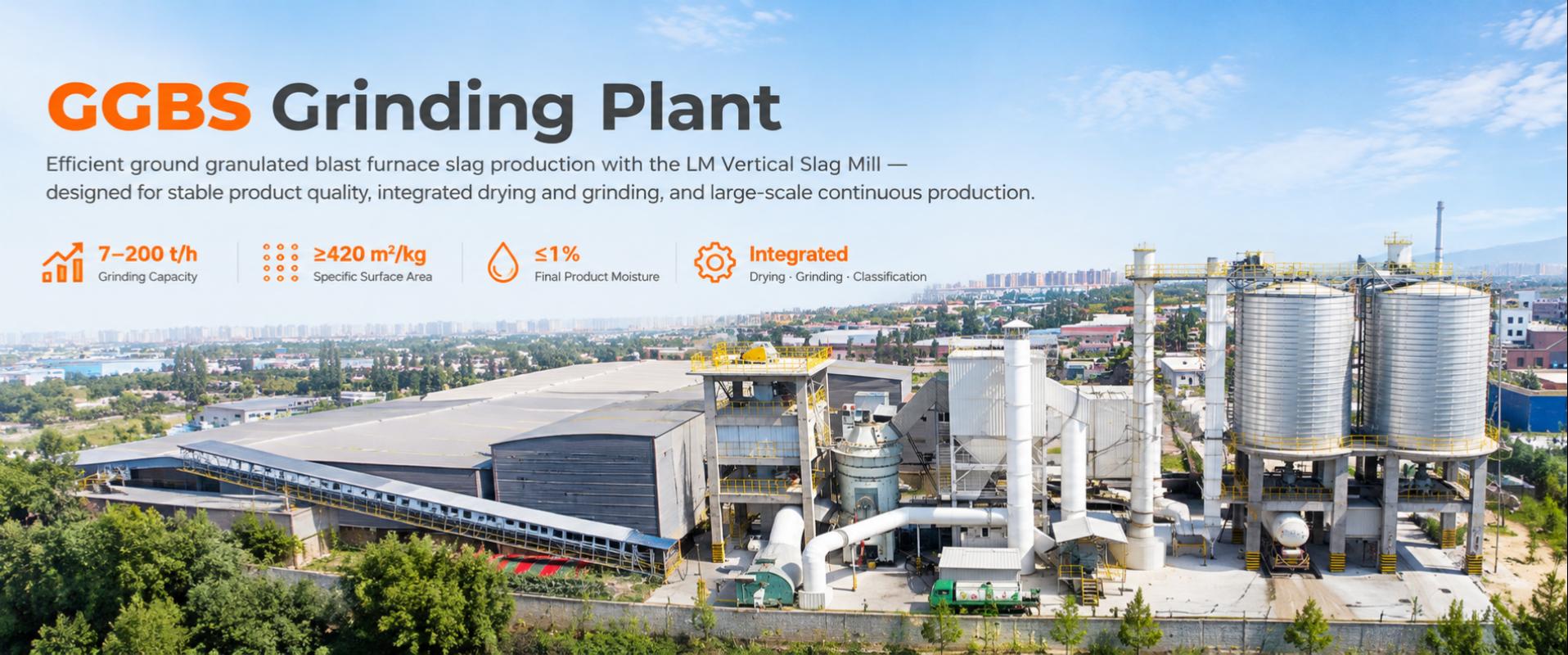
Ground granulated blast-furnace slag (GGBS), also called GGBFS, is made by rapidly cooling molten blast-furnace slag, removing excess water, and grinding the resulting granules into a fine, controlled mineral powder. The process turns a material generated during ironmaking into a useful supplementary cementitious material for blended cement, ready-mix concrete, precast products, and other construction applications.
The name describes the production route: ground refers to fine milling, granulated describes the glassy granules created by rapid cooling, and blast-furnace slag identifies its origin in iron production. GGBS quality depends not only on the grinding mill, but also on slag chemistry, cooling conditions, moisture management, separation efficiency, and product-quality control.
Where the Raw Material Comes From
GGBS begins at an ironmaking blast furnace. Iron ore, coke, and flux materials such as limestone are charged into the furnace and heated to high temperature. As the iron is produced, a separate molten slag phase forms. This slag collects gangue minerals and flux-derived components and floats above the denser molten iron.
Fresh blast-furnace slag is extremely hot when discharged. Its future use is determined largely by the way it is cooled:
Slow air cooling produces a more crystalline slag, which is commonly processed for aggregate and related uses.
Rapid water quenching produces glassy, sand-like granulated blast-furnace slag, the correct feedstock for GGBS production.
Rapid cooling limits crystalline growth and preserves a high proportion of glassy material. When this granulated slag is later ground to cement-like fineness, it develops the properties needed for use in cementitious blends.
The GGBS Production Route
A typical GGBS plant follows the material flow below:
Molten blast-furnace slag → rapid quenching → granulated slag → dewatering and storage → screening and iron removal → drying and vertical grinding → classification → dust collection → finished-product silo → bulk loading or packing
1. Slag Quenching and Granulation
Molten slag from the blast furnace is directed to a granulation system, where it is contacted with a large volume of water. The thermal shock breaks the molten stream into small particles and cools them quickly. The result is granulated blast-furnace slag: a porous or sand-like material, generally with a vitreous structure.
This is a critical process step. If slag cooling is too slow, crystallization increases and the resulting material may no longer be suitable for high-quality GGBS. The goal is to produce a stable, glassy granulated material with consistent chemical and physical properties.
2. Dewatering and Slag Storage
Water granulation naturally leaves the slag with substantial surface and internal moisture. The material is dewatered before storage or conveyed directly to a preparation system. Depending on site conditions, a slag yard may be used to buffer variations in steelworks output and maintain a stable feed for the grinding plant.
Good storage practice helps prevent excessive moisture variation, foreign-material contamination, and material-handling problems. Because wet slag can compact during storage, the reclaiming and conveying system should be designed for its actual moisture level, bulk density, and flow behavior.
3. Screening and Metal Removal
Before grinding, the slag is normally screened to remove oversized objects and unwanted debris. Magnetic separation is also important because metallic iron or other ferrous pieces can damage conveying equipment and increase wear in the mill.
Multiple metal-removal points may be arranged along the material route: before drying, after drying, and before the mill feed point. This improves the protection of the grinding system and supports steadier operation.
4. Drying Wet Granulated Slag
Granulated slag needs to be dried before or during fine grinding. Moisture affects mill output, product consistency, conveying behavior, and the efficiency of the separator. The drying stage uses hot gas to evaporate water while maintaining a stable material temperature.
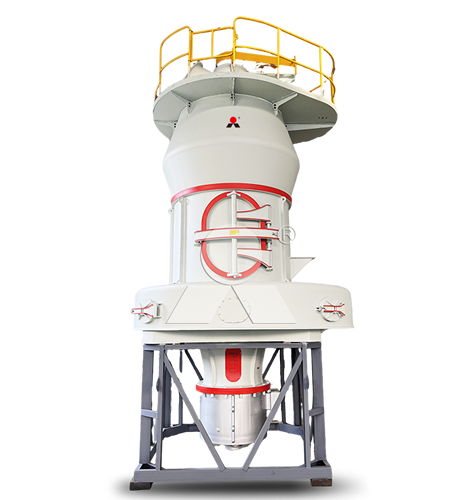
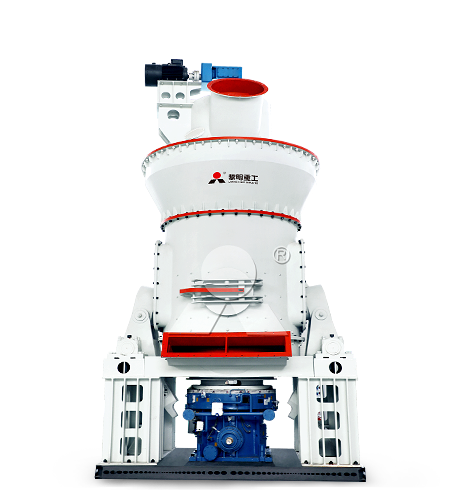
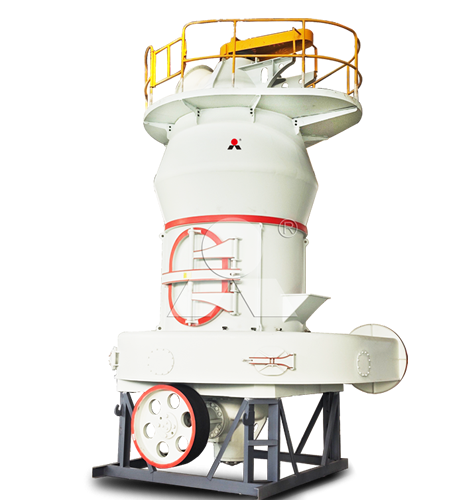
An LM Vertical Slag Mill from Liming Heavy Industry can handle drying and grinding in one system. High-temperature airflow passes through the mill, where it contacts the feed material and removes moisture during milling. The equipment is designed for feed moisture of up to about 15%, subject to the actual material condition and process configuration.
5. Fine Grinding in an LM Vertical Slag Mill
After entering the mill, slag falls onto the rotating grinding table. Grinding rollers press the material bed, reducing the slag particles through compression and inter-particle grinding. Hot gas simultaneously dries and transports the material upward through the mill.
The LM Vertical Slag Mill integrates four essential functions in one process unit:
Drying of moist granulated blast-furnace slag
Grinding to the required powder fineness
Classification of fine and coarse particles
Pneumatic conveying of qualified powder to the collection system
This configuration reduces the need to transfer wet material between separate drying and grinding machines. It also allows operators to coordinate feed rate, grinding pressure, gas temperature, airflow, and separator speed around the actual condition of the slag.
6. Classification and Fineness Control
Inside the vertical mill, an efficient classifier separates particles according to size. Fine material is carried with the gas flow toward the powder-collection system. Coarse particles are rejected by the separator and return to the grinding table for additional milling.
Fineness must be selected according to the required grade and end use of the GGBS. Grinding generally reduces granulated slag to cement-sized particles, and the fineness can be verified through tests such as specific surface area and particle-size distribution. More intensive grinding may improve the amount of fine, reactive material, but it also increases energy consumption and can reduce hourly output.
7. Powder Collection and Finished GGBS Storage
Qualified powder leaving the mill is separated from the gas stream by a high-efficiency dust collector. The collected GGBS is conveyed to storage silos, where it is protected from moisture before shipment. Cleaned process gas is discharged through the exhaust system in accordance with the plant’s emission-control arrangement.
Finished GGBS is normally supplied by bulk tanker for concrete plants, cement terminals, and large construction-material producers. It may also be packed in bags or big bags where bulk logistics are not available.
Key Quality Checks
Consistent GGBS requires routine checks from raw-material receipt to final dispatch. A practical quality-control program typically covers the following areas:
Chemical composition of the incoming granulated slag
Moisture content before milling
Glass content and physical condition of the slag
Specific surface area and particle-size distribution of finished GGBS
Residue on the specified test sieve
Product moisture content
Strength activity and compatibility testing under the applicable product standard
In day-to-day production, mill parameters are equally important. Feed quantity, grinding pressure, outlet temperature, circulating load, airflow, separator speed, vibration, and differential pressure should be monitored together rather than as isolated values. A stable operating window is usually more valuable than short-term output increases that compromise fineness or equipment reliability.
Why Process Control Matters
Two GGBS products may appear similar in color and fineness while performing differently in cement or concrete. The difference can come from variations in blast-furnace slag chemistry, cooling history, glass content, moisture condition, or particle-size distribution. This is why a complete GGBS production line must control the entire route—not only the final grinding stage.
For example, wet slag with fluctuating moisture may require changes in hot-gas volume and mill feed rate. If these changes are not coordinated, the mill outlet temperature can become unstable, separation efficiency can decline, and the final powder may fall outside the intended fineness range. An integrated LM Vertical Slag Mill provides the operating flexibility to dry, grind, classify, and convey slag within the same system.
GGBS Production in Summary
GGBS is manufactured through a controlled sequence of rapid quenching, dewatering, preparation, drying, fine grinding, classification, powder collection, and sealed storage. The process begins with molten blast-furnace slag and ends with a consistent fine powder suitable for cementitious applications.
For a dedicated slag-powder plant, the LM Vertical Slag Mill from Liming Heavy Industry provides a practical solution by integrating wet-slag drying, fine grinding, dynamic classification, and pneumatic powder handling. The result is a streamlined production route that can be adjusted to match raw-slag moisture, required fineness, and plant-capacity targets.
Related GGBS Grinding Plant


LIMING at MiningMetals Uzbekistan 2026 | Booth B94
2026-10-22

LIMING Heavy Industry at MINEXPO Africa 2026 | Booth 133
2026-10-22
Liming Heavy Industry to Exhibit at bauma CHINA 2026 – Visit Us at Booth E6.510
2026-10-15
Meet Liming Heavy Industry at the 140th Canton Fair 2026
2026-10-13
Liming Heavy Industry to Attend the 140th Canton Fair
2026-09-25
Complete Mineral Processing Solutions
Convenient Reliable Professional Efficient Get Your Quote
Please feel free to submit your inquiry information to us. We will contact with you as soon as possible.
Our team will contact you as soon as possible.