


In a limestone–gypsum flue gas desulfurization (FGD) system, limestone powder is not simply a bulk raw material. Its chemical composition, particle-size distribution, moisture level, and grinding consistency directly affect slurry preparation, limestone dissolution, reagent utilization, sulfur dioxide removal, gypsum quality, and long-term operating stability.
For most wet FGD applications in coal-fired power plants, the preferred feedstock is a high-calcium limestone powder with stable quality from batch to batch. The powder is mixed with water to prepare an absorbent slurry, which reacts with SO2 in the absorber. A fine and reactive powder helps the system maintain sufficient alkalinity and reduces the amount of unreacted limestone leaving with the by-product gypsum.
Core Quality Requirements
The specification should be determined by the absorber design, coal sulfur content, target SO2 removal rate, slurry concentration, oxidation mode, and local limestone source. Nevertheless, the following parameters are commonly used as a practical starting point for power-plant FGD projects.
| Parameter | Typical FGD Requirement | Why It Matters |
|---|---|---|
| Calcium carbonate content | CaCO3 ≥ 90%; commonly 92–95% or higher | Higher CaCO3 content provides more active alkaline material for SO2 absorption. |
| Calcium oxide equivalent | Usually above 45% | CaO equivalent is often used as an indicator of the available calcium content in limestone. |
| Particle size | Typically 90% passing 325 mesh, approximately 44 μm | Fine particles dissolve faster in the slurry and provide more surface area for reaction. |
| Particle-size distribution | Stable and reasonably narrow distribution | A balanced distribution improves slurry stability and avoids excessive coarse, unreacted particles. |
| Moisture | Preferably low and controlled | Low moisture supports storage, conveying, metering, and dry grinding efficiency. |
| Insoluble matter | As low as practical | Clay, silica, sand, and other insolubles can increase wear, reduce effective reagent content, and accumulate in the process. |
| Magnesium content | Controlled according to process design | Excessive magnesium-bearing minerals may change slurry chemistry and affect gypsum handling. |
| Chloride and trace impurities | Monitored according to plant requirements | Some impurities can contribute to corrosion, wastewater-treatment load, or operating complications. |
Why Fineness Is Critical
Limestone reacts only after it dissolves into the circulating slurry. Reducing particle size increases the exposed mineral surface area, allowing calcium carbonate to dissolve more rapidly and participate more effectively in the absorption reaction.
In a wet limestone FGD absorber, the main reaction pathway can be simplified as follows:
CaCO3 + SO2 + ½O2 + 2H2O → CaSO4·2H2O + CO2
The final product is generally gypsum, provided that the oxidation system operates properly. If limestone particles are too coarse, they may remain partially unreacted, increasing limestone consumption and reducing gypsum purity. Coarse particles can also settle in slurry tanks, pipelines, or recirculation systems, making operation less stable.
A common target is 90% passing 325 mesh. However, the exact requirement should always follow the power plant’s engineering specification. Some installations use a coarser feed where residence time and absorber conditions are favorable, while other high-efficiency systems require a finer and more tightly controlled powder.
Balancing Fineness and Operating Cost
Grinding limestone more finely is not always the best solution. Extremely fine powder can improve dissolution, but it also increases grinding energy consumption and may create handling challenges if the powder becomes too light or dusty. The objective is to achieve the fineness needed for reliable SO2 removal without producing unnecessary ultrafine material.
A well-designed FGD limestone grinding system should therefore deliver:
Consistent powder fineness at the mill outlet.
Low coarse-particle content to improve reagent utilization.
Stable throughput matched to the power plant’s peak limestone demand.
Low moisture in the finished powder for smooth storage and pneumatic conveying.
Reliable classification to prevent oversized particles from entering the slurry-preparation system.
Flexible adjustment capability when coal quality, sulfur content, or boiler load changes.
Recommended Grinding Equipment
For power-plant FGD limestone powder production, the grinding system should be selected according to required capacity, feed size, site conditions, finished-powder target, and automation requirements.
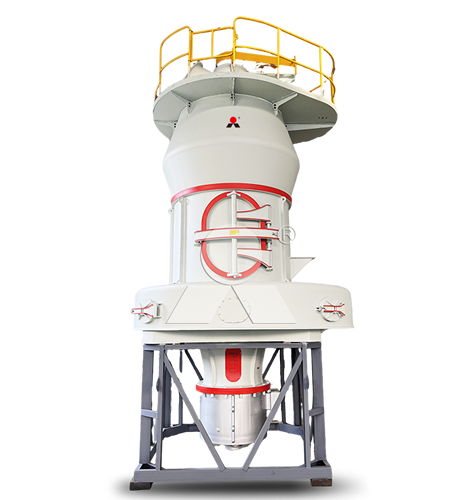
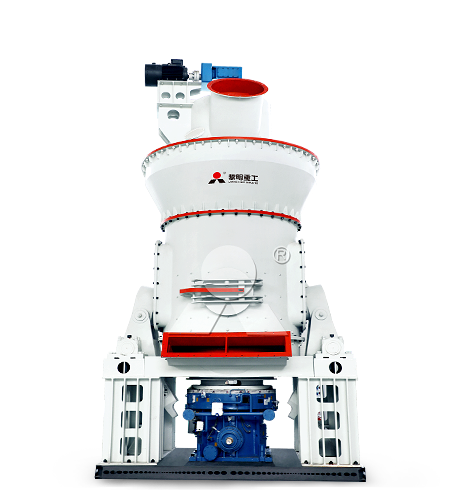
For medium and large projects requiring continuous production, the LM Vertical Coal Mill from Liming Heavy Industry can be configured for limestone grinding. Its integrated grinding, drying, classification, and conveying functions support a compact process layout. The vertical design is particularly suitable where a large production capacity, stable operation, and centralized control are required.
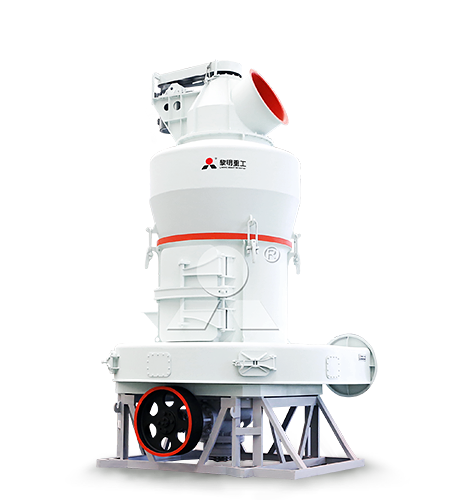
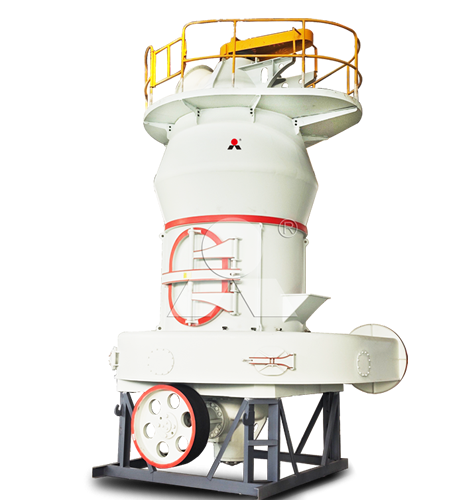
For projects that need flexible fineness adjustment, efficient classification, and a mature dry-powder process, the MTW European Trapezium Grinding Mill from Liming Heavy Industry is a practical option. It is suitable for producing fine limestone powder for FGD slurry preparation, especially where the required product is around the common 325-mesh range.
Both mill types should be paired with suitable crushing, feeding, dust collection, finished-powder storage, and conveying equipment. The final configuration should ensure that the powder delivered to the slurry tank remains stable in fineness and chemical quality throughout the operating cycle.
Feed Limestone Before Grinding
Good FGD powder starts with suitable raw limestone. Before entering the mill, limestone should be sampled and evaluated for CaCO3 content, SiO2, MgO, moisture, loss on ignition, and other site-specific indicators. Variation in quarry quality can be more damaging to FGD stability than small variations in mill output.
The raw stone should also be crushed to a stable feed size. Uniform feed material supports steady mill loading, reduces fluctuation in grinding pressure, and helps maintain a consistent finished-powder distribution. Oversized stone, excessive clay, and high moisture can reduce capacity and increase the risk of blockage in the feeding system.
Inspection and Acceptance Checklist
Before accepting limestone powder for an FGD unit, plant operators commonly review the following items:
CaCO3 content and CaO equivalent.
Residue on the specified control sieve, often 325 mesh.
Particle-size distribution measured by sieve analysis or laser particle-size analysis.
Moisture content at delivery and before slurry preparation.
Silica, clay, magnesium, chloride, and other impurity levels.
Slurry density and settling behavior after mixing with water.
Limestone reactivity under the plant’s operating conditions.
Consistency between different supply batches and production periods.
High-quality limestone powder is a foundation for efficient FGD operation. A stable high-calcium feed, suitable 325-mesh-level fineness, low impurity content, and properly selected grinding equipment allow the desulfurization system to operate with better reagent utilization, smoother slurry preparation, and more consistent gypsum production. Industry references commonly identify CaCO3 above 90% and fine grinding near 325 mesh as important starting points for wet limestone FGD applications.
Related FGD Limestone Grinding Plant


Liming Heavy Industry at bauma CONEXPO INDIA 2026 | Booth 5-C6
2026-09-07

Turnkey Raw Mill Cement Plant in Saudi Arabia: Design and Installation
2026-09-03
Cement Raw Mill Supplier in Indonesia: Cost and Configuration Analysis
2026-09-01
Liming Heavy Industry to Exhibit at the 24th Global Gypsum Conference & Exhibition in Turkey
2026-08-31
Complete Calcium Carbonate Grinding and Coating Plant Solution
2026-08-29
Complete Mineral Processing Solutions
Convenient Reliable Professional Efficient Get Your Quote
Please feel free to submit your inquiry information to us. We will contact with you as soon as possible.
Our team will contact you as soon as possible.