


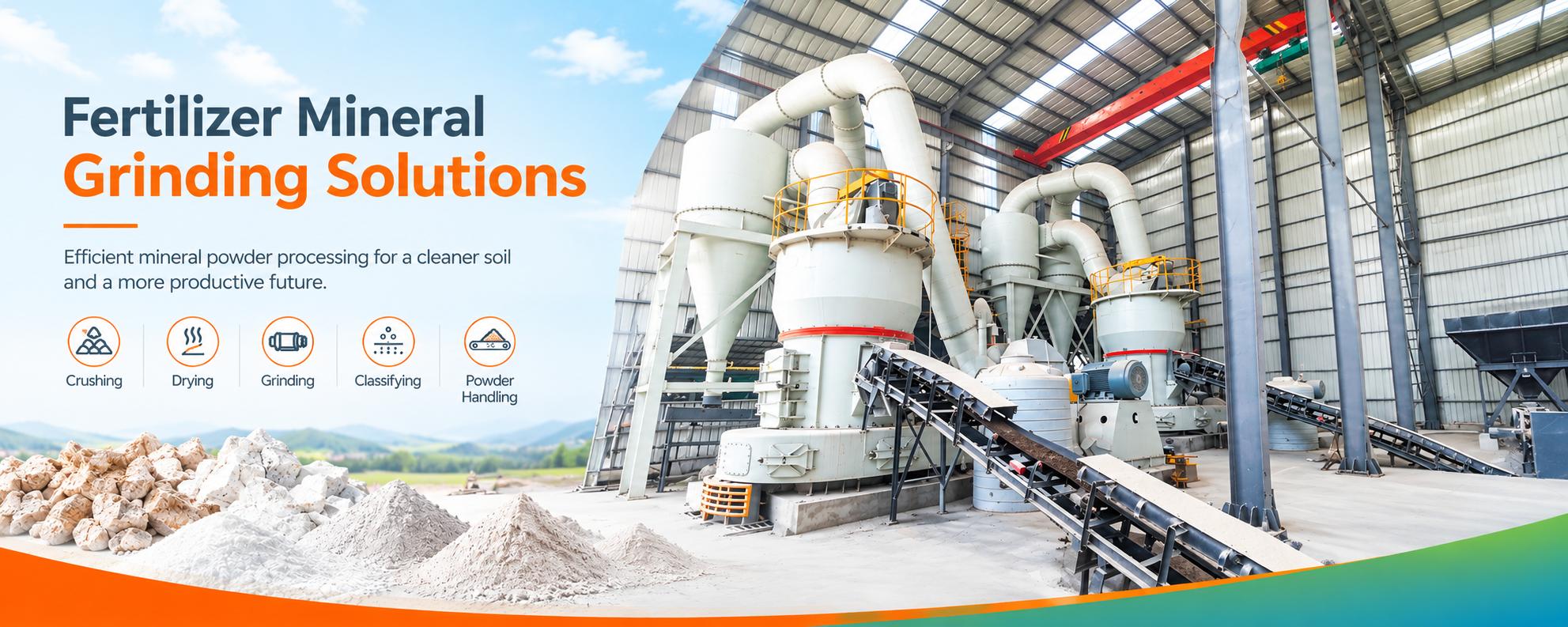
A dolomite grinding plant prepares calcium- and magnesium-bearing mineral powder for agricultural liming, soil amendment formulations, and downstream mineral product manufacturing. The production system typically includes crushing, controlled feeding, grinding, classification, powder collection, and storage or packing.
For an agricultural project, the first decision is not how fine the mill can grind. It is what product the market needs: graded dolomitic agricultural limestone, fine powder for a formulation, or feed material for pelletizing. Each requires a different balance of chemical quality, particle size, moisture, and handling performance.
Where Dolomite Fits in Agricultural Applications
Dolomitic agricultural limestone can neutralize soil acidity while supplying calcium and magnesium. It is particularly relevant where soil testing identifies both a liming requirement and a need for magnesium. It should not be selected solely because a higher magnesium content appears more desirable.
This creates two separate responsibilities for the producer:
Qualify the mineral deposit so the material has the required composition and neutralizing value.
Process the accepted material into a consistent physical grade suitable for its intended use.
A grinding plant addresses the second responsibility. It cannot establish the correct application rate for every soil, replace agricultural testing, or turn unsuitable mineral feed into a qualified product simply by reducing particle size.
Choose the Product Route Before the Equipment
Three common project routes lead to different processing priorities.
Route 1: Ground Dolomitic Agricultural Limestone
The product is supplied as a graded liming material. Define the required sieve distribution, neutralizing-value specification, magnesium declaration, moisture condition, and dispatch method before selecting equipment.
This route does not automatically require a fine-powder grinding circuit. If crushing and screening can produce the accepted agricultural grade, additional fine grinding should have a clear commercial or technical purpose.
Route 2: Fine Dolomite Powder for Agricultural Formulations
The customer requires a more closely controlled mineral ingredient. Obtain the receiving producer’s specifications for composition, particle size distribution, moisture, and impurities, together with any formulation-specific acceptance requirements.
Do not assume that a powder accepted in one formulation will be suitable for another. Confirm its role and compatibility through the customer’s product development or process team.
Route 3: Dolomite Powder for Pelletized Products
The grinding plant supplies powder to an agglomeration process. Its product specification should be agreed with the pelletizing equipment supplier and verified through trials.
Pelletizing, binder addition, drying or curing where required, screening, and product recycling are additional process stages. They should be identified separately rather than included implicitly in a grinding plant quotation.
Qualify the Deposit: A Mineral Name Is Not a Specification
Before finalizing the plant configuration, collect representative samples from the areas expected to supply production. Include foreseeable variations rather than testing only a clean, dry sample from the most favorable part of the deposit.
| Property to Establish | Why It Matters | Design or Quality Decision |
|---|---|---|
| Calcium and magnesium content | Confirms the composition of the material being sold. | Product qualification, stockpile segregation, and labeling basis. |
| Acid-neutralizing value | Establishes the material’s suitability for the intended liming grade. | Raw material acceptance and finished product specification. |
| Impurities and insoluble material | May affect product acceptance and processing behavior. | Feed selection, blending, and any additional treatment requirements. |
| Feed size and moisture range | Influences crushing, storage, feeding, and potential drying duty. | Equipment sizing and seasonal operating strategy. |
| Grindability and abrasive components | Supports realistic estimates of output and wear. | Mill configuration, wear protection, and maintenance planning. |
| Finished powder flow behavior | Determines how the product behaves after collection. | Conveying, silo design, discharge equipment, and packing arrangements. |
Use clearly defined reporting units for calcium and magnesium. Elemental content and carbonate-equivalent reporting are not interchangeable, so laboratory reports and customer specifications must use a consistent basis. Agricultural lime analyses may report magnesium in different forms, making this distinction important when comparing materials.
Build the Process Around Consistent Feed and Controlled Classification
For a project requiring fine dolomite powder, a practical dry process follows this sequence:
Receiving and inspection → foreign-object removal → crushing where necessary → covered buffer storage → metered feeding → grinding → classification → powder collection → finished storage → dispatch or downstream processing.
Keep Oversized and Unstable Feed Out of the Mill
Size the crushing stage around the selected mill’s feed requirements. Occasional oversized pieces matter as much as average feed size because they can interrupt otherwise stable operation.
A buffer bin helps separate the grinding circuit from short interruptions in loading or crushing. Use a controllable feeder to maintain a steady material supply rather than relying on uncontrolled discharge from storage.
Evaluate Drying as a Defined Duty
Where incoming moisture requires drying, assess the moisture load, heat source, exhaust conditions, and required finished product condition together. Review wet-material handling upstream as well: hot air at the mill does not resolve a receiving hopper that cannot discharge reliably.
Treat Classification as Part of Product Quality
The classifier separates acceptable powder from material requiring further grinding. Mill feed rate, airflow, and classifier settings should therefore be coordinated around the agreed product distribution.
Liming Heavy Industry describes dolomite powder systems incorporating feeding, conveying, grinding, air classification, collection, dust removal, and packing. These supporting functions should be included in the equipment review rather than treating the mill as a stand-alone purchase.
LM or MTW: Which Liming Heavy Industry Mill Should Be Evaluated?
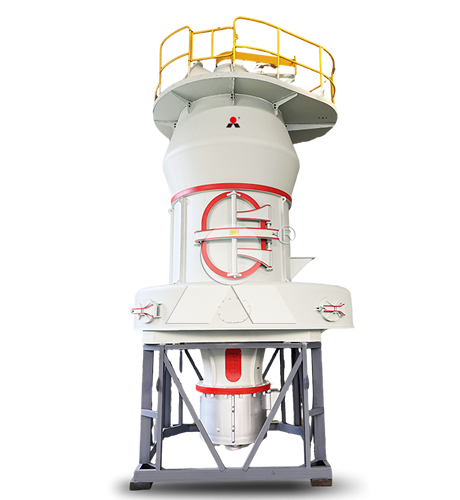
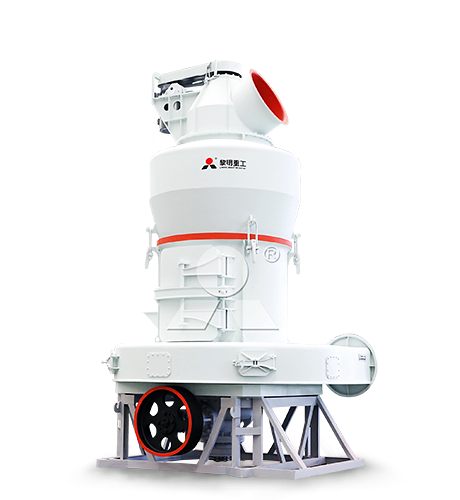
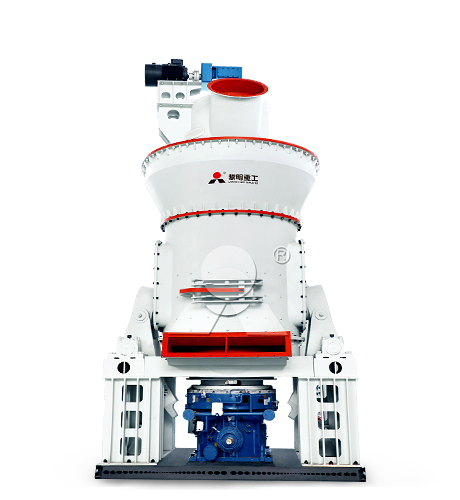
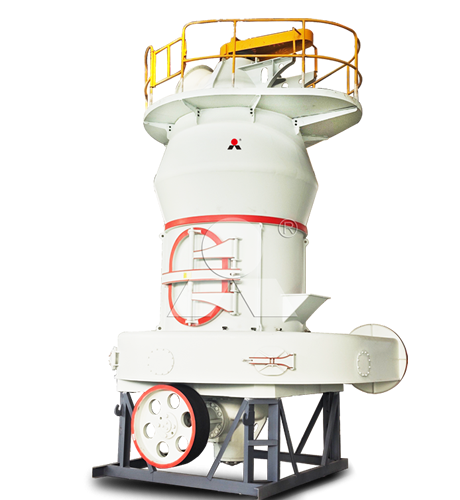
Liming Heavy Industry offers both LM Vertical Grinding Mills and MTW European Trapezium Grinding Mills for dolomite powder processing. The manufacturer identifies these equipment families for fine-powder duties, including an advertised 80–400 mesh category. That equipment capability is not, by itself, an agricultural product specification.
| Equipment Option | Project Discussion | Confirmation Required |
|---|---|---|
| Liming Heavy Industry LM Vertical Grinding Mill | Evaluate a coordinated grinding, classification, and drying arrangement where appropriate. | Material suitability, output at the required fineness, moisture duty, utility demand, layout, and maintenance access. |
| Liming Heavy Industry MTW European Trapezium Grinding Mill | Evaluate a pendulum roller grinding system for the defined dolomite powder duty. | Feed conditions, achievable size distribution, production rate, supporting equipment, and wear-part requirements. |
Compare proposals using the same sample, target product, and operating conditions. A higher nominal capacity has limited value if it refers to a coarser powder or a more favorable feed than the project will actually process.
Do not transfer performance claims from coatings, putty, or other industrial dolomite applications directly to agricultural products. Such installations can demonstrate material-processing experience, but the agricultural specification still needs its own validation.
Set Fineness Around the Product—not an Arbitrary Mesh Number
The key decision is grading, not maximum fineness.
Agricultural lime recommendations commonly describe a distribution across several sieves rather than requiring every particle to pass one fine sieve. For example, one agricultural extension reference describes a grade with nearly all material passing an 8-mesh sieve and half passing a 60-mesh sieve. This illustrates the use of graded products; it is not a universal specification for every market.
For a customer requiring fine powder, use a more specific acceptance statement:
Identify the sieve standard or particle size measurement method.
State the required passing percentage, not just “200 mesh” or “fine powder.”
Define any separate coarse-particle limit.
Specify the moisture condition used for testing.
Agree on sampling frequency and acceptance procedures.
Where several grades are planned, establish whether they can be produced through operating adjustments alone or require additional screening, blending, or separate storage. Include grade-change time and material carryover in the production plan.
Common Problems to Resolve Before Construction
Acceptable chemistry but inconsistent particle size
Review feed stability, classifier operation, sampling methods, and the agreed product distribution. Chemical acceptance does not demonstrate physical acceptance.
Fine powder accumulates but dispatch cannot keep up
Match silo capacity, discharge equipment, bagging, and bulk loading to the production schedule. Design around both average demand and foreseeable dispatch interruptions.
Wet-season feed disrupts production
Include the maximum expected moisture in the design basis. Review covered storage, hopper discharge, feeding, and drying together.
Maintenance takes longer than planned
Provide access for inspection and component replacement. Agree on wear-part stocking, lifting arrangements, and service clearances before the layout is approved.
Dust escapes outside the main grinding circuit
Include receiving, crushing, transfer points, silo vents, and packing in the dust-control assessment. Base worker protection and environmental measures on the actual material and local requirements.
Define the Proposal and Acceptance Test Together
A useful project proposal should identify the conditions behind the stated output: dolomite feed characteristics, maximum feed size, moisture range, finished particle size distribution, and equipment included in the system.
Agree on performance testing before procurement. The acceptance procedure should demonstrate sustained production of compliant powder, not only a short period of high feed rate. Define sampling, test duration, moisture measurements, and the boundaries used for energy measurement.
To begin an LM or MTW plant assessment, provide Liming Heavy Industry with representative material analysis, target product requirements, hourly output, annual operating schedule, installation location, power supply, and dispatch method. Include any connection to formulation or pelletizing equipment so that the grinding plant and downstream process can be designed around the same material specification.
Related Fertilizer Mineral Grinding Solutions


Liming Heavy Industry to Exhibit at bauma CHINA 2026 – Visit Us at Booth E6.510
2026-10-15

Meet Liming Heavy Industry at the 140th Canton Fair 2026
2026-10-13
Liming Heavy Industry to Attend the 140th Canton Fair
2026-09-25
Liming Heavy Industry at bauma CONEXPO INDIA 2026 | Booth 5-C6
2026-09-07
Turnkey Raw Mill Cement Plant in Saudi Arabia: Design and Installation
2026-09-03
Complete Mineral Processing Solutions
Convenient Reliable Professional Efficient Get Your Quote
Please feel free to submit your inquiry information to us. We will contact with you as soon as possible.
Our team will contact you as soon as possible.