


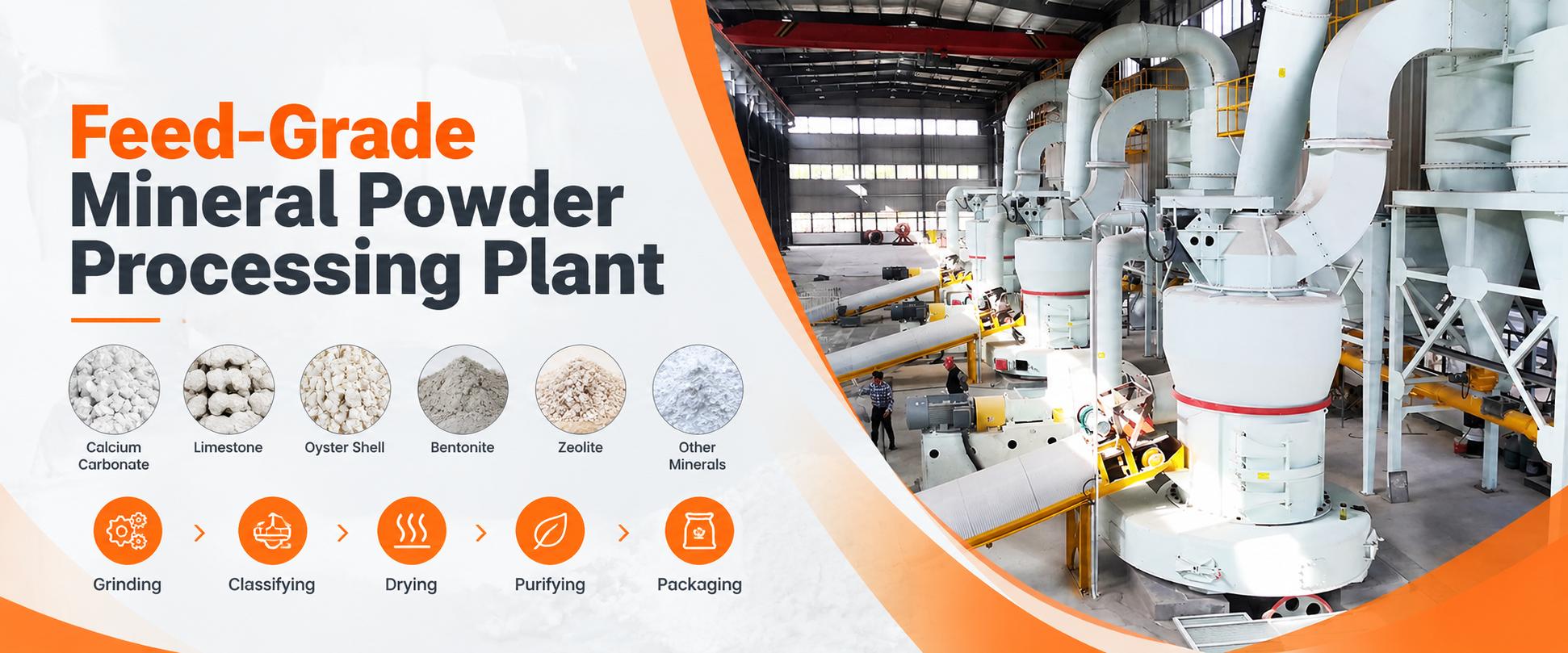
Limestone powder processing for poultry and livestock feed begins with a suitable calcium-bearing mineral and ends with a tested, traceable ingredient. Between those points, the plant must control raw-material acceptance, particle size, contamination risks, storage, and delivery. The goal is not simply to grind limestone, but to supply a calcium ingredient that consistently meets the feed manufacturer’s specification.
Limestone is used in animal feeding as a source of calcium. Its actual calcium content varies, so feed formulation and product acceptance should rely on the supplied material’s analysis rather than an assumed value for all limestone.
One Mineral, Different Feed Requirements
A processor supplying poultry farms, compound-feed manufacturers, and livestock-feed producers may receive several requests under the general name “feed limestone.” These requests should not automatically become one product grade.
| Customer Requirement | What the Processor Needs to Clarify | Production Implication |
|---|---|---|
| Fine limestone for compound feed | Required calcium content, particle-size distribution, and acceptance method | Controlled grinding and classification, followed by identified storage |
| Coarse calcium particles for a layer-feed program | Specified size band, allowable fines, and whether a fine fraction is also required | A dedicated crushing-and-screening route may be more appropriate than fine grinding |
| Limestone for livestock mineral mixtures | Ingredient composition, intended formulation, and handling requirements | Product trials and customer approval before fixing the production specification |
| Several grades supplied from one site | Separate specifications, order volumes, and dispatch formats | Defined production campaigns or separate routes, with clear grade identification |
Limestone is used in compound and premixed feeds to contribute calcium for poultry and livestock. However, the processor’s role is to deliver the agreed ingredient—not to apply one inclusion rate or one fineness across all animal groups. Those decisions belong within the complete diet formulation.
For Poultry, Separate Fine Powder from Coarse Calcium
Poultry customers may require fine limestone, coarse limestone, or a specified combination. The distinction is particularly important in laying-hen diets, where particle size can affect calcium retention and availability during eggshell formation. Research has found benefits from coarse limestone under many studied conditions, but it does not establish a universal size recommendation for every flock.
A plant supplying layer-feed customers should therefore ask for a written particle-size specification before committing to a processing route. “Poultry grade” is not precise enough to determine crusher settings, screen openings, mill selection, or finished-product acceptance.
Keep these products distinct:
Fine ground limestone produced through a grinding-and-classification system.
Coarse limestone produced within an agreed screened size range.
A customer-approved combination of fine and coarse fractions.
If coarse material is required, grinding the entire supply into fine powder is counterproductive. Design the route around the required finished particles rather than using the mill as the default destination for every tonne.
For Livestock Feed, Prioritize Composition and Delivery Consistency
Limestone is used as a calcium ingredient in feeds for several livestock groups, including cattle, sheep, pigs, and horses. Its suitability in a particular ration depends on the overall feeding program and the characteristics of the supplied ingredient.
For the mineral processor, the practical requirement is repeatability. A feed manufacturer needs to know that the next delivery will match the agreed composition and physical specification closely enough to support its formulation and production controls.
Before establishing a livestock-feed grade, confirm:
The required calcium analysis and acceptable variation.
Any composition limits relevant to the customer’s formulation.
The specified particle-size distribution and test procedure.
Whether the ingredient will be used in a premix, mash feed, or another manufacturing route.
The customer’s storage, weighing, conveying, and packing requirements.
Avoid presenting a finer limestone powder as a universal solution to animal-performance problems. The plant supplies an ingredient; the customer must assess its use within the complete ration.
Qualify the Limestone Before It Enters Production
A quarry that supplies construction aggregate is not automatically an approved source for feed ingredients. Feed safety requires attention to hazards at the beginning of the supply chain, including undesirable substances in raw materials.
Start with representative sampling and an analysis appropriate to the intended feed market. The qualification program should establish mineral identity, calcium content, relevant additional constituents, and applicable contaminant limits.
Feed ingredient tables illustrate why this matters: the limestone samples reported in one dataset show a range of calcium concentrations rather than one fixed value. A plant should verify its own source instead of treating a general reference value as a delivery guarantee.
Use three receiving decisions
Accept material that meets the approved incoming specification.
Hold material when documentation, identity, or test results require clarification.
Reject material that does not meet the applicable requirements.
Give each status a clearly identified location or controlled handling procedure. Material awaiting approval should not become indistinguishable from released stock.
Grinding is not a chemical purification step. Reducing the size of unsuitable limestone does not establish its safety or nutritional suitability.
A Practical Limestone Powder Processing Route
For an approved source intended for fine-powder production, the core process normally includes receiving, preliminary crushing where necessary, intermediate storage, controlled feeding, grinding, classification, powder collection, and finished-product dispatch. Liming Heavy Industry describes limestone grinding arrangements that combine crushing, buffer storage, feeding, grinding, classification, and collection.
Receiving and preliminary crushing
Inspect incoming deliveries and confirm their identification before unloading into the production supply. Where the stone exceeds the selected mill’s inlet requirements, use preliminary crushing to prepare a suitable feed size.
The required crusher discharge should come from the chosen mill configuration. Do not copy a maximum inlet size from a different model or assume that every limestone grinding system accepts the same material.
Intermediate storage and feeding
Provide a buffer between raw-material preparation and grinding. Specify the bin and feeder using the actual stone size, moisture conditions, and handling behavior.
The operating objective is a controlled supply to the mill. Receiving interruptions, irregular crusher discharge, and unsuitable bin arrangements should be addressed during design rather than left for operators to manage manually.
Grinding and classification
Choose the grinding system against the required finished-particle distribution and production rate together. Classification separates the acceptable fraction from material requiring further grinding.
For product acceptance, define the allowable coarse fraction and any other important distribution limits. A nominal mesh description alone leaves uncertainty about how much material must pass and how it will be measured.
Collection and finished-product handling
Provide enclosed transfer where appropriate, accessible inspection points, and clearly identified finished-product storage. Feed safety guidance emphasizes protection from contamination during production, storage, and distribution.
Plan the handling route through to dispatch. A mill that meets its output target is not enough if the downstream silo, packing system, or loading arrangement cannot maintain the same production schedule.
Selecting a Liming Heavy Industry Grinding Mill
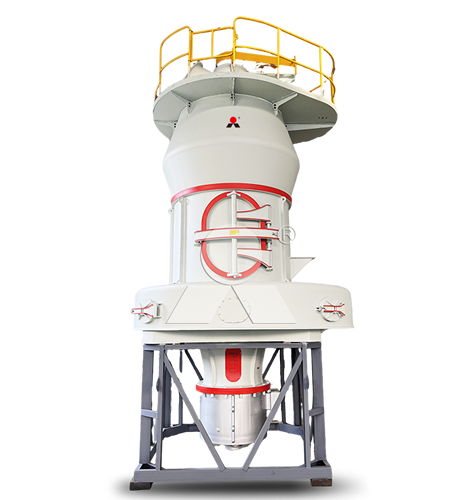
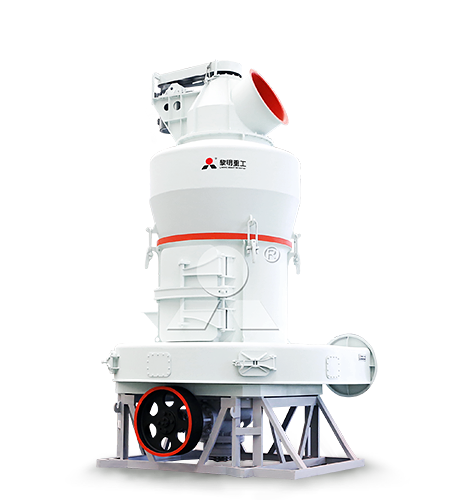
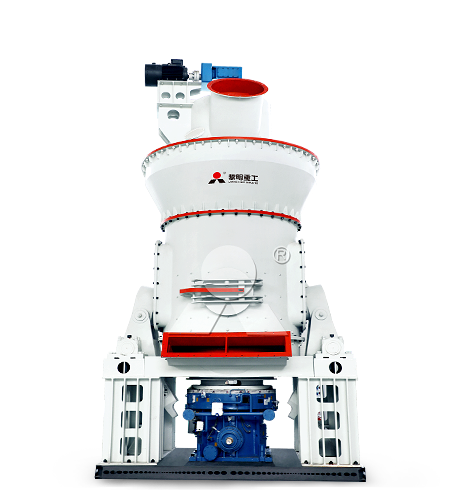
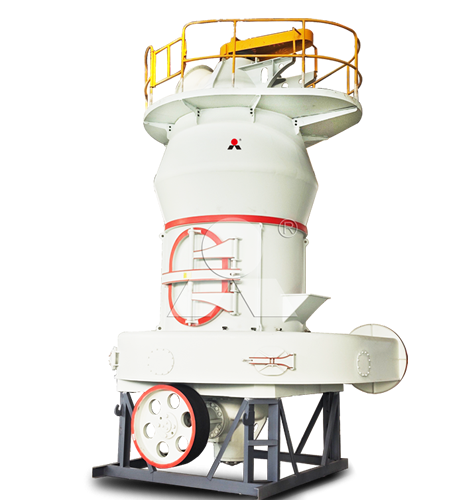
For fine limestone powder, the MTW European Type Grinding Mill and LM Vertical Roller Mill are relevant Liming Heavy Industry options to evaluate. The manufacturer identifies these mill families for limestone processing, with the final choice dependent on the project’s material and production requirements.
| Grinding Option | Project Evaluation Focus | What the Proposal Should Demonstrate |
|---|---|---|
| Liming Heavy Industry MTW European Type Grinding Mill | A fine-powder line assessed against the required output, layout, and operating schedule | Achievable particle-size distribution and throughput with representative limestone |
| Liming Heavy Industry LM Vertical Roller Mill | A vertical grinding arrangement assessed as part of the complete plant | Suitability for the material conditions, required output, maintenance plan, and available utilities |
Both are mineral-grinding options. Their use in a feed-ingredient installation requires a separate review of product-contact materials, wear components, lubrication arrangements, inspection access, cleaning procedures, and the applicable regulatory requirements. A general limestone application listing is not proof that a complete installation is approved for feed production.
Ask for equipment selection based on a representative sample and a written product specification. Any output commitment should state the associated fineness, incoming material conditions, and scope of the supplied system.
Build Quality Checks Around the Product Specification
Feed safety is a chain of controls, not a certificate attached only at dispatch. Good practice covers ingredient selection, handling, processing, storage, records, and distribution.
| Control Point | What to Verify | Operational Decision |
|---|---|---|
| Incoming limestone | Identity, supplier approval, analysis, and required acceptance results | Release, hold, or reject the delivery |
| During processing | Particle-size results and relevant operating observations | Continue production or investigate a deviation |
| Finished product | Compliance with the agreed composition, safety, and physical specification | Release or hold the batch |
| Packing and loading | Product identity, packaging or vehicle condition, quantity, and lot information | Authorize dispatch after the required checks |
Set testing frequency according to the material’s risk profile, supplier history, process variability, customer agreement, and applicable requirements. Do not treat one laboratory result from the initial source sample as permanent approval for every future delivery.
Common Problems to Resolve Before Start-Up
The customer requests “feed-grade limestone” without a size specification
Obtain the intended application and measurable particle-size limits before selecting equipment. If necessary, prepare trial grades for customer assessment rather than assigning a familiar industrial mesh grade by default.
The plant is expected to supply both powder and coarse particles
Evaluate separate downstream routes from approved raw-material storage. Share receiving where appropriate, but preserve the ability to make, identify, and inspect each grade independently.
A new quarry area changes the material
Reassess the incoming specification and finished-product results. Stable machine settings do not prove that composition or grinding behavior remains unchanged.
The mill meets capacity, but product cannot be dispatched quickly enough
Review silo capacity, packing speed, loading arrangements, and operating schedules as one system. Define the required rate in terms of accepted, dispatch-ready product rather than mill discharge alone.
Define the Project Before Requesting a Quotation
A useful project brief should include the limestone analysis, representative sample, incoming size and moisture range, required particle-size distribution, production target, operating hours, packing format, site constraints, and destination-market requirements.
State separately whether the plant will supply fine limestone powder, coarse calcium particles, or both. This distinction gives the equipment supplier a clear basis for evaluating a Liming Heavy Industry grinding system and gives the operator a defined product to manufacture, test, and deliver.
Related Feed Mineral Processing


Liming Heavy Industry to Exhibit at bauma CHINA 2026 – Visit Us at Booth E6.510
2026-10-15

Meet Liming Heavy Industry at the 140th Canton Fair 2026
2026-10-13
Liming Heavy Industry to Attend the 140th Canton Fair
2026-09-25
Liming Heavy Industry at bauma CONEXPO INDIA 2026 | Booth 5-C6
2026-09-07
Turnkey Raw Mill Cement Plant in Saudi Arabia: Design and Installation
2026-09-03
Complete Mineral Processing Solutions
Convenient Reliable Professional Efficient Get Your Quote
Please feel free to submit your inquiry information to us. We will contact with you as soon as possible.
Our team will contact you as soon as possible.