


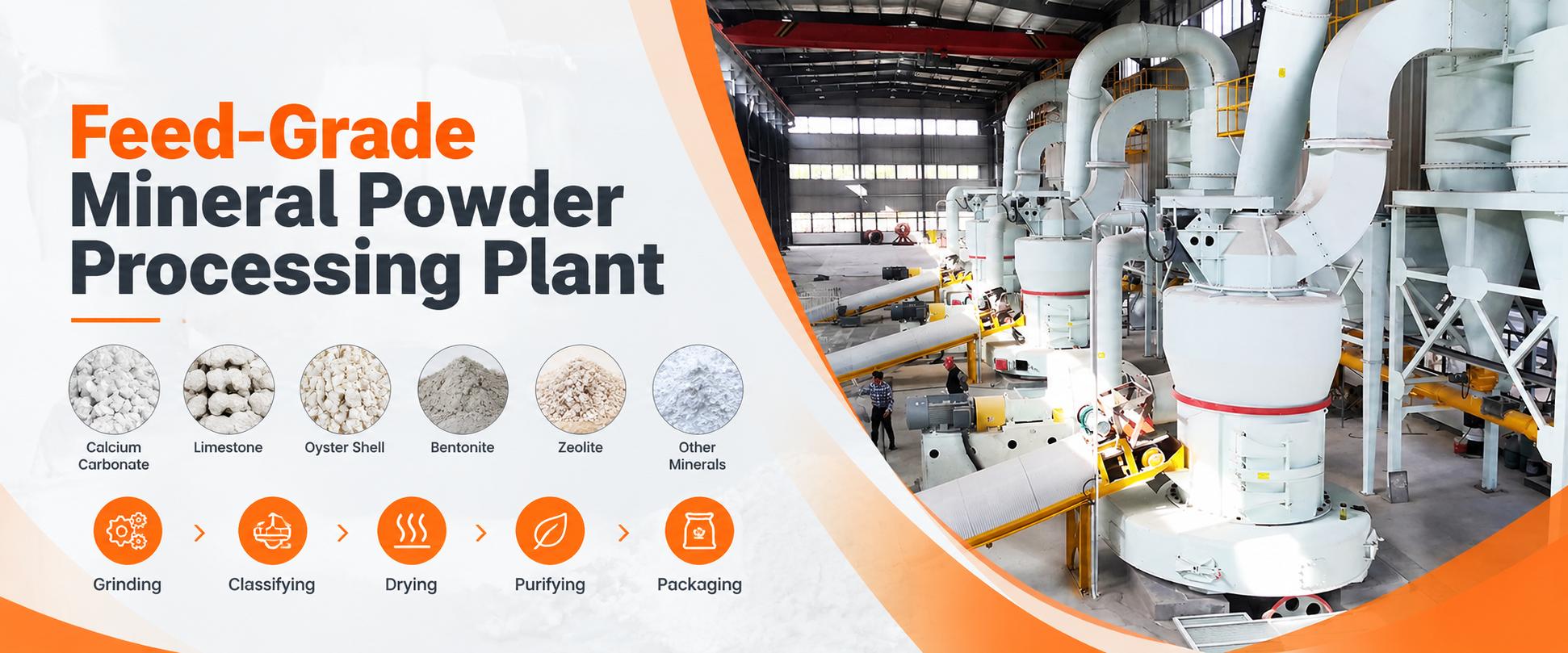
Air classification helps mineral powder producers control particle-size distribution by separating a ground material into finer and coarser fractions. In a closed-circuit grinding line, the accepted powder moves to collection while rejected material returns for further grinding. For feed-grade calcium carbonate and other mineral ingredients, its value lies in producing a repeatable physical specification—not simply making the powder finer.
The most important distinction is that air classification controls particle behavior in an air stream. It does not, by itself, establish feed-grade status, remove every contaminant, or demonstrate the nutritional or functional performance of the finished ingredient.
What Happens Inside an Air Classifier?
In a dynamic air classifier, dispersed powder enters a separation zone where airflow and a rotating classifier wheel influence particle movement. Particles with suitable aerodynamic behavior pass into the fine-product stream; others are rejected into the coarse stream. Separation depends on particle size, but density, shape, moisture, and dispersion also affect the result.
The practical objective is consistency: maintain the required product distribution despite normal variation in the material entering the system.
A classifier is not a screen with a fixed physical opening. Its separation is a process outcome governed by the equipment design, material properties, and operating conditions. This is why a classifier setting should be treated as an operating parameter rather than a finished-product guarantee.
Where Classification Fits in a Mineral Processing Line
Two arrangements are worth distinguishing before selecting equipment.
Closed-circuit grinding
The classifier works with the mill. Material that meets the required fineness proceeds to collection, while rejected material returns for further grinding. Liming Heavy Industry describes this arrangement in its MTW limestone grinding process.
This route is appropriate to evaluate when the plant must reduce the mineral to a specified fine-powder grade. The mill and classifier should be sized together because the amount of returned material affects the operating duty.
Separate classification of an existing powder
A standalone classification stage separates an already prepared powder into fine and coarse fractions. It may be considered when a supplier needs to remove an unwanted coarse fraction or divide a feedstock into different product streams.
Before adopting this route, define the disposition of both fractions. The coarse stream is not automatically waste, and the fine stream is not automatically the only saleable product. Each stream needs its own specification, storage plan, and commercial justification.
Define the Product Before Choosing the Cut Point
A request for “fine calcium carbonate” does not provide enough information for classifier selection. The equipment supplier needs measurable acceptance criteria.
| Specification Item | What It Clarifies |
|---|---|
| Particle-size measurement method | How the finished powder will be assessed and compared with the acceptance limits |
| Central particle-size target, where required | The intended position of the main distribution |
| Upper-size or coarse-residue limit | How much coarse material is acceptable |
| Fine-fraction limit, where required | Whether excessive fines must also be controlled |
| Sampling and preparation procedure | How a representative sample will be collected and prepared for testing |
| Required accepted-product output | The production duty at the specified quality, rather than at an unspecified fineness |
If the specification uses D50, D90, or D97, state the reporting basis and test method. These values describe points in the measured product distribution. They should not be used interchangeably with the classifier’s cut size.
The cut size characterizes the separation between the fine and coarse streams. It is not an absolute boundary below which every particle passes and above which every particle is rejected. Actual separation performance must be assessed from the resulting streams.
The Operating Variables That Matter Most
Classifier performance comes from coordinated settings. Changing one variable while ignoring the rest can shift product quality, output, and the amount of material circulating through the mill.
| Variable | Typical Influence | Operating Implication |
|---|---|---|
| Classifier rotor speed | Higher speed generally produces a finer cut in a dynamic classifier | Check the resulting product distribution and output rather than adjusting speed in isolation |
| Airflow | Higher airflow can carry larger particles into the fine stream and shift the cut coarser | Balance classification requirements with material transport and the complete air circuit |
| Particle density and shape | Change how particles respond to drag and centrifugal effects | Validate settings for each mineral rather than copying settings between materials |
| Moisture and surface condition | Can affect dispersion and classification behavior | Define acceptable incoming conditions and investigate changes in material behavior |
These are general tendencies, not universal adjustment rules. Equipment geometry and the material being processed influence the actual result.
For routine operation, keep a record linking product test results to rotor speed, airflow indicators, feed conditions, and production rate. Make controlled adjustments and allow the circuit to stabilize before judging the outcome.
Calcium Carbonate: Control the Coarse Fraction Without Chasing Unnecessary Fineness
In a calcium carbonate grinding line, the classifier provides a way to regulate which particles leave as product and which return for further grinding. Liming Heavy Industry’s limestone systems use adjustable classification within the grinding circuit to control finished fineness.
For a feed ingredient, the target should come from the customer’s formulation and manufacturing requirements. Do not adopt a grade used for paint, plastics, or another industrial application merely because the same mineral and mill are involved.
A useful trial should answer three questions:
Can the system meet the agreed particle-size distribution?
Can it maintain that distribution at the required accepted-product output?
Can it do so across the agreed range of incoming material conditions?
If coarse limestone particles are also required, assess that product separately. A fine-powder classifier should not be assumed to replace a dedicated crushing-and-screening route for a specified coarse size band.
Bentonite and Zeolite Need Their Own Trials
Do not transfer a successful calcium carbonate classifier setting directly to bentonite or zeolite. Classification responds to density, particle shape, surface properties, and moisture as well as size. A setting established with one mineral therefore cannot guarantee the same distribution with another.
For each material, test representative feedstock and define:
The acceptable incoming moisture range.
The required degree of dispersion.
The finished-powder distribution.
The expected fine-product yield.
The handling and disposition of the coarse fraction.
Any separate functional tests required for product acceptance.
Where mineral composition is part of the product specification, analyze it independently. A change in particle size does not demonstrate that the required mineral content or additive functionality has been maintained.
Classification Is Not a Substitute for Iron Removal
Because density and shape affect air separation, different particles may report differently to the fine and coarse streams. However, that does not make a general-purpose air classifier a validated metal-removal system. Its separation behavior depends on several interacting particle properties.
If foreign-metal contamination is a credible risk, provide dedicated prevention, separation, or detection controls appropriate to that risk. Do not claim iron reduction from classification unless representative trials and an agreed analytical method demonstrate the result.
The same principle applies to other contaminants: a clean-looking fine powder is not evidence of chemical compliance.
Integrating Classification with Liming Heavy Industry Mills
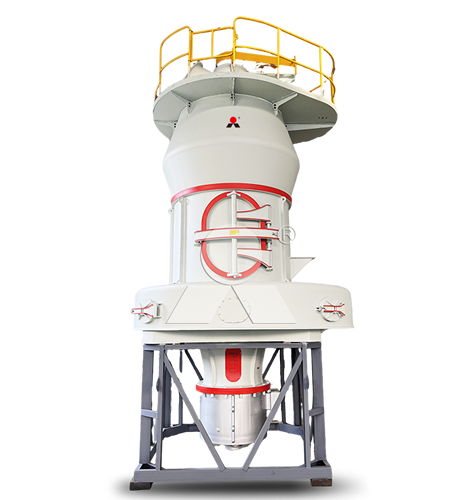
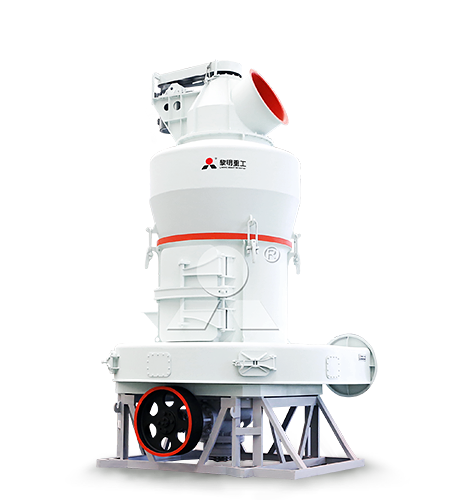
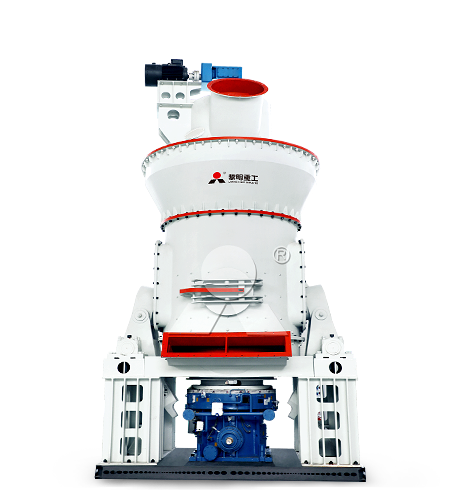
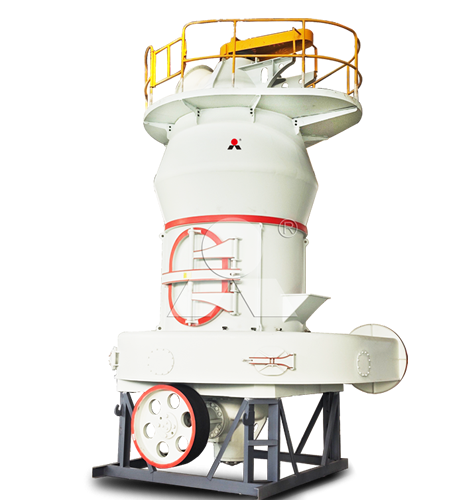
For a conventional fine limestone or calcium carbonate project, evaluate the classifier as part of a Liming Heavy Industry MTW European Type Grinding Mill or LM Vertical Roller Mill system. The manufacturer describes closed-circuit classification for MTW limestone grinding and coordinated classifier-speed and airflow control for the LM system.
| Grinding System | What to Evaluate | What to Request in the Proposal |
|---|---|---|
| Liming Heavy Industry MTW European Type Grinding Mill | The complete grinding, classification, return, and collection arrangement | Output and finished distribution with representative material, plus the conditions behind the commitment |
| Liming Heavy Industry LM Vertical Roller Mill | The interaction of grinding, airflow, classification, and any proposed drying duty | Material-specific performance, operating limits, utility requirements, and maintenance provisions |
A mineral-processing equipment configuration does not establish feed-grade approval. Review product-contact materials, wear components, lubrication separation, inspection access, cleaning arrangements, and applicable product requirements as separate parts of the project.
Do Not Confuse Classification with Powder Collection
The classifier determines which material enters the accepted stream. Downstream cyclones or filters recover powder from the conveying air. Liming Heavy Industry describes these as separate stages in its limestone grinding arrangement.
This distinction matters when preparing a plant specification. Ask the supplier to identify where saleable product is collected and how material from each collection point will be handled.
If several powder streams are combined, verify the distribution and quality of the combined product. Do not assume that a sample taken from only one collector represents everything entering the finished-product silo.
Troubleshoot the Circuit, Not Just the Rotor Speed
| Observed Problem | Checks to Include |
|---|---|
| Finished powder becomes coarser | Confirm the test result, then review rotor speed, airflow, material condition, and mechanical condition |
| Output falls while fineness remains acceptable | Review feed conditions, grinding performance, classifier settings, and the amount of returned material |
| Results vary between samples | Check sampling consistency, circuit stability, raw-material variation, and whether all product streams are represented |
| A new mineral source behaves differently | Compare size distribution, density-related behavior, moisture, and dispersion before copying the previous operating settings |
Begin by confirming that the measurement is reliable. Then investigate one change at a time. Repeatedly increasing rotor speed without understanding the cause can obscure the original problem.
Commission Against Distribution, Yield, and Accepted Output
A meaningful acceptance trial uses representative material and the agreed test method. It should demonstrate stable production, not merely produce one compliant sample.
Confirm the incoming material and operating conditions.
Establish stable feeding, grinding, airflow, and classification.
Sample the accepted product and other relevant streams.
Verify the required particle-size distribution.
Record fine-product yield or circulating return where relevant.
Measure accepted-product output and utility use.
Confirm the final collected or blended product meets the specification.
Define how long the trial must run, which deviations require investigation, and how off-specification material will be identified and managed.
Information Needed for a Classification Proposal
Provide the mineral identity, representative sample, incoming particle-size distribution, moisture range, target product distribution, required accepted output, intended operating hours, available utilities, and planned disposition of each separated fraction.
For a feed-grade project, add the product-contact, cleaning, traceability, and release requirements. This gives the equipment supplier a defined separation duty and gives the operator a measurable product target—rather than an open-ended request to make the powder finer.
Related Feed Mineral Processing


Liming Heavy Industry to Exhibit at bauma CHINA 2026 – Visit Us at Booth E6.510
2026-10-15

Meet Liming Heavy Industry at the 140th Canton Fair 2026
2026-10-13
Liming Heavy Industry to Attend the 140th Canton Fair
2026-09-25
Liming Heavy Industry at bauma CONEXPO INDIA 2026 | Booth 5-C6
2026-09-07
Turnkey Raw Mill Cement Plant in Saudi Arabia: Design and Installation
2026-09-03
Complete Mineral Processing Solutions
Convenient Reliable Professional Efficient Get Your Quote
Please feel free to submit your inquiry information to us. We will contact with you as soon as possible.
Our team will contact you as soon as possible.