


ASTM C989/C989M and EN 15167-1 specify requirements for finely ground granulated blast-furnace slag used as a cementitious material. ASTM C989 classifies slag cement into Grades 80, 100, and 120 according to activity-test performance. EN 15167-1 specifies chemical, physical, and conformity requirements for ground granulated blast-furnace slag, commonly called GGBS, without using those ASTM grade designations. A product that meets one standard does not automatically meet the other.
For a concrete producer, these standards help establish what material is being purchased and how its performance has been verified. For a slag powder producer, they help define the testing and production controls needed before a product can be offered to a particular market. Neither standard can be reduced to a single grinding-fineness target.
First, Clarify What “Slag Cement” Means
In ASTM C989, slag cement refers to the finely ground slag material itself. It does not mean a finished blend of Portland cement and slag. The material may subsequently be added separately at a concrete plant or incorporated into a blended hydraulic cement. Those finished blended cements fall under different product specifications, such as ASTM C595/C595M.
EN 15167-1 addresses ground granulated blast-furnace slag for use in concrete, mortar, and grout. Its scope identifies GGBS as a Type II addition, meaning a finely divided material with pozzolanic or latent hydraulic properties. Practical rules for using it in concrete are addressed through concrete standards and applicable national provisions rather than EN 15167-1 alone.
The raw material distinction is equally important: granulated blast-furnace slag is not interchangeable with steelmaking slag or every other metallurgical residue. Grinding an alternative slag into fine powder does not, by itself, bring that material within either specification.
ASTM C989 and EN 15167-1 at a Glance
| Point of comparison | ASTM C989/C989M | EN 15167-1 |
|---|---|---|
| Material covered | Slag cement for use in concrete and mortar. | Ground granulated blast-furnace slag for concrete, mortar, and grout. |
| Performance classification | Grades 80, 100, and 120. | No equivalent ASTM-style grade classification. |
| Activity-test blend | 50% slag cement and 50% qualifying reference Portland cement by mass. | 50% GGBS and 50% specified test cement by mass. |
| Strength-test approach | Mortar testing based on ASTM procedures, with water adjusted to the specified flow range. | Mortar testing based on EN 196-1, with a specified water content. |
| Fineness approach | Includes a limit on 45-micrometre sieve residue; Blaine specific surface is determined and reported without a specified minimum. | Specifies a minimum Blaine specific surface area of 275 m²/kg. |
| Setting-time provision | Does not use the same comparative initial-setting-time requirement as EN 15167-1. | The initial setting time of the test blend must not exceed twice that of the test cement alone. |
These comparisons reflect the ASTM C989/C989M-18 provisions and EN 15167-1:2006 provisions discussed here. Purchase orders and conformity assessments should identify the exact edition required by the project, including any amendments and national requirements.
Understanding ASTM Grades 80, 100, and 120
The ASTM grade number describes a performance classification. It is not a mesh size, a percentage of slag in the product, a recommended cement-replacement percentage, or a concrete compressive strength in MPa.
The slag activity test compares the compressive strength of mortar containing equal masses of slag cement and reference Portland cement with that of reference-cement mortar. The resulting activity index indicates relative performance under the prescribed laboratory conditions.
The acceptance limits are not simply 80%, 100%, and 120%
A frequent mistake is to assume that each grade number is the exact minimum 28-day activity index. ASTM C989/C989M-18 instead distinguishes between the average of the last five consecutive samples and an individual sample.
| ASTM slag cement grade | Minimum 28-day activity index: average of last five consecutive samples | Minimum 28-day activity index: any individual sample |
|---|---|---|
| Grade 80 | 75% | 70% |
| Grade 100 | 95% | 90% |
| Grade 120 | 115% | 110% |
Under these provisions, the 7-day activity index is determined for Grades 100 and 120 and reported for information; the table does not impose a minimum 7-day index for those grades. A single favorable test result also does not establish compliance with every requirement of the specification.
What a higher grade tells the concrete producer
A higher grade indicates stronger relative performance in the specified activity test. It can help distinguish candidate slag cements, but it does not predict a specific concrete strength. Actual concrete performance also depends on the Portland cement, slag dosage, water content, aggregates, admixtures, temperature, and curing. Project mixtures still need testing with the materials that will be used on site.
What EN 15167-1 Requires
EN 15167-1 evaluates GGBS through a combination of material requirements, physical performance, and continuing conformity procedures. Its requirements should be read together rather than treated as independent product claims.
Fineness: a minimum threshold, not proof of full compliance
EN 15167-1:2006 specifies a minimum specific surface area of 275 m²/kg, determined using the air-permeability method in EN 196-6. This is a minimum requirement, not a universal production target for every GGBS application. Passing it does not demonstrate that the product also meets activity, setting-time, chemical, or conformity requirements.
Activity: requirements at both 7 and 28 days
The prescribed test uses a blend containing 50% GGBS and 50% test cement by mass. The specified minimum activity indices are:
45% at 7 days.
70% at 28 days.
The test cement must meet defined conditions, including being a CEM I cement of strength class 42.5 or higher. These activity limits belong to the EN test system and should not be directly substituted into an ASTM classification.
Initial setting time: control over delayed stiffening
The initial setting time of the equal-mass GGBS and test-cement combination must not exceed twice that of the test cement alone. This requirement is separate from activity testing: acceptable strength development does not remove the need to check setting behavior.
Chemistry and continuing conformity
The standard also addresses chemical characteristics, including magnesia, sulfide, sulfate, chloride, loss on ignition, and moisture, as well as the nature of the granulated slag. Its conformity provisions extend beyond an isolated laboratory result. Producers need an appropriate sampling, testing, and production-control system to demonstrate that the supplied product remains compliant.
Why the Two Activity Tests Are Not Interchangeable
Both systems use an equal-mass combination of slag and cement, but that similarity does not make their results equivalent.
Reference cements differ. The standards specify different requirements for the cement used in testing.
Mortar procedures differ. ASTM and EN methods do not use identical specimen preparation and testing arrangements.
Water control differs. The ASTM procedure adjusts water to achieve a prescribed mortar flow, while the EN procedure uses a specified water content.
Acceptance rules differ. ASTM grade assessment includes individual-sample and consecutive-sample criteria, while EN has its own performance and conformity framework.
Consequently, an EN 15167-1 activity report cannot simply be relabeled as an ASTM Grade 100 certificate. Likewise, an ASTM Grade 120 designation does not establish compliance with EN requirements for setting time, chemistry, or continuing conformity. Where both standards are required, the product needs a documented assessment against both.
What These Standards Mean for a Slag Grinding Plant
A production specification such as “make the powder finer” is incomplete. The grinding plant must produce a material that consistently satisfies the intended product standard, with enough operating margin to accommodate normal variation.
Start with the incoming slag
Before fixing the grinding target, assess representative raw slag and produce trial powders for performance testing. The ASTM activity-test guidance explicitly recognizes that slag properties and cement compatibility affect strength contribution. A change in raw slag supply can therefore require more than a routine adjustment to classifier speed.
Control both specific surface and coarse residue
For ASTM production, Blaine fineness is reported, but the specification also controls residue on a 45-micrometre sieve. For EN production, the stated Blaine minimum is an explicit requirement. These measurements describe different aspects of the powder and should not be treated as interchangeable.
For example, a reported Blaine result of 450 m²/kg is not, by itself, a compliance certificate under either system. The producer must still establish the remaining physical, chemical, activity, and conformity requirements.
Select equipment around the qualified product
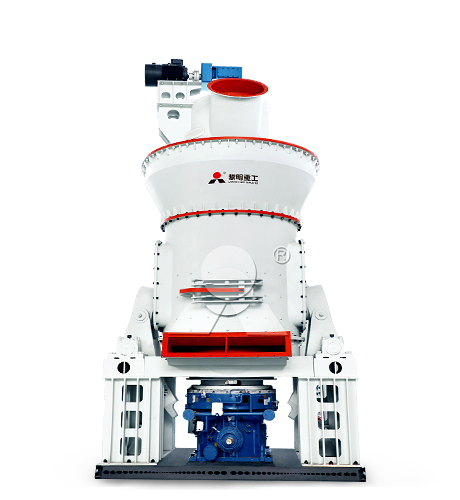
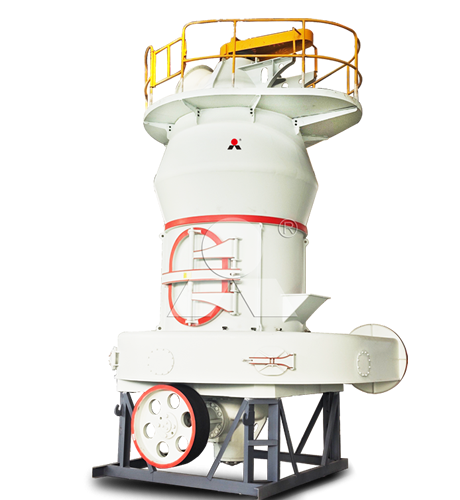
The Liming Heavy Industry LM Vertical Slag Mill is an option for GGBS production lines requiring integrated drying, grinding, classification, and conveying. This arrangement allows the mill system to address incoming slag moisture and finished-powder control within a coordinated process.
Equipment selection should follow material testing and a defined product requirement. The required output must be evaluated at the intended fineness and feed conditions—not at an unrelated nominal operating point. A mill can provide the processing capability, but ASTM or EN compliance must be established through testing and production control; it is not an automatic property of the machine.
A Practical Checklist for Reviewing a Slag Cement Test Report
Before approving a supplier or releasing a product to a customer, check whether the documentation answers the following questions:
Which standard and edition apply? The report should identify the contractual specification rather than state only “international standard.”
Which production period or shipment does the report represent? Results need a clear connection to the material supplied.
Is the ASTM grade stated where required? “Slag cement” alone does not identify Grade 80, 100, or 120.
Which test methods and reference cement were used? This is essential when comparing activity results.
Are the required properties covered? A fineness result and a strength result do not necessarily constitute a complete compliance assessment.
Are later-age results measured or still pending? Estimated values should not be mistaken for completed 28-day tests.
Does the documentation address continuing conformity? One selected sample cannot describe the consistency of an entire production history.
ASTM C989 includes provisions for manufacturer reporting and product identification, and its reporting guidance recognizes that material may be shipped before later-age results become available. EN 15167-1 likewise includes quality-control and conformity requirements. Clear records are therefore part of reliable supply, not an administrative substitute for testing.
Common Questions About GGBS Standards
Does ASTM Grade 120 mean 120 MPa concrete?
No. It is a slag activity classification under ASTM C989, not a concrete strength designation. The strength of a project mixture must be established separately.
Is EN 15167-1 equivalent to ASTM Grade 100?
No direct equivalence is established by these specifications. Their test procedures and acceptance requirements differ. Compliance must be demonstrated under the standard named in the purchase specification.
Does meeting the EN minimum fineness guarantee acceptable activity?
No. Fineness and activity are separate requirements. A product must satisfy both, together with the other applicable provisions.
Do these standards specify the slag replacement percentage for every concrete mixture?
No. They qualify the slag material rather than provide a universal concrete mix design. Replacement levels must suit the concrete specification, required strength development, exposure conditions, and actual project materials. EN 15167-1 explicitly leaves practical application provisions to other European or national standards.
Define the Required Product Before Defining the Grinding Line
A workable GGBS project specification should identify the destination standard and edition, required ASTM grade where applicable, raw slag characteristics, target output, powder-control requirements, and testing arrangements. These inputs connect the grinding system to the product that customers will actually purchase.
For a Liming Heavy Industry LM Vertical Slag Mill installation, the appropriate objective is stable production at a validated quality level. The decisive evidence remains the finished material’s test results and the consistency of the production process—not a mill model, a mesh claim, or a single activity number.
Related Concrete SCM Grinding Plant Solutions


Liming Heavy Industry to Showcase Crushing and Grinding Solutions at bauma CHINA 2026
2026-11-02

LIMING Heavy Industry to Participate in SIREXE 2026 in Abidjan, Côte d'Ivoire
2026-10-26
LIMING at MiningMetals Uzbekistan 2026 | Booth B94
2026-10-22
LIMING Heavy Industry at MINEXPO Africa 2026 | Booth 133
2026-10-22
Liming Heavy Industry to Exhibit at bauma CHINA 2026 – Visit Us at Booth E6.510
2026-10-15
Complete Mineral Processing Solutions
Convenient Reliable Professional Efficient Get Your Quote
Please feel free to submit your inquiry information to us. We will contact with you as soon as possible.
Our team will contact you as soon as possible.