


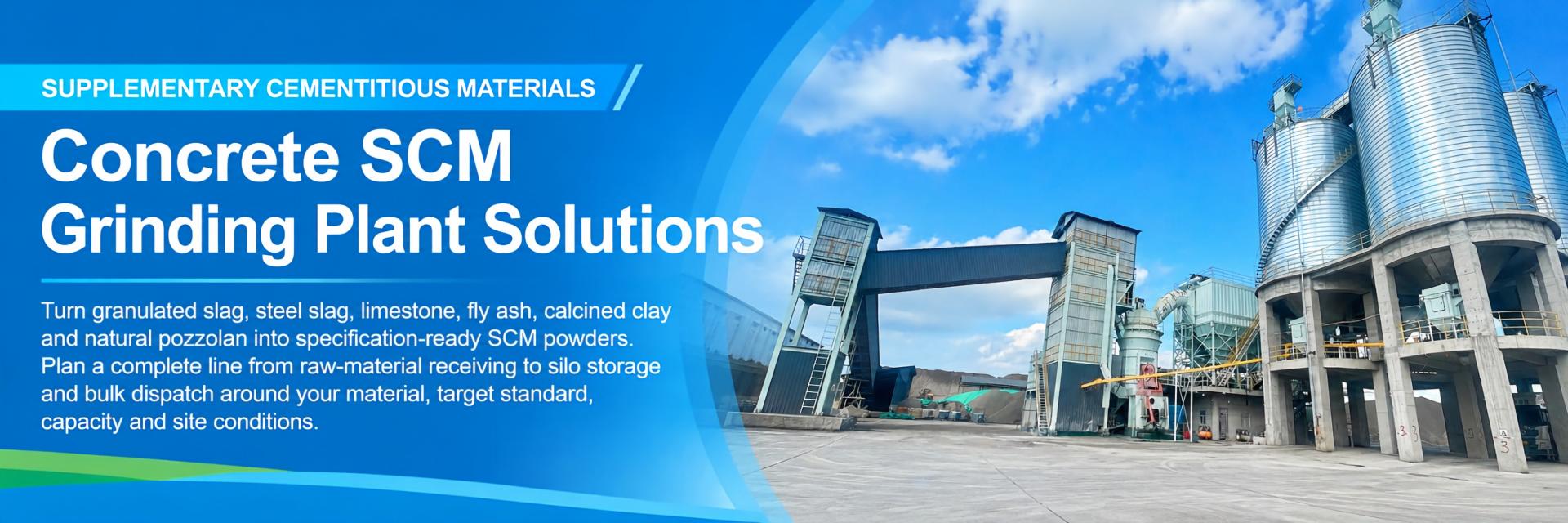
A composite SCM plant must do more than combine powders in the right average proportions. It must deliver a uniform product, protect that product during storage, and preserve its identity through loading and delivery. The practical route connects separately controlled ingredients, accurate mass dosing, validated mixing, protected storage, representative sampling, and traceable bulk dispatch.
The most important quality question is not simply whether the recipe was entered correctly. It is whether the powder leaving the loading spout consistently represents the qualified blend. Evaluation guidance for cementitious materials emphasizes representative sampling from shipments, silos, and blended batches because laboratory results are meaningful only when the samples reflect the material used in production.
Define the Product Before Designing the Blending System
A composite SCM is a manufactured combination of supplementary cementitious materials intended for use with cement in concrete or mortar. Depending on the applicable specification, a product may combine slag cement, fly ash, natural pozzolan, silica fume, or other permitted constituents. It should not automatically be described as finished blended cement: a manufactured SCM blend and a cement containing clinker are different products with different qualification requirements.
ASTM C1697 addresses blended supplementary cementitious materials. Its edition matters. ASTM C1697-21 covered blends or interground products made from two or three specified ASTM-compliant SCMs. ASTM C1697-26 broadened the stated scope to ASTM-compliant SCMs with or without ground limestone. A formulation containing limestone should therefore not be assessed solely against an older description of the standard.
Before equipment selection, establish:
The governing product specification and required edition.
The permitted ingredients and qualified supply sources.
The target composition and allowable production variation.
The required physical, chemical, and performance properties.
The intended concrete applications and customer acceptance requirements.
The information to be supplied with each shipment.
Permission to include an ingredient does not make every formulation acceptable. The complete blend still needs qualification, and its effects on fresh and hardened concrete must be evaluated.
A Practical Plant Arrangement
For separately prepared ingredients, a workable layout begins with individual receiving and storage systems. Each material then passes through controlled discharge and weighing before entering the mixer. The mixed product moves to an identified finished-product silo and is released for dispatch through a controlled loading system.
Receive and identify each ingredient.
Store ingredients separately under suitable conditions.
Meter the required masses into the blending process.
Mix using a validated operating procedure.
Sample and assign the product to a defined batch or production interval.
Transfer to identified finished-product storage.
Verify release status before bulk loading.
Record the shipment and its destination.
Physical separation and clearly identified transfer routes are essential. Concrete-industry quality guidance calls for moisture-proof cementitious storage, checks against cross-feed, labeled filling pipes, and monitoring of tanker unloading. These controls are equally relevant when several fine powders share a manufacturing site.
Batch Blending or Continuous Blending?
| Arrangement | How it operates | Main control priorities |
|---|---|---|
| Batch blending | Defined ingredient masses are charged, mixed, and discharged as a batch. | Weighing accuracy, ingredient sequence, mixer loading, mixing time, and complete discharge. |
| Continuous blending | Ingredients are metered continuously into a mixing process at controlled rates. | Feeder accuracy, coordinated feed rates, residence behavior, and management of startup and interruptions. |
| Intergrinding | Selected ingredients are ground together before collection and storage. | Feed proportioning, differences in grindability, circuit inventories, and finished-product uniformity. |
Batch blending can provide clear production boundaries for multiple recipes. Continuous blending can suit sustained production of a stable formulation. Neither arrangement guarantees uniformity without testing.
Intergrinding is also a recognized manufacturing route under ASTM C1697, but it should not be treated as identical to mixing separately prepared powders. The grinding circuit becomes part of the composition-control system, particularly during transitions between products.
Accurate Dosing Starts with Reliable Material Flow
A correctly specified weighing system cannot compensate for uncontrolled discharge from an ingredient silo. Bridging, intermittent flow, unexpected flushing, and material remaining in transfer equipment can all interfere with the intended dosing sequence.
Design the system around the actual powder rather than its name alone. Different supplies of the same SCM can have different flow characteristics, and a low-dose component may require different feeding equipment from the main constituent.
Use mass-based proportioning
Specify ingredient quantities by mass and select weighing equipment that can achieve the required accuracy across the intended operating range. A feeder handling a small constituent needs adequate resolution at that low rate, not only sufficient maximum capacity.
For illustration, a component present at 2% by mass requires only 0.2 tonnes in a 10-tonne batch. Equipment suitable for the principal ingredient may not be appropriate for that smaller dose. The required tolerance should follow the qualified formulation and purchase specification rather than a generic plant-wide percentage.
Verify the complete dosing path
Commissioning should check actual delivered mass, not only the indicated value. Include material retained in chutes, delayed discharge, refill behavior, and the effect of stopping and restarting. Define how incomplete batches and feed interruptions will be isolated.
Prove Uniformity at the Discharge Point
Mixing time alone is not proof of blend uniformity. The result also depends on mixer geometry, loading, ingredient properties, and discharge behavior.
A commissioning trial should examine the product across the full sequence:
During the beginning, middle, and end of mixer discharge.
After transfer to the finished-product silo.
Across representative silo withdrawal periods.
During bulk loading, particularly after a product change.
Select a suitable analytical indicator that distinguishes the ingredients. The indicator must be sufficiently different between components, repeatable to measure, and relevant to the intended assessment. Similar-looking powders cannot be judged homogeneous by appearance.
Use both individual samples and appropriately prepared composite samples. Individual samples help reveal short-term variation, while composite samples describe broader supply characteristics. Cementitious-material evaluation guidance distinguishes these purposes and recommends retaining samples in sealed containers to preserve their condition.
Storage Must Preserve Quality and Product Identity
Keep water out
Provide weather-tight silos and inspect roofs, hatches, connections, and transfer points. Moisture protection is a basic storage requirement for cementitious materials, not an optional accessory.
Do not assume that dry incoming powder guarantees dry storage. Assess condensation risk and any air introduced through conveying or discharge-assistance systems. Inspection and maintenance should focus on the complete storage arrangement.
Maintain physical separation
Separate ingredients, qualified blends, and material awaiting a quality decision. Where multi-compartment silos are used, inspect the separating walls and transfer routes for leakage or cross-feed. Concrete-industry guidance specifically identifies compartment integrity and accidental cross-feed as inspection priorities.
A silo should have a clear product identity and status. Changing the recipe while an earlier product remains in the silo requires a defined transition plan, not simply a new label on the control screen.
Do not assume a storage silo is a mixer
Filling and withdrawal patterns can affect which material leaves first and how consistently a blend is discharged. A silo intended for storage should not be credited with homogenization unless its design and operation have been validated for that purpose.
If flow assistance is required, specify it around the powder’s behavior. Excessive or poorly controlled aeration is not a substitute for a suitable discharge design.
Separate total volume from usable capacity
Storage sizing should consider working level limits, powder bulk density, inventory that cannot be routinely withdrawn, product segregation, and dispatch scheduling. Keep space available for material awaiting release where the quality plan requires it.
Size Dispatch Around the Loading Window
A plant producing continuously may dispatch only during limited daytime hours. Its bulk-loading system can therefore require a higher hourly rate than its average production rate.
As an illustrative planning case, a blending plant producing 40 tonnes per hour over 24 hours makes 960 tonnes per day. If that daily quantity must leave within a 12-hour dispatch window, the average loading requirement is 80 tonnes per hour before allowing for vehicle positioning, documentation, connection, and interruptions.
This does not automatically mean the loading equipment should be rated at exactly 80 tonnes per hour. Check peak demand, tanker capacities, vehicle turnaround, operating restrictions, and available storage before selecting the arrangement.
Bulk Loading Needs Positive Product Verification
A consistent product can still fail the customer if it is loaded into the wrong vehicle, sent under the wrong identity, or delivered to the wrong receiving silo.
Before loading, verify:
The order, product code, and approved formulation.
The selected silo and the product’s release status.
The vehicle’s suitability, cleanliness, and previous-load information where relevant.
The loading route and isolation of other products.
The intended quantity and weighing method.
The destination and customer receiving instructions.
Use a documented line-clearance procedure for shared conveying and loading equipment. Residual powder in transfer equipment needs a defined destination during product changes.
At the customer’s site, clearly labeled filling connections and monitored unloading help prevent wrong-silo delivery. These controls are specifically identified in concrete-industry quality guidance.
Silo Protection Is Part of the Process Design
Filling air must leave the receiving silo through a suitable venting and filtration arrangement. Filling controls, level indication, pressure protection, and discharge equipment should be designed and maintained as a coordinated system.
Quality-management guidance calls for checking high-level indicators, anti-overfill devices, pressure sensors, and dust collection systems. Do not rely on a single level indication or assume that a filter can manage any unloading rate.
Provide safe access for inspection and follow applicable site procedures for isolation, maintenance, and confined-space work. Flow obstructions should be addressed through an engineered method rather than improvised entry or uncontrolled intervention.
Traceability Should Connect Ingredients to the Tanker
A useful record system links each dispatched load to the ingredients and production conditions that created it. The batch definition may be a discrete mixer batch, a controlled continuous-production interval, or an identified silo lot, depending on the plant arrangement.
| Record | Information to preserve |
|---|---|
| Ingredient receipt | Supplier, material identity, delivery reference, storage location, and acceptance status. |
| Blend production | Approved recipe, ingredient quantities, production time, and any deviations. |
| Sampling and testing | Sample location, sampling time, test results, and retained-sample identity. |
| Storage movement | Transfer route, destination silo, inventory status, and product transitions. |
| Dispatch | Product, quantity, vehicle, loading time, delivery reference, and destination. |
Representative sampling and controlled sample retention support investigation when a customer reports a change in performance. They also help distinguish ingredient variation from blending, storage, or delivery problems.
Where Grinding Fits in a Composite SCM Plant
A blending-only facility does not need a mill if all purchased ingredients already meet the required preparation and performance criteria. Adding grinding without a defined purpose increases equipment scope and complicates product control.
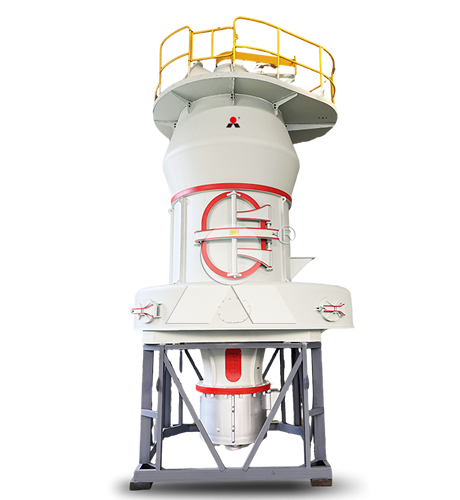
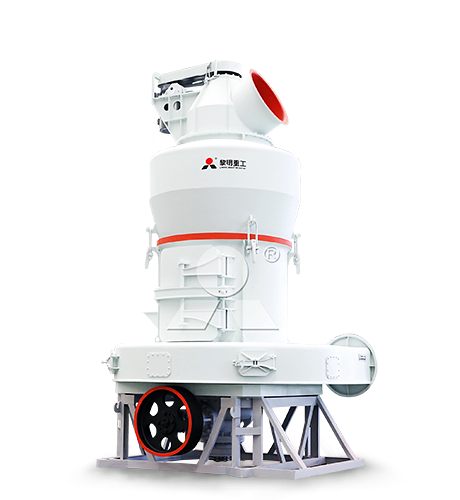
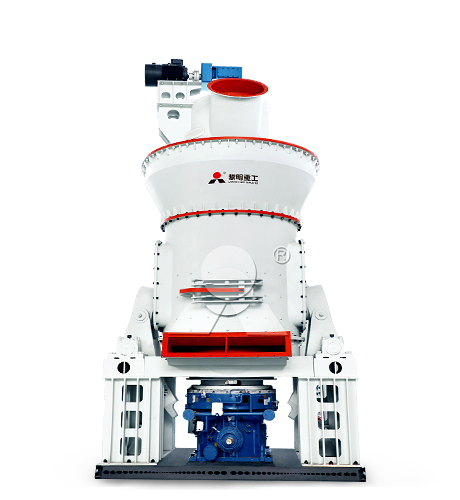
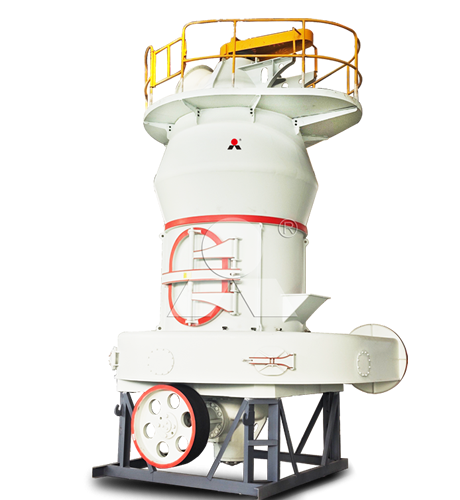
Where on-site grinding is necessary, evaluate the appropriate Liming Heavy Industry system for the actual duty. A dedicated slag preparation line may justify assessing the LM Vertical Slag Mill, while other mineral-powder duties require material-specific selection of an LM Vertical Roller Mill configuration.
Keep the grinding and blending responsibilities clear. Decide whether the mill produces a qualified individual ingredient, an intermediate powder, or the final interground blend. This determines where weighing, sampling, product release, and storage boundaries belong.
Commission the Complete Delivery Chain
Acceptance should extend beyond running the mixer at nominal output. Demonstrate ingredient dosing, mixing consistency, product transfer, silo withdrawal, loading accuracy, and traceability under representative operating conditions.
Include at least one planned interruption and one product transition where the plant will routinely encounter them. Confirm that unqualified transition material can be isolated without contaminating approved stock.
The commercial objective is a repeatable delivered product: the right ingredients, in the right proportions, protected during storage and sent to the correct customer under an identifiable product record. Blending, storage, and bulk dispatch must function as one controlled system to achieve that result.
Related Concrete SCM Grinding Plant Solutions


Liming Heavy Industry to Showcase Crushing and Grinding Solutions at bauma CHINA 2026
2026-11-02

LIMING Heavy Industry to Participate in SIREXE 2026 in Abidjan, Côte d'Ivoire
2026-10-26
LIMING at MiningMetals Uzbekistan 2026 | Booth B94
2026-10-22
LIMING Heavy Industry at MINEXPO Africa 2026 | Booth 133
2026-10-22
Liming Heavy Industry to Exhibit at bauma CHINA 2026 – Visit Us at Booth E6.510
2026-10-15
Complete Mineral Processing Solutions
Convenient Reliable Professional Efficient Get Your Quote
Please feel free to submit your inquiry information to us. We will contact with you as soon as possible.
Our team will contact you as soon as possible.