


Barite powder fineness should be selected according to the final application, not by choosing the smallest possible particle size. The correct grinding system produces the required mesh range and particle-size distribution consistently, while controlling moisture, limiting coarse particles, avoiding excessive ultrafine powder, and maintaining stable production output.
For standard barite fine-powder production, an MTW European Trapezium Mill is a practical choice for flexible 20–400 mesh processing. For larger-capacity plants that require an integrated process combining drying, grinding, classification, and conveying, the LM Vertical Mill is the more suitable solution. Liming Heavy Industry identifies both LM Vertical Mill and MTW European Type Grinding Mill as equipment for barite fine-powder processing.
Fineness Is More Than Mesh
Mesh is a useful reference, but it does not fully describe barite powder quality. A powder described as “325 mesh” may still differ significantly from another 325-mesh product if its coarse-particle content, ultrafine fraction, moisture, particle shape, or particle-size distribution is different.
When selecting a grinding system, the finished powder specification should define:
Nominal fineness, expressed in mesh or microns.
Particle-size distribution, including the permitted coarse and ultrafine fractions.
Maximum residue on a specified sieve.
Moisture content after grinding and collection.
Specific gravity and chemical composition requirements.
Whiteness and impurity limits where applicable.
Required production capacity in tonnes per hour.
Annual output and planned operating hours.
The objective is to produce powder that performs consistently in the customer’s process. A coating producer may focus on smoothness and dispersibility. A plastics compounder may need controlled particle size and stable powder flow. A drilling-fluid supplier may require a tightly controlled size distribution to support mud density and suspension behavior.
Match Fineness to the Application
Barite powder is used in several industries, and each market may require a different powder grade. The following ranges are general processing references. Final specifications should always be confirmed with the end user or applicable product standard.
| Barite Application | Common Fineness Range | Grinding-System Focus |
|---|---|---|
| Drilling-fluid weighting material | Usually around 200–325 mesh, with controlled particle-size distribution | Stable classification, limited oversize particles, and controlled ultrafine content |
| Paints and coatings | Fine powder, often 325 mesh or finer depending on formulation | Uniformity, low contamination, good dispersibility, and stable fineness |
| Plastics and rubber | Fine powder selected according to compound and filler requirements | Particle-size consistency, powder flow, cleanliness, and efficient collection |
| Glass, ceramics, and chemicals | Selected according to the production formula and reaction requirement | Controlled size range, chemical consistency, and reliable material handling |
| General industrial filler | Often 200–400 mesh | Economical production with stable mesh control and suitable output |
For drilling-fluid barite, the particle-size distribution is especially important. API 13A requirements commonly specify that no more than 3% by mass remains above 75 μm and no more than 30% by mass is below 6 μm. The product must also meet the applicable specific-gravity requirement, commonly 4.20 g/mL or 4.10 g/mL depending on the grade.
This means a drilling-grade barite line should not be designed merely to create very fine powder. It must use grinding and classification conditions that control both ends of the particle-size curve. Too much coarse material may settle more easily in the drilling fluid, while excessive ultrafine material can adversely affect fluid rheology and increase processing difficulty.
Understand Common Barite Fineness Levels
Barite grinding projects are often grouped into broad fineness categories. These categories help determine the most appropriate process route.
| Processing Category | Typical Size Range | Typical Use | Recommended Grinding System |
|---|---|---|---|
| Coarse barite material | 0–3 mm | Intermediate feed, mineral blends, or further processing | Crushing and screening system before fine grinding |
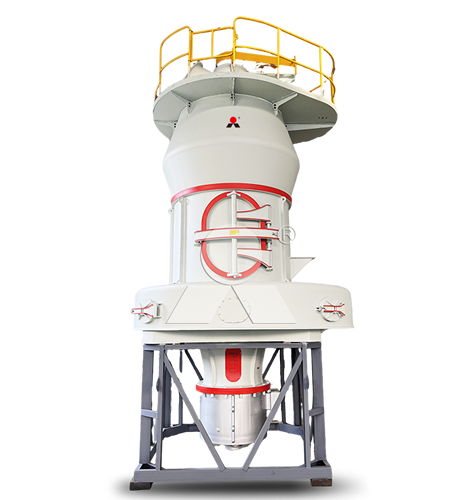
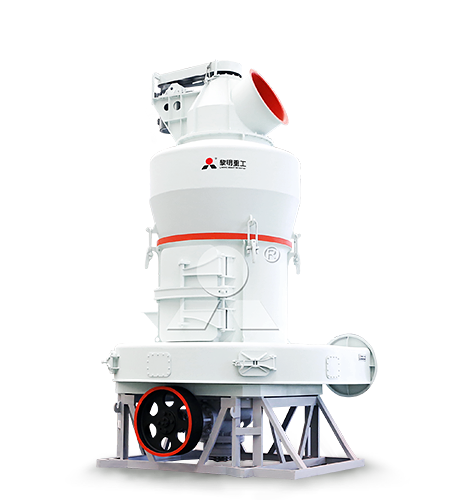
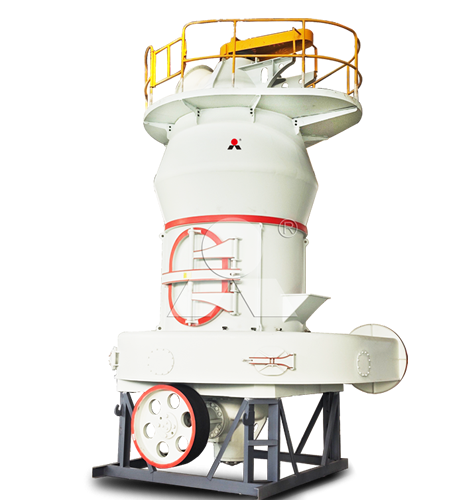
| Fine barite powder | 20–400 mesh | Drilling fluids, fillers, coatings, plastics, rubber, chemical applications | MTW European Trapezium Mill or LM Vertical Mill |
| Ultrafine barite powder | 400–1250 mesh | Higher-value specialty filler and selected industrial formulations | A dedicated ultrafine process should be evaluated based on the required particle-size distribution |
Liming Heavy Industry classifies barite processing into coarse powder of 0–3 mm, fine powder of 20–400 mesh, and ultrafine powder deep processing of 400–1250 mesh. For a standard fine-powder barite project, the key equipment decision is therefore whether the capacity and operating conditions favor an MTW European Trapezium Mill or an LM Vertical Mill.
When to Choose MTW European Trapezium Mill
The MTW European Trapezium Mill is suitable for barite projects requiring conventional fine powder, especially in the 20–400 mesh range. It is a practical option for producers supplying drilling-fluid additives, industrial filler grades, coatings, rubber, plastics, and other common barite powder markets.
Its process uses controlled feeding, grinding rollers and a grinding ring, airflow transport, classification, and dust collection. Fine particles that meet the required specification leave the grinding circuit for collection, while oversized particles return for further grinding. This circulation is essential for producing powder with stable fineness rather than allowing incompletely ground material into the finished product.
Choose an MTW European Trapezium Mill when the project requires:
Fine barite powder within the typical 20–400 mesh processing range.
Standard 200-mesh, 325-mesh, or similar commercial barite grades.
Medium-scale production with flexible output planning.
A clear and practical process layout for grinding, classification, collection, and packaging.
Controlled powder fineness without unnecessary process complexity.
The ability to adjust production settings for different conventional powder grades.
Liming Heavy Industry lists the MTW European Type Grinding Mill as suitable for barite and other non-metallic mineral applications. The company’s MTW series is designed for materials with Mohs hardness below 7 and feed moisture below 6%; actual suitability should be confirmed through raw-material testing and process design.
When to Choose LM Vertical Mill
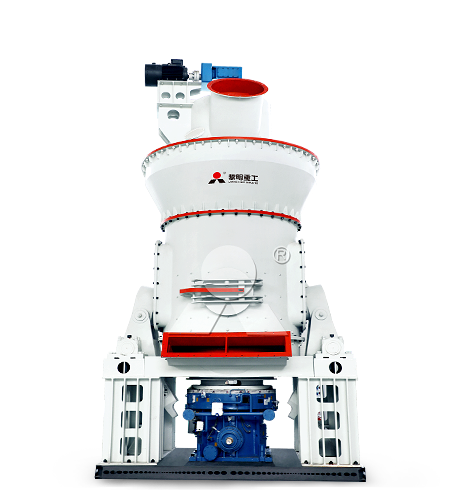
The LM Vertical Mill is designed for projects where production scale, integrated processing, and continuous operation are major priorities. It combines drying, grinding, powder selection, and pneumatic conveying in one coordinated system.
Within the LM Vertical Mill, barite is fed onto a rotating grinding table and ground under roller pressure. Airflow transports fine particles upward to the internal separator. The separator sends qualified powder to the collection section while returning coarse particles to the grinding zone. This continuous internal circulation helps maintain product fineness and prevents oversized particles from entering the finished-powder silo.
Choose an LM Vertical Mill when the project requires:
Large-scale or high-throughput barite powder production.
Continuous operation with a stable hourly output target.
Integrated drying for barite containing moisture.
A compact arrangement combining several process functions.
Centralized control of feeding, grinding pressure, airflow, separation, and conveying.
Long-term supply to high-volume customers or multiple powder markets.
For a large barite powder plant, the integrated design can reduce intermediate transfers between separate drying, grinding, classification, and conveying units. This can simplify material flow and improve operating coordination, provided that crushing, feeding, dust collection, storage, and packing capacity are all matched to the mill.
LM Vertical Mill or MTW European Trapezium Mill?
| Selection Factor | LM Vertical Mill | MTW European Trapezium Mill |
|---|---|---|
| Suitable production scale | Large-capacity, continuous production lines | Medium-scale and flexible powder production |
| Typical barite fineness focus | Fine powder with stable continuous classification | Standard 20–400 mesh fine powder |
| Drying capability | Integrated hot-air drying can be incorporated into the process | Hot air can be introduced when feed moisture needs to be reduced |
| Process structure | Drying, grinding, classification, and conveying are closely integrated | Grinding, air classification, powder collection, and conveying operate as a coordinated line |
| Best-fit project type | High-output plants with centralized production requirements | Practical fine-powder lines serving conventional barite markets |
| Fineness adjustment | Controlled through separator operation, airflow, grinding conditions, and feed stability | Controlled through classifier settings, airflow, grinding conditions, and feed stability |
The two systems should not be judged only by whether they can achieve a certain mesh. Both must be selected according to the combination of fineness, particle-size distribution, capacity, raw-material moisture, site conditions, and final application.
Control the Factors That Affect Fineness
Even the right mill cannot produce stable barite powder if upstream preparation and operating conditions are inconsistent. The following factors directly influence final fineness and product uniformity.
Feed Size
Crushed barite should enter the mill within the specified feed-size range. Oversized material can reduce capacity, increase vibration, accelerate wear, and cause fluctuations in product fineness. A crushing and screening system should therefore be matched to the chosen grinding mill.
Feed Stability
Uniform feeding is essential. Large changes in the material flow can affect grinding pressure, mill load, air volume, separator performance, and the amount of powder returned for regrinding. A buffer silo and controlled feeder help maintain a stable mill feed.
Feed Moisture
Moisture affects how barite flows, grinds, classifies, and collects. Excessive moisture may cause buildup in hoppers, chutes, and grinding zones. It can also interfere with air classification and dust collection. If raw barite moisture is above the preferred operating range, a properly controlled hot-air system should be included.
Classifier Operation
The classifier is the main control point for finished powder fineness. Higher classifier speed generally produces a finer cut, while lower speed allows a coarser product. Airflow must be coordinated with classifier settings. Incorrect balance can lead to excessive coarse powder, excessive ultrafine powder, reduced output, or unstable circulation inside the grinding system.
Grinding Pressure and Wear Condition
Grinding pressure must be sufficient to reduce the barite efficiently without causing unstable operation. As rollers, rings, tables, liners, or other wear parts gradually wear, the grinding profile changes. Regular inspection and timely maintenance help preserve output and particle-size consistency.
Powder Collection
Collection equipment should efficiently separate finished powder from the air stream. Cyclones and pulse dust collectors recover product while supporting stable airflow through the system. Poor collection can reduce product yield, create dust leakage, disturb system pressure, and affect the consistency of powder transferred to storage.
Example: Selecting a System for 325-Mesh Barite
Assume a producer plans to manufacture 325-mesh barite powder for drilling-fluid customers. The project requires controlled particle-size distribution, stable daily output, low finished-product moisture, and reliable bagging or bulk loading.
If the required capacity is moderate and the operation needs flexibility to produce more than one standard barite grade, an MTW European Trapezium Mill with matched crushing, feeding, air classification, pulse dust collection, finished-product silos, and packing equipment is an appropriate solution.
If the same producer requires substantially higher output, continuous long-hour operation, integrated drying of moderately moist feed, and centralized production for several large customers, an LM Vertical Mill is the stronger choice. The vertical-mill route can integrate key process stages and support a larger, more continuous powder-processing system.
Prepare These Details Before Equipment Selection
A complete technical review should be based on actual production data. Before selecting a barite grinding system, prepare the following information:
Barite chemical analysis and specific gravity.
Raw-material hardness, abrasiveness, moisture, and impurity content.
Maximum feed size after crushing.
Required final mesh, micron value, and particle-size distribution.
Required capacity in tonnes per hour and tonnes per year.
Daily operating time and maintenance schedule.
Final application and applicable customer or industry standard.
Required packaging format: small bags, jumbo bags, or bulk transport.
Available power supply, heat source, site area, installation height, and local environmental requirements.
Future production expansion plans.
A suitable grinding system is one that produces the required barite fineness consistently at the intended capacity—not one that simply reaches the finest possible powder. For conventional 20–400 mesh barite powder, the MTW European Trapezium Mill offers a flexible and efficient solution. For large-scale, integrated, continuous production, the LM Vertical Mill provides a strong foundation for stable barite powder manufacturing.
Related Barite Powder Processing


Liming Heavy Industry at bauma CONEXPO INDIA 2026 | Booth 5-C6
2026-09-07

Turnkey Raw Mill Cement Plant in Saudi Arabia: Design and Installation
2026-09-03
Cement Raw Mill Supplier in Indonesia: Cost and Configuration Analysis
2026-09-01
Liming Heavy Industry to Exhibit at the 24th Global Gypsum Conference & Exhibition in Turkey
2026-08-31
Complete Calcium Carbonate Grinding and Coating Plant Solution
2026-08-29
Complete Mineral Processing Solutions
Convenient Reliable Professional Efficient Get Your Quote
Please feel free to submit your inquiry information to us. We will contact with you as soon as possible.
Our team will contact you as soon as possible.