


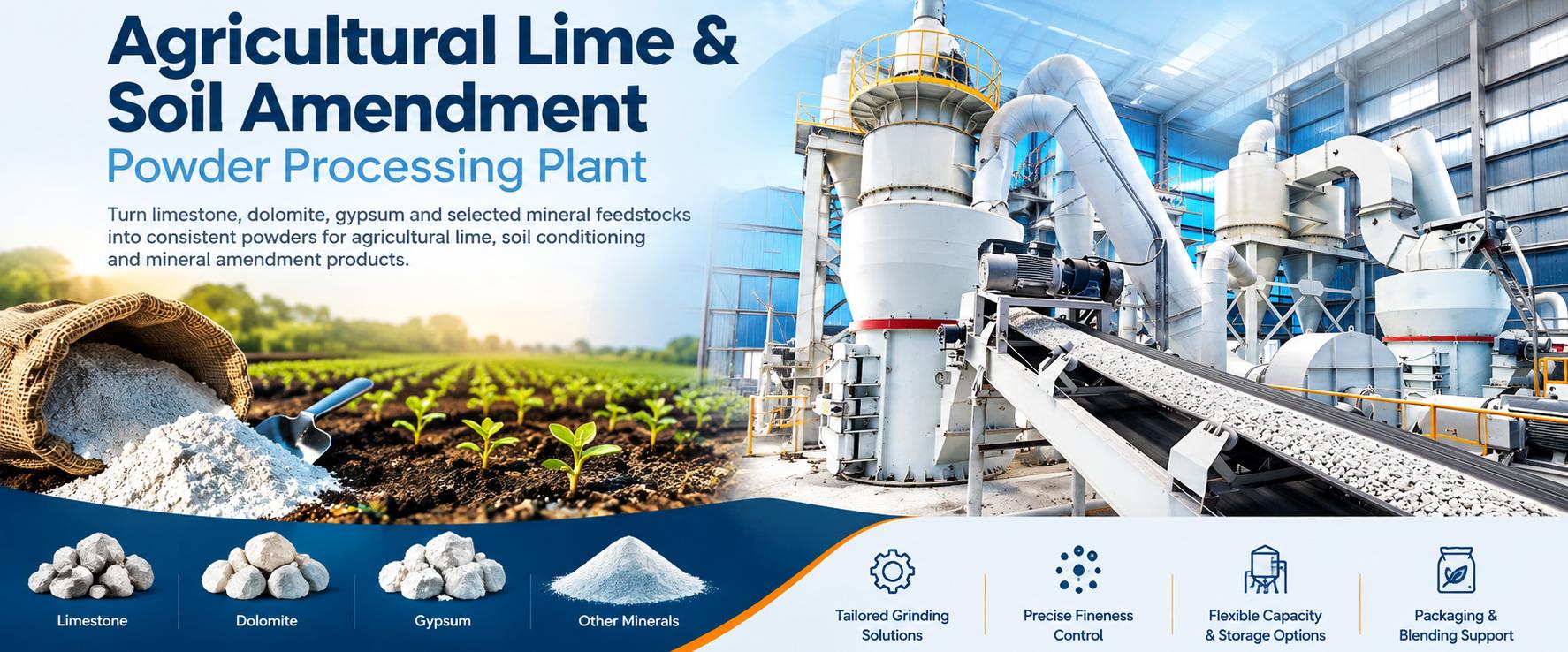
Fineness is one of the most important quality parameters in soil amendment powder production. Whether a plant processes agricultural limestone, dolomite, gypsum, or another mineral material, the particle-size distribution affects product consistency, handling characteristics, and, in many applications, the rate at which the material reacts with soil.
For powder manufacturers, controlling fineness means more than selecting a grinding mill with a particular mesh rating. Raw material properties, feeding stability, grinding conditions, classification, airflow, and finished-product testing all influence the final result. A well-designed production system must keep these factors under control while meeting the required output capacity.
1. Understand What Fineness Means
Fineness describes the size of particles in a powder. It is commonly specified using particle diameter in micrometers or a mesh designation. These two methods are related, but mesh numbers and particle diameters are not interchangeable without considering the applicable sieve standard and measurement method.
For industrial powder production, it is also important to distinguish between a nominal fineness rating and the actual particle-size distribution. Two samples can have a similar average particle size but different proportions of coarse and fine particles.
Coarse particles: May react more slowly in applications where particle surface area affects chemical reaction rates.
Fine particles: Generally provide greater surface area per unit of mass, although excessive grinding may increase energy consumption without providing a meaningful benefit for the intended application.
Particle-size distribution: Shows how particles are distributed across different size ranges and helps determine whether the product meets the required specification.
The target fineness should be defined according to the mineral type, intended application, customer requirements, and relevant local standards. Agricultural limestone, dolomite, and gypsum do not necessarily require the same particle-size specification.
2. Choose a Grinding Mill That Matches the Target Fineness
The grinding mill establishes the main conditions for particle reduction. Its configuration should match the raw material's grindability, maximum feed size, required product fineness, and target production rate.
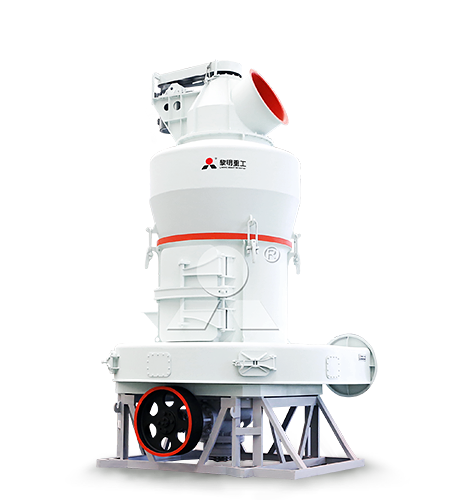
MTW European Trapezium Grinding Mill
The MTW European Trapezium Grinding Mill from Liming Heavy Industry can be considered for conventional limestone and dolomite powder production when the required fineness and capacity fit the selected model. It is an option for projects that need a controlled powder product for soil amendment applications.
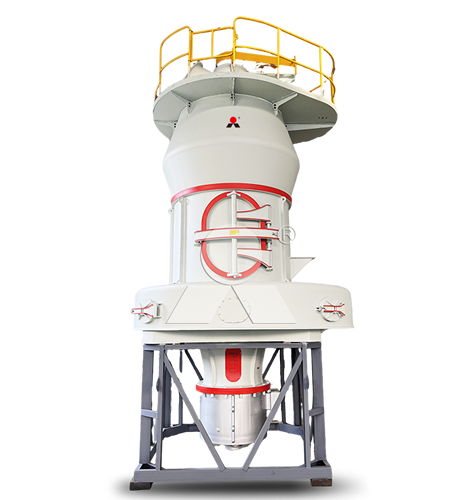
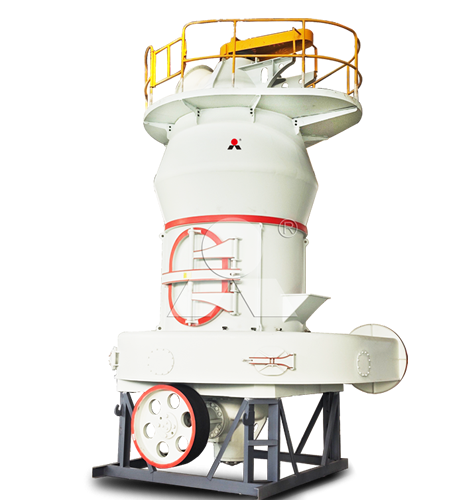
LM Vertical Grinding Mill
The LM Vertical Grinding Mill may be suitable for larger-scale mineral powder plants. Depending on the model and system configuration, it can integrate grinding, classification, and drying functions where appropriate. The actual fineness and capacity must be evaluated against the material and operating conditions.
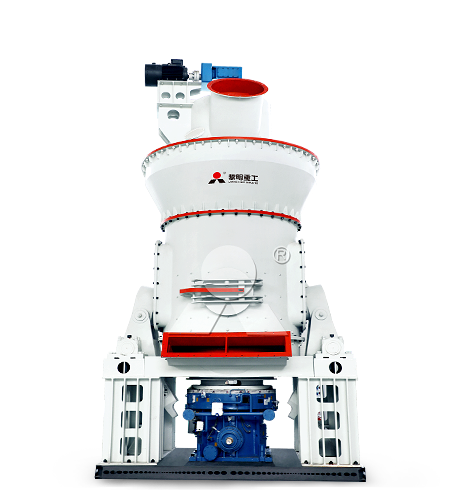
Raymond Grinding Mill
The Raymond Grinding Mill can be evaluated for smaller-capacity powder production where the feed material and required fineness fall within the selected model's operating range.
When selecting equipment, do not focus on fineness alone. A mill may be capable of producing a target powder size but may not achieve the required output at that fineness for a particular material. The equipment proposal should consider fineness and capacity together.
3. Control the Raw Material Before Grinding
Stable grinding begins with consistent feed material. Variations in feed size, moisture, hardness, and mineral composition can change the grinding load and affect the finished powder.
Feed size: Oversized material can reduce throughput or create unstable operating conditions. Crushing and screening may be required before grinding.
Moisture content: Excess moisture may cause sticking, buildup, or feeding difficulties, depending on the material and equipment. Drying requirements should be evaluated before finalizing the process.
Hardness and abrasiveness: Changes in mineral characteristics can affect grinding performance and wear-part consumption.
Feed consistency: A stable feed rate helps the mill operate under more consistent conditions and reduces fluctuations in product quality.
For plants processing limestone from multiple quarries or dolomite with varying characteristics, routine raw material inspection can help identify changes before they affect the production line.
4. Adjust Classification to Control Product Size
Grinding and classification work together to determine the fineness of the finished powder. Grinding reduces particle size, while the classifier separates particles according to the system's operating settings and design.
In a closed-circuit or integrated grinding system, material that does not meet the required size may return for further grinding. The finer product proceeds toward collection. The actual arrangement varies with the mill design.
When the finished powder is too coarse, the cause may be an unsuitable classifier setting, excessive feed rate, inconsistent material properties, or insufficient grinding. Simply increasing grinding intensity is not always the best solution.
When the product is finer than required, the system may be consuming unnecessary energy or producing less material than expected. The operator should check classification settings and operating conditions while confirming that the product still meets the required particle-size distribution.
Classifier adjustments should follow the equipment manufacturer's operating guidance. Changes to rotational speed, airflow, or other settings can affect both product fineness and output, so each adjustment should be evaluated through sampling and performance monitoring.
5. Maintain Stable Feeding and Grinding Conditions
Frequent fluctuations in feed rate can cause variations in grinding load and finished-product quality. A well-designed feeding system and consistent operating procedures help maintain more stable production.
Operators should monitor the parameters available on the selected mill and control system, which may include:
Feed rate and feed continuity
Grinding system load and motor current
Classifier operating conditions
Airflow and system pressure, where applicable
Feed moisture and material condition
Finished-product fineness and production rate
These parameters should be assessed together. For example, reducing feed rate may help a plant reach a finer target, but it can also lower output. Increasing airflow or changing classifier settings may affect separation performance, so operators should avoid making several changes at once without recording the results.
6. Use Sampling and Testing to Verify Fineness
Equipment settings provide useful process information, but they do not replace finished-product testing. Regular sampling helps determine whether the actual powder meets the agreed specification.
Depending on the product and customer requirements, fineness can be evaluated using sieve analysis, laser diffraction, or another suitable particle-size measurement method. The test method should be consistent so that results from different production batches can be compared reliably.
A practical quality-control routine includes the following steps:
Define the required fineness and acceptable particle-size distribution.
Collect representative samples from the finished-product stream or storage system.
Test samples using the specified measurement method.
Record the results alongside feed conditions, operating settings, and production output.
Investigate deviations and adjust the relevant process variables.
Repeat testing to confirm that the corrective action has worked.
For products sold under agricultural or industrial specifications, the plant should also verify other required quality parameters, such as chemical composition or moisture content. Fineness alone does not establish overall product suitability.
7. Match Fineness Control to the Mineral Application
Different soil amendment materials have different processing and quality requirements. The target fineness should reflect the material's intended function rather than a universal mesh number.
Agricultural limestone and dolomite
Particle size influences how quickly ground carbonate minerals react with acidic soil. Producers should follow the particle-size requirements of their target market and consider the relationship between fineness, reactivity, throughput, and grinding cost.
Agricultural gypsum
Gypsum is used in specific soil-management applications, and its appropriate particle size depends on the intended use and applicable product requirements. Its fineness specification should be established separately from that of limestone or dolomite.
Other mineral-based soil amendments
Materials with different hardness, moisture sensitivity, or abrasiveness may require different mill configurations and operating conditions. Equipment should be selected according to the specific material rather than assuming that one setting will work for every mineral.
8. Common Fineness Control Problems and Their Solutions
| Observed problem | Possible causes | Recommended checks |
|---|---|---|
| Powder is too coarse | Unsuitable classification settings, excessive feed rate, coarse or harder feed material | Check the classifier, feed conditions, grinding load, and measured particle-size distribution |
| Powder is finer than required | Classification settings or operating conditions are producing excessive fines | Review system settings and compare product fineness with actual output and energy use |
| Fineness changes between batches | Variable feed size, moisture, mineral properties, or operating conditions | Improve feed inspection, feeding stability, sampling, and operating records |
| Production rate decreases at the target fineness | The material is difficult to grind, the target is demanding, or the mill is not appropriately sized | Review grindability, capacity requirements, equipment selection, and system configuration |
| Powder buildup or unstable feeding | Excessive moisture, unsuitable feed conditions, or material handling issues | Check moisture, storage conditions, feeders, and conveying equipment |
These are potential causes rather than universal diagnoses. Operators should use test results and equipment operating data to identify the actual source of a problem before making major adjustments.
9. Improve Fineness Consistency Without Unnecessary Operating Costs
Producing a finer powder is not always the same as producing a better product. Excessive grinding can increase electricity consumption, accelerate wear, and reduce throughput. The objective should be to meet the required specification consistently and efficiently.
To improve overall performance:
Set a clear product specification before selecting the mill.
Keep raw material size and moisture within the intended operating range.
Maintain a consistent feed rate.
Inspect grinding and classification components according to the maintenance schedule.
Track product fineness alongside production rate and energy consumption.
Use representative sampling to confirm the results of process adjustments.
Where several product grades are required, evaluate whether the selected system can produce each grade at the necessary capacity. A configuration optimized for one fineness may not deliver the same throughput at another.
10. Choose a Suitable Grinding Solution with Liming Heavy Industry
Liming Heavy Industry provides grinding equipment for limestone, dolomite, gypsum, and other non-metallic mineral processing applications. The MTW European Trapezium Grinding Mill, LM Vertical Grinding Mill, and Raymond Grinding Mill can be evaluated according to the material characteristics, target fineness, required output, and plant operating conditions.
For an initial equipment assessment, prepare the following information:
Material type and, where available, its chemical or mineral composition
Maximum feed size and moisture content
Required finished-powder fineness and particle-size distribution
Target capacity in tonnes per hour or tonnes per day
Whether drying, crushing, classification, or packaging equipment is required
Project location and existing plant conditions, if applicable
With these details, the Liming Heavy Industry team can evaluate an appropriate grinding configuration and supporting equipment for your soil amendment powder production project. Visit the Liming Heavy Industry product page to explore available grinding mill options.
Related Agricultural Lime & Soil Amendment


Meet Liming Heavy Industry at the 140th Canton Fair 2026
2026-10-13

Liming Heavy Industry to Attend the 140th Canton Fair
2026-09-25
Liming Heavy Industry at bauma CONEXPO INDIA 2026 | Booth 5-C6
2026-09-07
Turnkey Raw Mill Cement Plant in Saudi Arabia: Design and Installation
2026-09-03
Cement Raw Mill Supplier in Indonesia: Cost and Configuration Analysis
2026-09-01
Complete Mineral Processing Solutions
Convenient Reliable Professional Efficient Get Your Quote
Please feel free to submit your inquiry information to us. We will contact with you as soon as possible.
Our team will contact you as soon as possible.