


Classification is an essential part of quicklime powder production. Grinding reduces cooled quicklime to smaller particles, while the classification stage separates qualified fine powder from particles that still require further grinding. Together, grinding and classification determine whether the finished CaO powder can consistently meet the required particle-size specification.
For applications such as flue gas desulfurization, metallurgy, chemical processing and mineral processing, consistent powder characteristics can be just as important as overall production capacity. A properly designed classification system helps keep the finished product within the required range while supporting stable continuous operation.
What Does Classification Do?
After quicklime enters the grinding mill, the resulting particles are not all the same size. Some particles may already be fine enough to become finished product, while others remain relatively coarse.
The classifier separates these particles according to the selected operating conditions. Qualified fine powder moves toward the collection system, while coarse particles are returned to the grinding zone for additional size reduction.
This creates a continuous closed grinding and classification cycle:
Quicklime Feeding → Grinding → Classification → Fine Powder Collection → Finished Product
Coarse particles remain within the grinding circuit until they reach the required size.
Why Classification Matters for Quicklime Powder
Simply increasing grinding intensity does not necessarily produce a better quicklime powder. Excessive grinding can consume additional energy without providing a meaningful benefit when the finished product already meets the required specification.
Classification allows the grinding system to distinguish between qualified and unqualified particles. This helps direct finished powder out of the grinding circuit while returning coarse material for further processing.
The result is a more controlled particle-size distribution and a more stable finished-product output.
Mesh Size Alone Does Not Describe the Entire Product
Quicklime powder specifications are sometimes expressed using a mesh size, but mesh size alone does not fully describe particle-size distribution.
A project may specify a target such as 200 mesh with D90. In this case, both the nominal mesh requirement and the particle-size distribution need to be considered when configuring the grinding and classification system.
This is particularly important when the powder is used in a process where particle size affects reaction behavior, material handling or downstream performance.
Classification for Flue Gas Desulfurization
Quicklime powder is used in various flue gas desulfurization processes, and the required powder characteristics depend on the specific process design.
A consistent particle-size distribution can help maintain predictable material behavior when quicklime powder is fed into a desulfurization system. The appropriate fineness should therefore be determined from the actual process requirements rather than selecting the finest possible product.
For a project requiring 200-mesh quicklime powder, for example, the classifier should be configured to maintain the required product range during continuous operation.
How Classification Affects Grinding Stability
Classification and grinding are closely connected. If the classifier allows too much coarse material to leave the system, the finished product may contain particles outside the required specification. If classification is too restrictive, excessive material may remain in circulation and increase the grinding load.
A properly matched grinding and classification system maintains an appropriate balance between material circulation and finished-product discharge.
This is particularly important for large-scale plants, where even small changes in classification performance can affect production stability over long operating periods.
LM Vertical Mill and Integrated Classification
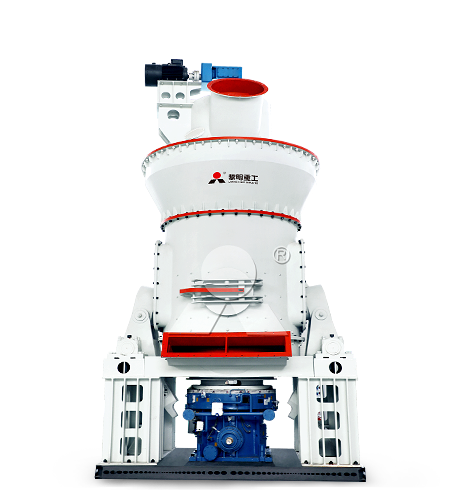
For large-scale quicklime powder production, the Liming Heavy Industry LM Vertical Mill integrates grinding and classification within the grinding system.
Cooled quicklime is fed into the mill and ground to the required particle size. The classification section then separates qualified powder from coarse particles. Fine powder proceeds to the collection system, while coarse material returns to the grinding section.
This integrated arrangement allows the grinding and classification processes to operate as a coordinated system and can be configured according to the required capacity and finished-product fineness.
Factors That Influence Classification Performance
Classification performance depends on more than the classifier itself. Several operating and material conditions should be considered.
Feed characteristics: Quicklime hardness, lump size and material condition affect the grinding load and particle formation.
Target fineness: The classifier needs to operate according to the required finished-product specification.
Production capacity: Higher throughput requires a classification system capable of handling the corresponding material flow.
Grinding conditions: Grinding and classification must remain properly balanced during operation.
Airflow: In air-classification systems, stable airflow contributes to consistent separation conditions.
Material circulation: Coarse particles should return efficiently to the grinding section without disrupting continuous production.
Maintaining Consistent Quicklime Powder Quality
Consistent finished powder requires stable operation across the entire grinding circuit. Changes in feed rate, feed size or material characteristics can influence the amount of material entering and leaving the classification stage.
Regular monitoring of the finished product can help identify changes in particle-size distribution. If the product begins to move outside the required range, the grinding and classification conditions can be adjusted accordingly.
For continuous plants, maintaining stable feeding and avoiding sudden changes in operating conditions are also important for keeping product quality consistent.
Classification and Powder Collection Work Together
Classification is only one part of the finished-product system. Once qualified quicklime powder leaves the classifier, it needs to be efficiently collected and transferred to storage.
A properly designed collection system prevents unnecessary recirculation of qualified powder and helps maintain stable material flow. Enclosed conveying and storage can also reduce dust and protect the finished CaO powder from moisture.
Designing a Quicklime Grinding and Classification System
Before selecting the equipment, the project should define the main product and operating requirements:
Quicklime feed size and material characteristics
Required finished powder capacity
Target fineness and particle-size distribution
Application of the quicklime powder
Finished-product storage requirements
Bulk loading or bag-packing method
These parameters provide the basis for selecting the grinding and classification configuration. For large-scale projects, the Liming Heavy Industry LM Vertical Mill can be configured as the core grinding equipment when its operating range matches the required capacity and powder specification.
Consistent Classification Supports Consistent CaO Powder
In a quicklime powder plant, classification is the link between grinding and finished-product quality. It determines which particles are ready to leave the grinding circuit and which particles need further size reduction.
When grinding, classification, collection and feeding are properly coordinated, the plant can produce a more consistent CaO powder while maintaining stable continuous operation.
For projects requiring controlled quicklime powder fineness, the Liming Heavy Industry LM Vertical Mill provides an integrated grinding and classification solution that can be matched to the actual material, capacity and finished-product requirements.
Related Quicklime Powder Production Line


Liming Heavy Industry to Attend the 140th Canton Fair
2026-09-25

Liming Heavy Industry at bauma CONEXPO INDIA 2026 | Booth 5-C6
2026-09-07
Turnkey Raw Mill Cement Plant in Saudi Arabia: Design and Installation
2026-09-03
Cement Raw Mill Supplier in Indonesia: Cost and Configuration Analysis
2026-09-01
Liming Heavy Industry to Exhibit at the 24th Global Gypsum Conference & Exhibition in Turkey
2026-08-31
Complete Mineral Processing Solutions
Convenient Reliable Professional Efficient Get Your Quote
Please feel free to submit your inquiry information to us. We will contact with you as soon as possible.
Our team will contact you as soon as possible.