


Selecting grinding mill capacity for drilling minerals requires more than matching a mill model to an annual tonnage target. The selected system must continuously produce powder that meets the required density, moisture, particle-size distribution, and functional performance under actual feed conditions.
For large, continuous drilling-mineral powder projects, the LM Vertical Roller Mill is suitable because it integrates crushing, drying, grinding, classification, and pneumatic conveying in one system. For flexible small-to-medium capacity projects, the MTW European Grinding Mill provides a practical solution for controlled fine-powder production. The final selection should always be confirmed through representative material testing.
Begin with the Production Target
The first step is to define how much qualified finished powder must be delivered each year. This target should be based on confirmed customer demand, planned delivery regions, product mix, storage capacity, and the expected operating schedule of the plant.
Annual demand should then be converted into a realistic hourly production target. The calculation should use planned working days and effective operating hours, not every hour of the calendar year. A mill needs scheduled time for inspection, cleaning, maintenance, wear-part replacement, product changes, raw-material interruptions, and quality adjustments.
| Annual Finished-Powder Target | Typical Plant Position | Capacity Planning Focus |
|---|---|---|
| Up to 20,000 t/year | Local supply or an initial drilling-mineral project. | Flexible operation, moderate storage, bagging or big-bag delivery, and controlled investment. |
| 20,000–50,000 t/year | Regional supply to drilling-fluid companies and distributors. | Stable fine-powder output, reliable packing, sufficient raw-material storage, and efficient dust collection. |
| 50,000–100,000 t/year | Established regional production facility with regular bulk deliveries. | Continuous operation, finished-product silos, tanker loading, automatic control, and planned maintenance access. |
| 100,000–200,000 t/year | Large centralized powder plant serving multiple drilling-fluid customers. | High-capacity integrated grinding, strong raw-material logistics, multi-silo storage, laboratory release, and loading redundancy. |
| Above 200,000 t/year | Strategic bulk-supply operation or mining-linked drilling-mineral hub. | Large-scale integrated processing, high storage capacity, standby planning, automated dispatch, and staged expansion capability. |
The mill should normally be selected with practical operating margin instead of being expected to run at maximum nameplate output every day. This allows the plant to maintain finished-powder quality when the raw material becomes harder, wetter, or more variable than expected.
Build in Operating Margin
Capacity margin protects production continuity. A drilling-mineral plant may lose available time because of crusher maintenance, filter replacement, mill inspection, roller or liner wear, power interruption, raw-material handling delays, laboratory hold periods, or truck-loading limitations.
When the selected mill is too close to the minimum required output, operators may be forced to increase feed rate or relax classification settings to maintain delivery volume. This can increase coarse residue, create excess ultrafines, raise product moisture, or reduce batch consistency. A correctly sized line gives the operator room to protect product quality while maintaining output.
| Operating Condition | Recommended Capacity Allowance | Reason |
|---|---|---|
| Stable ore source and standard product grade | Approximately 15–20% | Allows normal maintenance and operating variation without forcing the mill to run continuously at its limit. |
| Variable barite moisture, hardness, or density | Approximately 20–30% | Maintains output when drying demand, grinding resistance, or classification load changes. |
| Strict drilling-grade barite or hematite specification | Approximately 20–30% | Allows product quality to be maintained without sacrificing particle-size control for short-term output. |
| Remote site with limited spare-parts access | Approximately 25–35% | Provides additional protection against downtime caused by maintenance or logistics delays. |
| New market with uncertain growth | Phased development | Reserve space and infrastructure for future expansion instead of installing excessive initial capacity. |
For example, if a project requires a stable supply of 15 t/h of finished drilling-grade powder, the selected grinding line should usually have a higher practical operating capacity. This margin allows the mill to continue meeting product requirements during normal process variation and scheduled maintenance periods.
Factors That Affect Actual Output
The capacity shown for a grinding mill is always affected by the actual mineral, feed condition, required fineness, and operating settings. A mill that handles a certain tonnage of dry, soft limestone may produce a lower tonnage when processing wet barite, abrasive hematite, or bentonite requiring careful moisture control.
| Capacity Factor | Effect on Production | What Should Be Confirmed |
|---|---|---|
| Raw feed size | Large or inconsistent feed reduces grinding efficiency and may cause unstable mill loading. | Maximum feed size, crusher discharge size, screen performance, and feed-size variation. |
| Material hardness | Harder minerals require more grinding energy and can reduce hourly output. | Mohs hardness, grindability, mineral texture, and hard gangue content. |
| Material moisture | High moisture increases drying demand and may reduce grinding, classification, conveying, and collection efficiency. | Average moisture, maximum seasonal moisture, raw-material storage method, and available heat source. |
| Finished powder size | Finer powder normally requires more grinding work and can reduce output. | Required D10, D50, D90, screen residue, upper particle limit, and ultrafine fraction. |
| Particle-size distribution | A narrow, controlled distribution may require lower feed rates than ordinary industrial powder production. | Coarse-particle limit, ultrafine limit, classifier performance, and return-material circulation. |
| Specific gravity and ore grade | Low-grade or mixed feed can cause unstable finished-product density and may require blending or beneficiation. | Specific gravity, mineral composition, impurities, and raw-material consistency. |
| Abrasiveness | Abrasive minerals increase wear and may gradually reduce output if components are not maintained. | Silica content, iron oxide content, gangue mineral composition, and expected wear rate. |
| Classifier adjustment | A finer separation setting increases return load and can reduce finished-product capacity. | Airflow, separator speed, system pressure, desired product distribution, and dust-collector condition. |
Barite illustrates why output must be linked to quality control. Drilling-grade barite commonly requires a minimum specific gravity of 4.20 g/mL, no more than 3.0% retained above 75 μm, and no more than 30% below 6 μm. Increasing throughput by allowing a coarser product may fail the coarse-residue requirement, while excessive grinding can create too much material below 6 μm.
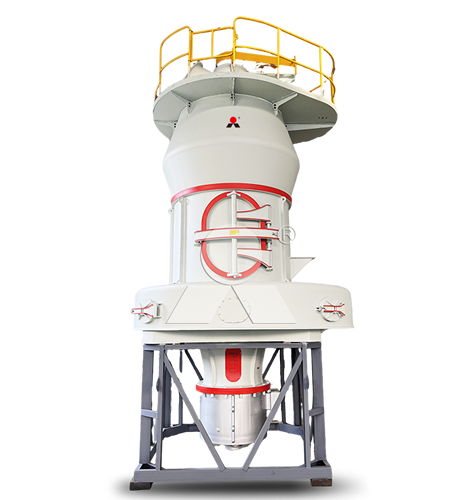
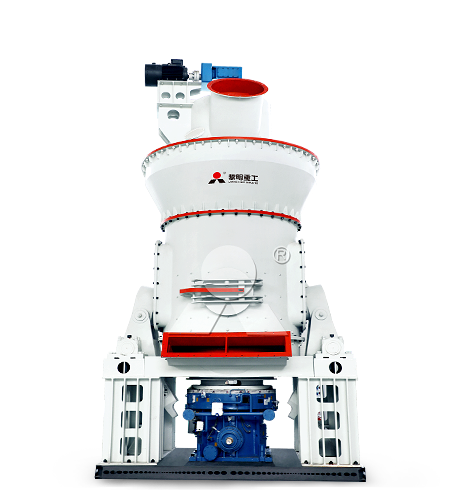
LM Vertical Roller Mill
The LM Vertical Roller Mill is the preferred choice for large-scale drilling-mineral powder plants that require high output, integrated drying, efficient classification, and a compact process layout. It is suitable for barite, hematite, bentonite, and fine calcium carbonate processing when the mill configuration is matched to the actual mineral properties.
The system integrates crushing, drying, grinding, powder classification, and pneumatic conveying. Prepared material enters the mill and is ground on the rotating table by rollers. Airflow carries the ground powder toward the classifier. Qualified powder moves into the collection system, while coarse particles return to the grinding zone for further processing.
| LM Vertical Roller Mill Feature | Capacity Selection Value |
|---|---|
| Integrated process functions | Combines several process stages, reducing intermediate transfer points and supporting large-scale continuous production. |
| Integrated drying capability | Helps manage moisture-bearing barite, bentonite, and other feed materials without adding unnecessary handling stages. |
| Internal powder classification | Supports controlled particle-size distribution and recirculates coarse material for additional grinding. |
| High-output operating concept | Suitable for centralized powder facilities supplying bulk drilling minerals to multiple customers. |
| Automatic control system | Helps maintain stable feed rate, mill load, drying temperature, airflow, and finished-powder quality. |
| Compact arrangement | Supports efficient plant layout where installation space and material-transfer distance are important considerations. |
The LM Vertical Roller Mill is particularly suitable when the project requires sustained high output, bulk tanker loading, large finished-product silos, and the ability to process mineral feed with variable moisture. It also provides a practical route for future expansion when the original plant layout reserves space for additional storage, loading stations, or parallel processing capacity.
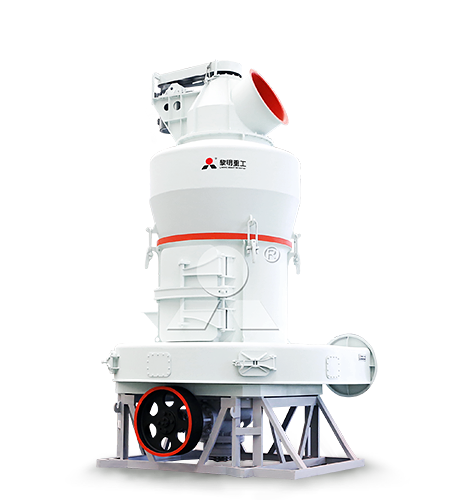
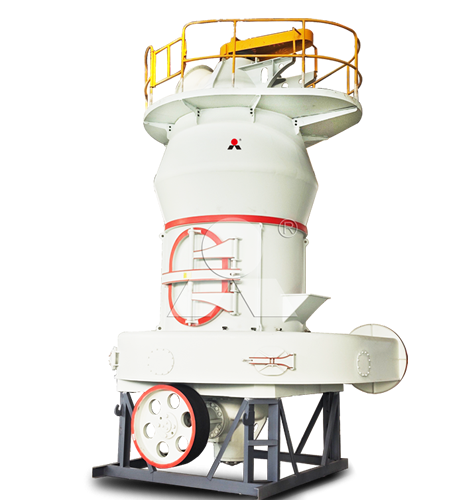
MTW European Grinding Mill
The MTW European Grinding Mill is suitable for drilling-mineral powder projects that require flexible capacity and reliable fine grinding. It is a practical option for regional barite, bentonite, hematite, and fine calcium carbonate plants where demand does not require a large vertical-mill installation.
Prepared feed enters the mill through a controlled feeding system. Grinding rollers press the material against the grinding ring, reducing it into fine powder. Airflow carries the ground material to the classifier, where qualified particles proceed to the dust collector and coarse particles return to the grinding chamber.
| MTW European Grinding Mill Feature | Capacity Selection Value |
|---|---|
| Flexible production arrangement | Suitable for projects with moderate, changing, or phased capacity requirements. |
| Roller-and-ring grinding | Provides controlled fine grinding for several drilling-mineral powder applications. |
| Air-classification circuit | Separates qualified powder from coarse material and supports stable final fineness. |
| Complete-line compatibility | Can be integrated with crushing, feeding, drying, powder collection, storage, and packing equipment. |
| Practical maintenance structure | Supports planned inspection of rollers, grinding rings, classifier parts, conveyors, and dust-collection equipment. |
| Expandable plant layout | Allows producers to add packing capacity, storage silos, or a parallel mill as demand grows. |
The MTW European Grinding Mill is best suited to projects where raw material has been properly crushed and prepared, moisture is controlled, and the plant requires dependable fine-powder output with a conventional crusher–feeder–mill–classifier–collector–silo arrangement.
Capacity Selection by Mineral
Each drilling mineral has a different capacity-selection priority. A suitable mill capacity for one mineral should not be copied directly to another material without confirming the feed properties and finished-product requirements.
| Mineral | Primary Capacity Consideration | Suitable Mill Arrangement |
|---|---|---|
| Barite | Specific gravity, moisture, coarse residue above 75 μm, ultrafine fraction below 6 μm, and classifier efficiency. | LM Vertical Roller Mill for large integrated plants; MTW European Grinding Mill for flexible fine-powder production. |
| Hematite | High density, Fe2O3 content, abrasiveness, silica-bearing impurities, component wear, and tight particle-size control. | LM Vertical Roller Mill for sustained high output; MTW European Grinding Mill for moderate capacity, both with wear-resistant configuration. |
| Bentonite | Feed moisture, drying requirement, hydration performance, coarse residue, and temperature control. | LM Vertical Roller Mill where integrated drying is needed; MTW European Grinding Mill for dry, stable, well-prepared feed. |
| Fine calcium carbonate | Fine-powder distribution, acid solubility, low insoluble residue, and separate storage from larger grades. | LM Vertical Roller Mill for high-volume fine grades; MTW European Grinding Mill for flexible fine-grade production. |
| Medium and coarse calcium carbonate | Preserving particles large enough for bridging pores and fractures. | Use crushing and calibrated screening rather than fine grinding. |
For calcium carbonate, plant capacity must be divided by product grade. Fine material can be produced by grinding and air classification, while medium and coarse bridging grades require crushing, screening, separate storage, and controlled blending. It is not efficient to send all calcium carbonate through a fine grinding circuit when the product requirement includes coarse particles for lost-circulation control.
Size the Full Production Line
The mill is only one part of capacity planning. The complete line must be designed so that crushing, drying, feeding, classification, dust collection, conveying, storage, packing, and bulk loading can all support the planned output.
| Process Section | Capacity Planning Requirement | Common Risk if Undersized |
|---|---|---|
| Crusher and screen | Must supply consistent feed at or above the practical mill requirement. | The mill is starved of feed or receives oversized material, causing unstable output. |
| Feed hopper and feeder | Must provide stable continuous feeding with enough buffer time for short crushing interruptions. | Fluctuating mill load, unstable classification, and inconsistent product fineness. |
| Drying system | Must handle the highest expected seasonal moisture condition, not only average moisture. | Wet material buildup, reduced grinding performance, and poor powder flow in silos. |
| Classifier | Must process full airflow and circulating load while maintaining the required particle-size distribution. | Excessive coarse residue or excessive ultrafine content. |
| Dust collector and fan | Must handle total system airflow, including the mill, classifier, transfer points, and normal air leakage. | Dust escape, low powder recovery, unstable airflow, and reduced classification performance. |
| Finished-product silos | Must store qualified powder while laboratory testing, truck scheduling, and loading continue. | The mill stops because dispatch cannot keep up with production. |
| Packing and bulk loading | Must remove finished powder at least as quickly as average production over the operating period. | Product backs up in silos, creating an avoidable plant bottleneck. |
For a high-output drilling-barite operation, the finished-product silo system is particularly important. Multiple silos allow one batch to remain under laboratory review while another qualified batch is loaded for dispatch. This arrangement improves supply continuity and prevents mixing of products with different density grades or test results.
Recommended Selection Procedure
Define the product: Confirm the mineral type, drilling application, target particle-size distribution, density requirement, moisture limit, packing format, and annual demand.
Set a realistic operating schedule: Include planned maintenance, inspection, product changes, laboratory release, and loading time.
Select practical operating capacity: Include sufficient margin for normal availability loss, raw-material variation, and strict quality control.
Test representative feed: Measure moisture, hardness, abrasiveness, mineral composition, specific gravity, particle-size distribution, and grindability.
Confirm the powder specification: Use particle-size distribution, sieve residue, and ultrafine limits rather than relying only on a nominal mesh number.
Select the mill type: Use the LM Vertical Roller Mill for large, integrated, continuous projects requiring drying and high output; use the MTW European Grinding Mill for flexible, moderate-capacity fine-powder production.
Size all auxiliary equipment: Match crushing, drying, classification, dust collection, storage, packing, and loading systems to the mill’s practical operating rate.
Validate at production load: Confirm that the selected line can maintain the required product quality while operating at the planned output rate.
A properly sized grinding line gives the producer the ability to maintain drilling-mineral quality under real operating conditions. The best selection is not the smallest mill that can theoretically meet the target, but the LM Vertical Roller Mill or MTW European Grinding Mill configuration that can deliver stable, qualified powder with enough operating margin for long-term production.
Related Oil & Gas Mineral Processing


Liming Heavy Industry at bauma CONEXPO INDIA 2026 | Booth 5-C6
2026-09-07

Turnkey Raw Mill Cement Plant in Saudi Arabia: Design and Installation
2026-09-03
Cement Raw Mill Supplier in Indonesia: Cost and Configuration Analysis
2026-09-01
Liming Heavy Industry to Exhibit at the 24th Global Gypsum Conference & Exhibition in Turkey
2026-08-31
Complete Calcium Carbonate Grinding and Coating Plant Solution
2026-08-29
Complete Mineral Processing Solutions
Convenient Reliable Professional Efficient Get Your Quote
Please feel free to submit your inquiry information to us. We will contact with you as soon as possible.
Our team will contact you as soon as possible.