


Barite and calcium carbonate serve different primary purposes in drilling fluids. Barite is the standard high-density weighting mineral used to raise mud weight and control formation pressure, while calcium carbonate is mainly an acid-soluble bridging and fluid-loss-control material used to seal permeable zones, fractures, and reservoir pore openings.
They can be used in the same drilling-fluid program, but they should not be treated as direct substitutes. Barite is selected for density; calcium carbonate is selected for particle-size-controlled bridging and later acid removal when reservoir protection is important.
Core Differences
| Comparison Item | Barite | Calcium Carbonate |
|---|---|---|
| Main composition | Barium sulfate, BaSO4 | Calcium carbonate, CaCO3 |
| Specific gravity | Minimum 4.20 g/cm3 for conventional drilling-grade barite. | Approximately 2.7–2.8 g/cm3. |
| Primary drilling function | Increasing drilling-fluid density and generating hydrostatic pressure. | Bridging pores and fractures, controlling seepage or lost circulation, and supporting filter-cake formation. |
| Acid solubility | Generally not selected for acid removal. | Highly acid soluble; commercial products may reach 97–98% or higher solubility in 15% hydrochloric acid. |
| Typical particle-size focus | Fine, closely controlled powder for suspension and mud-weight stability. | Fine, medium, coarse, or blended grades chosen according to pore, fracture, and loss-zone size. |
| Common drilling use | Routine weighted mud systems, including water-based and oil-based drilling fluids. | Drill-in fluids, reservoir sections, completion and workover fluids, seepage control, and lost-circulation treatments. |
| Value near producing formations | Effective for weighting but may not be desirable where removable solids are required. | Useful where a temporary, removable bridge is needed to reduce formation damage risk. |
Barite has the density needed for efficient mud weighting: it is commonly specified with a minimum specific gravity of 4.20 g/cm3. Calcium carbonate has a lower specific gravity of approximately 2.7–2.8 g/cm3, so it can contribute some density but is typically chosen for acid solubility and bridging performance rather than for high mud-weight construction.
Barite: The Weighting Mineral
Barite is the most common weighting material in drilling fluids. It increases fluid density so that the hydrostatic pressure exerted by the mud column can help balance formation pressure and support well control.
Because barite is dense, a relatively moderate volume of solid material can produce a meaningful increase in mud weight. This makes it suitable for conventional weighted water-based, oil-based, and synthetic-based drilling fluids. API drilling-grade barite is commonly supplied in 4.1 g/mL and 4.2 g/mL density grades, with 4.2-grade material being the established reference for many drilling applications.
For barite powder, particle-size distribution is essential. Excessively coarse particles may settle more readily, while too many ultrafines can increase viscosity and treatment demand. Conventional drilling-grade barite is commonly controlled to limit particles above 75 μm and the fraction below 6 μm. The processing line must therefore combine stable grinding with efficient air classification.
| Barite Processing Requirement | Reason |
|---|---|
| High-specific-gravity raw ore | Grinding cannot increase the natural density of the barite deposit. |
| Stable fine-powder production | Supports even dispersion and more consistent mud-weight adjustment. |
| Controlled coarse residue | Helps limit settling and reduces oversize particles in the drilling-fluid system. |
| Controlled ultrafine fraction | Helps prevent unnecessary increases in fluid viscosity and chemical consumption. |
| Dry, enclosed storage | Supports free powder flow, accurate loading, and clean handling. |
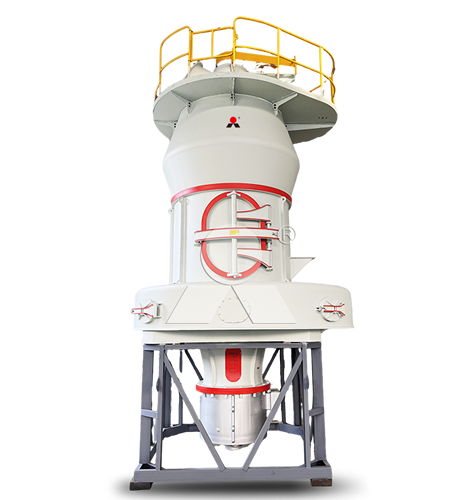
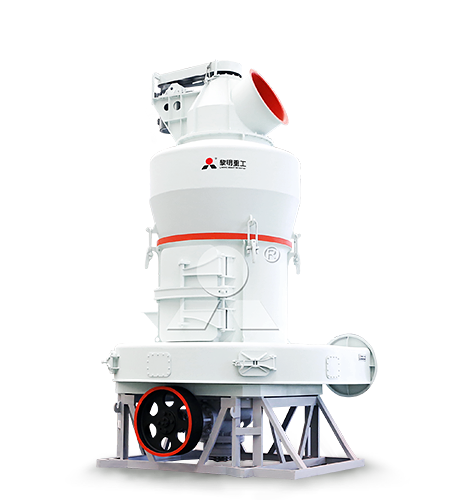
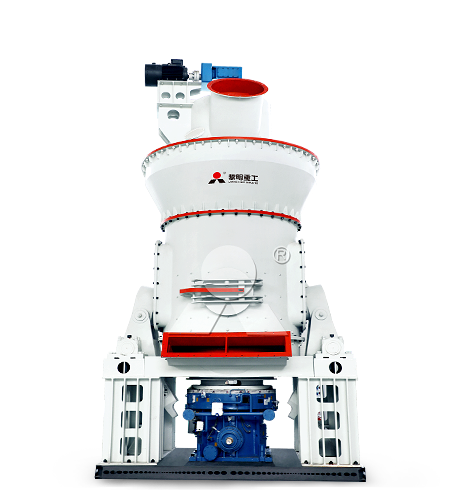
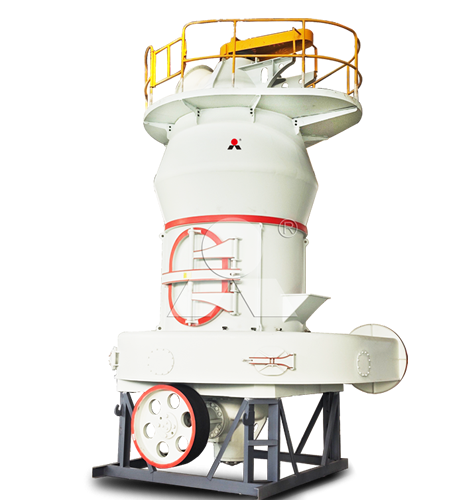
For large-volume barite powder production, the LM Vertical Roller Mill can provide integrated drying, grinding, classification, and pneumatic conveying. For flexible-capacity barite plants, the MTW European Grinding Mill can provide roller-and-ring grinding with air classification and powder collection.
Calcium Carbonate: The Bridging Mineral
Calcium carbonate is most valuable when drilling fluid must control fluid loss while minimizing the risk of permanent formation plugging. It is commonly manufactured from high-purity limestone, marble, or calcite and supplied in several particle-size grades.
When a drilling fluid enters a permeable zone, microfracture, natural fracture, or larger loss zone, calcium carbonate particles can form a bridge across the opening. Fine material fills smaller spaces, medium particles build the bridge structure, and coarse particles span larger openings. A carefully designed blend of grades can create a more densely packed and effective seal than a single-size powder.
Calcium carbonate is highly soluble in hydrochloric acid. This makes it especially suitable for reservoir drilling, drill-in fluids, completion operations, and workover fluids where solids should be removable during cleanup. A published drilling-fluid study notes that calcium carbonate is approximately 98% soluble in hydrochloric acid and can be used as a bridging agent and/or weighting material in drilling and completion fluids.
| Calcium Carbonate Grade | Typical Use | Processing Method |
|---|---|---|
| Ultra-fine calcium carbonate | Fine pore sealing, filter-cake improvement, and very fine bridging. | Fine grinding and air classification. |
| Fine calcium carbonate | Seepage-loss control and filling of small gaps in a bridging structure. | Fine grinding and classification, often supplied in 200- or 325-mesh grades. |
| Medium calcium carbonate | Bridging moderate pore throats and fractures. | Controlled crushing, screening, and grade separation. |
| Coarse calcium carbonate | Initial bridging across larger fractures, vugs, and severe loss zones. | Crushing, screening, and separation with minimal unwanted fines generation. |
| Multi-grade blend | Lost-circulation pills and treatment of formations with uncertain opening size. | Separate production of fine, medium, and coarse grades followed by controlled weighing and blending. |
Medium and coarse calcium carbonate are important because they provide the physical structure needed to bridge larger openings. They should not be sent through a fine-grinding system designed for barite powder. Their size must be preserved through properly controlled crushing and screening.
When to Use Each Material
Use barite when the principal requirement is to increase drilling-fluid density. It is the appropriate choice for controlling formation pressure through hydrostatic mud weight in conventional weighted drilling systems.
Use calcium carbonate when the principal requirement is to bridge permeable intervals, reduce seepage, control lost circulation, build a low-permeability filter cake, or use a solid that can later be removed by acid treatment. It is often preferred in reservoir sections, where acid-soluble solids can reduce the chance of permanent formation impairment.
| Drilling Situation | More Suitable Material | Reason |
|---|---|---|
| Routine mud-weight increase | Barite | Its higher density makes it more efficient for increasing hydrostatic pressure. |
| High-density drilling fluid | Barite, or hematite where still higher density is required | Calcium carbonate has limited density contribution because of its lower specific gravity. |
| Minor seepage into a permeable formation | Fine calcium carbonate | Fine particles help seal smaller pore spaces and improve filter-cake quality. |
| Partial lost circulation through fractures | Medium and coarse calcium carbonate with fine material | A multi-grade blend can bridge the opening and fill remaining voids. |
| Reservoir drilling or drill-in fluid | Calcium carbonate | Its acid solubility allows removal during appropriate cleanup operations. |
| Completion or workover fluid | Calcium carbonate | Acid-soluble solids can support density and bridging needs while remaining removable. |
Using Barite and Calcium Carbonate Together
Barite and calcium carbonate can be used together when a drilling-fluid system requires both density control and fluid-loss management. In this arrangement, barite provides most of the mud weight, while calcium carbonate is added in a selected particle-size blend to form an acid-soluble bridge or filter cake.
For example, a reservoir drilling fluid may use barite to achieve the target equivalent mud weight while including fine and medium calcium carbonate to reduce invasion into a permeable production interval. If a larger fracture or loss zone develops, coarse calcium carbonate can be added as part of a designed lost-circulation pill.
Particle size must be selected carefully when combining the two materials. A study of barite sag mitigation found that 2 μm calcium carbonate produced the greatest sag reduction at a 70:30 barite-to-calcium-carbonate mixing ratio, while 40 μm calcium carbonate showed greater sag potential than 100% barite in the tested blends. This illustrates that calcium carbonate size affects not only bridging performance but also the overall suspension behavior of a weighted drilling fluid.
Processing Equipment Considerations
Barite and fine calcium carbonate both require controlled grinding and classification, but their production objectives are different. Barite processing focuses on generating a stable fine weighting powder. Fine calcium carbonate processing focuses on producing a defined fine grade for pore sealing and blend formulation.
The LM Vertical Roller Mill is suitable for high-output production of fine barite or fine calcium carbonate where integrated drying, grinding, classification, and pneumatic conveying are required. The MTW European Grinding Mill is suitable for flexible-capacity production of controlled fine barite or calcium carbonate powder.
For medium and coarse calcium carbonate, crushing and screening are the preferred production route. The purpose is to preserve the particle sizes needed for bridging rather than reduce all material into fine powder. Separate product silos, calibrated screens, controlled dust return, and accurate blending equipment are important for maintaining clean particle-size grades.
The right choice is therefore based on the drilling objective: select barite for efficient mud weighting, calcium carbonate for acid-soluble bridging and fluid-loss control, or a carefully engineered combination where the well requires both functions.
Related Oil & Gas Mineral Processing


Liming Heavy Industry at bauma CONEXPO INDIA 2026 | Booth 5-C6
2026-09-07

Turnkey Raw Mill Cement Plant in Saudi Arabia: Design and Installation
2026-09-03
Cement Raw Mill Supplier in Indonesia: Cost and Configuration Analysis
2026-09-01
Liming Heavy Industry to Exhibit at the 24th Global Gypsum Conference & Exhibition in Turkey
2026-08-31
Complete Calcium Carbonate Grinding and Coating Plant Solution
2026-08-29
Complete Mineral Processing Solutions
Convenient Reliable Professional Efficient Get Your Quote
Please feel free to submit your inquiry information to us. We will contact with you as soon as possible.
Our team will contact you as soon as possible.