


Fine and ultrafine limestone powder is used in applications where ordinary crushed limestone or coarse powder cannot provide the required particle size. Depending on the end use, limestone may need to be processed into fine powder for construction materials, fillers, chemical products, agriculture, plastics, coatings, and other industrial applications.
Producing finer limestone powder requires more than simply increasing the grinding intensity. The grinding mill, classifier, feeding system, dust collection equipment, and material-handling system need to work together to achieve the required product fineness and stable production.
What Is Fine Limestone Powder?
Fine limestone powder generally refers to limestone that has been processed to a substantially smaller particle size than crushed limestone. The exact definition varies between applications because different industries use different particle-size specifications.
Fine limestone powder is commonly used in construction materials, dry-mix mortar, cement-related applications, mineral fillers, agriculture, environmental applications, and other products where a controlled fine mineral component is required.
For many conventional fine-powder applications, the Liming Heavy Industry MTW European Grinding Mill and LM Vertical Grinding Mill can be considered according to the required capacity and final product specification.
What Makes Ultrafine Limestone Powder Different?
Ultrafine limestone powder requires substantially finer grinding and more precise classification than conventional fine powder. As the target particle size becomes smaller, controlling the separation of qualified and oversized particles becomes increasingly important.
Ultrafine limestone powder can be considered for applications requiring a high surface area, fine mineral filler, or a tightly controlled particle-size range. The actual requirement should always be determined by the final product and its formulation.
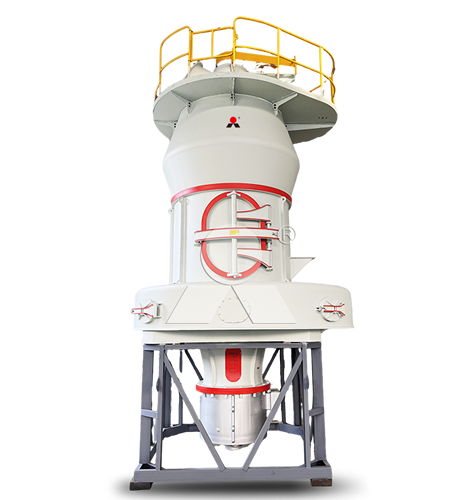
For these applications, Liming Heavy Industry offers the MW Micro Powder Mill and LUM Ultrafine Vertical Grinding Mill as dedicated ultrafine grinding options.
Why Classification Becomes More Important as Fineness Increases
A grinding mill does not produce particles of exactly the same size. The grinding process generates a range of particle sizes, so a classifier is required to separate fine particles from material that needs additional grinding.
For conventional fine limestone powder, classification helps maintain the required product size. For ultrafine powder, classification becomes even more important because the finished product specification is narrower and the target particle size is much smaller.
An effective grinding and classification system therefore works as a continuous cycle: limestone enters the grinding zone, particles are reduced in size, the classifier separates the material, qualified powder is collected, and coarser particles return for further grinding.
Choosing Equipment According to Limestone Fineness
The selection of grinding equipment can be approached by dividing limestone powder requirements into conventional fine grinding and ultrafine grinding.
LM Vertical Grinding Mill
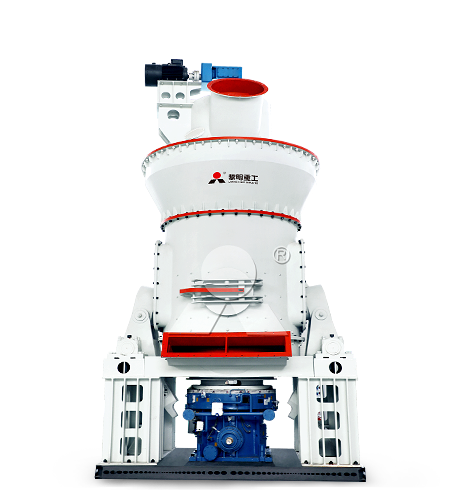
The Liming Heavy Industry LM Vertical Grinding Mill is designed for continuous and large-scale powder production. It integrates grinding, classification, drying, and conveying functions and can be considered for limestone projects requiring relatively high production capacity.
LM is particularly suitable when the project requires a stable large-capacity grinding system rather than an ultrafine specialty powder process.
MTW European Grinding Mill
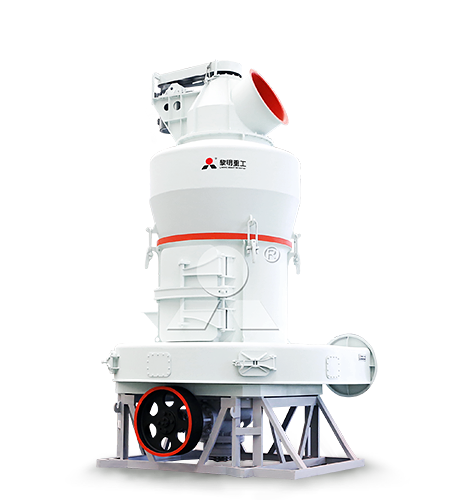
The Liming Heavy Industry MTW European Grinding Mill is suitable for a broad range of conventional fine limestone powder applications. It can be used for different capacity requirements and is suitable when the required fineness falls within the normal fine-grinding range.
MTW is commonly considered for limestone powder used in construction materials, dry-mix products, fillers, and other general industrial applications.
MW Micro Powder Mill
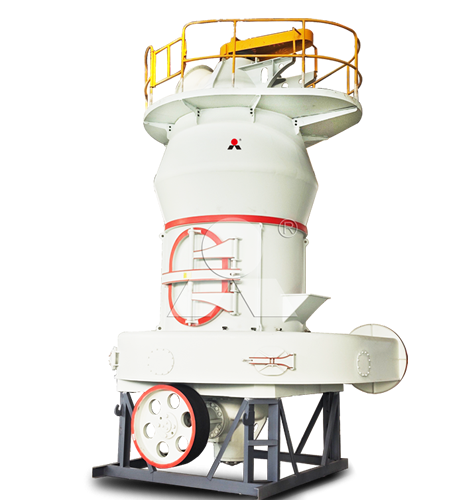
The Liming Heavy Industry MW Micro Powder Mill is designed for ultrafine powder processing. It can be considered when the limestone product needs to be significantly finer than conventional grinding products.
MW is particularly applicable to projects requiring ultrafine limestone powder at relatively moderate production capacities.
LUM Ultrafine Vertical Grinding Mill
The Liming Heavy Industry LUM Ultrafine Vertical Grinding Mill is designed for high-fineness powder production and fine classification. It can be considered for applications where ultrafine limestone powder and controlled particle-size distribution are important.
LUM is suitable for projects that require very fine products together with continuous and controlled classification.
Fine Limestone Grinding Process
A conventional fine limestone grinding line may follow a process such as:
Limestone → Crushing → Feeding → Grinding → Classification → Dust Collection → Finished Powder
If the raw limestone is already small enough for the grinding mill, the crushing stage can be simplified. Otherwise, the limestone is first reduced to a suitable feed size.
After grinding, the classifier separates particles according to the required product specification. Finished powder is collected by the dust collection system and transferred to storage or packaging.
Ultrafine Limestone Grinding Process
Ultrafine limestone processing follows the same basic principle but places greater emphasis on fine classification and system control.
The raw limestone is first prepared to a suitable feed size. The grinding mill then reduces the material to a fine particle size, while the classification system separates the qualified ultrafine powder from coarser particles.
Coarse material can return to the grinding zone, while qualified powder moves to the collection and storage system.
The closer the required product size is to the ultrafine range, the more important the interaction between grinding, classification, air flow, and powder collection becomes.
Raw Material Preparation Still Matters
Ultrafine grinding does not eliminate the need for proper feed preparation. Large limestone rocks normally need to be crushed before entering the grinding system.
Stable feed size can help the mill operate under more consistent conditions. If the raw material contains large variations in particle size, the grinding load and classification conditions may fluctuate.
For this reason, crushing and grinding should be considered as one continuous process rather than two independent equipment selections.
Moisture and Fine Powder Processing
Limestone moisture can affect feeding, grinding, classification, and powder collection. When the material contains excessive moisture, fine particles may become more difficult to separate and transport.
For suitable limestone materials, the grinding system can incorporate drying capability when necessary. The need for drying depends on the actual moisture content and the process conditions.
Low-moisture limestone is generally easier to process into fine and ultrafine powder, while higher-moisture feed may require additional process consideration.
Production Capacity and Fineness Must Be Matched
A common mistake in fine powder projects is to consider production capacity and fineness separately. The required output of a grinding mill depends on the target product size as well as the characteristics of the raw material.
As the required limestone powder becomes finer, the grinding and classification system generally needs to process the material more intensively. Therefore, a capacity achieved at a relatively coarse fineness should not automatically be used as the expected capacity for an ultrafine product.
A proper equipment selection should always state the required capacity together with the target fineness.
Fine Versus Ultrafine Limestone Grinding
| Consideration | Fine Limestone Powder | Ultrafine Limestone Powder |
|---|---|---|
| Typical applications | Construction materials, dry-mix products, general fillers | Fine fillers and specialized industrial applications |
| Grinding requirement | Conventional fine grinding | Intensive fine grinding |
| Classification | Important for controlling product size | Critical for controlling ultrafine product distribution |
| Suitable Liming equipment | LM, MTW | MW, LUM |
| Capacity consideration | Often suitable for higher production requirements | Depends strongly on the required ultrafine fineness |
How Application Determines the Required Powder
There is no universal “best” limestone powder fineness. The appropriate particle size depends on what the powder will be used for.
For example, a dry-mix mortar producer may need a fine mineral component with a specific particle-size distribution. A filler producer may require a finer product. An application requiring ultrafine limestone may need much tighter control of the final particle size.
Producing a powder that is finer than the application requires can increase grinding requirements without necessarily improving the finished product. The target should therefore be based on the technical requirements of the application.
Dust Collection for Fine and Ultrafine Limestone
Fine limestone particles are easily carried by air during grinding, classification, conveying, and storage. A suitable dust collection system is therefore an essential part of the production line.
The grinding mill, classifier, and dust collector should be designed as a coordinated system. Proper air flow helps transport fine particles through the grinding circuit while allowing the collection system to capture the finished powder.
Sealed conveyors and transfer points can also help reduce material loss and dust release.
Storage and Handling of Ultrafine Powder
Very fine limestone powder can behave differently from coarser material during storage and conveying. Fine particles may have greater cohesion and can require appropriate silo discharge and conveying arrangements.
Depending on the production scale, finished powder may be stored in silos, intermediate bins, or other suitable storage equipment before packaging or bulk loading.
The storage system should be designed according to the powder characteristics and the required production flow.
How to Select Between MTW, LM, MW, and LUM
The selection can be narrowed down by looking at the required product range and production conditions.
MTW European Grinding Mill: suitable for many conventional fine limestone powder applications with flexible capacity requirements.
LM Vertical Grinding Mill: suitable for larger-scale limestone grinding and integrated high-capacity systems.
MW Micro Powder Mill: suitable for ultrafine limestone powder production at relatively moderate capacities.
LUM Ultrafine Vertical Grinding Mill: suitable for demanding ultrafine limestone applications requiring fine classification and controlled particle-size distribution.
The final equipment model should be determined from the actual limestone feed size, material characteristics, required fineness, and production capacity.
Information Needed Before Equipment Selection
A limestone grinding project should provide several basic parameters before selecting the equipment:
Raw limestone feed size
Limestone moisture content
Required production capacity
Target finished powder fineness
Required particle-size distribution
Final application
Expected operating hours
Storage and packaging requirements
These details make it possible to determine whether conventional fine grinding or ultrafine grinding is appropriate and which Liming Heavy Industry grinding mill should be considered.
Conclusion
Fine and ultrafine limestone powder require different approaches to grinding and classification. Conventional fine powder can often be produced with the Liming Heavy Industry LM Vertical Grinding Mill or MTW European Grinding Mill, while ultrafine applications can be considered with the MW Micro Powder Mill or LUM Ultrafine Vertical Grinding Mill.
The right equipment is determined not by fineness alone, but by the combination of product size, production capacity, raw-material feed size, moisture, limestone characteristics, and final application.
For a new limestone powder project, defining the required product specification first provides the clearest basis for selecting the crushing, grinding, classification, dust collection, conveying, and storage equipment.
Related Limestone Grinding Plant


Liming Heavy Industry at bauma CONEXPO INDIA 2026 | Booth 5-C6
2026-09-07

Turnkey Raw Mill Cement Plant in Saudi Arabia: Design and Installation
2026-09-03
Cement Raw Mill Supplier in Indonesia: Cost and Configuration Analysis
2026-09-01
Liming Heavy Industry to Exhibit at the 24th Global Gypsum Conference & Exhibition in Turkey
2026-08-31
Complete Calcium Carbonate Grinding and Coating Plant Solution
2026-08-29
Complete Mineral Processing Solutions
Convenient Reliable Professional Efficient Get Your Quote
Please feel free to submit your inquiry information to us. We will contact with you as soon as possible.
Our team will contact you as soon as possible.