


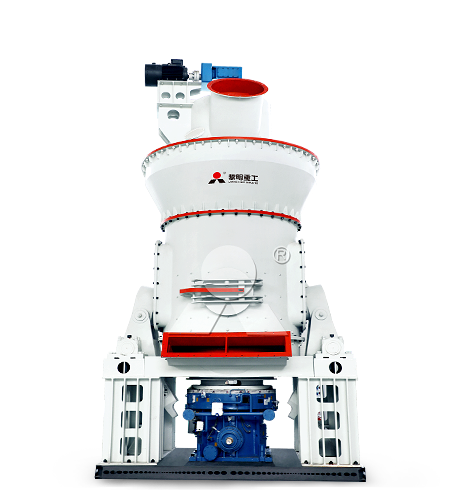
Centralized FGD limestone powder production requires a system that can serve high and continuously changing reagent demand without disrupting absorber operation. For large power plants, multi-unit boiler stations, industrial parks, and regional limestone powder supply centers, the LM Vertical Mill from Liming Heavy Industry provides an integrated route for high-volume grinding, classification, drying, powder conveying, storage, and controlled downstream delivery.
The LM Vertical Mill is suitable for projects where the grinding line must operate as a long-term production system rather than as an isolated mill. Its integrated process design combines drying, grinding, classification, and pneumatic conveying in a continuous cycle. Published LM product information indicates capacity ranges of approximately 10–400 TPH, depending on model, material condition, feed moisture, and finished-powder fineness.
Centralized Production Concept
A large FGD limestone grinding plant should be designed as a material logistics center. It receives raw limestone in bulk, prepares a stable fine powder, maintains sufficient inventory, and distributes powder or prepared slurry to one or more consumption points.
The complete process route can be arranged as follows:
Raw limestone receiving → Crushing and screening → Raw-material stockpile → Crushed limestone buffer storage → Controlled feeding → LM Vertical Mill → Dynamic classification → Pulse dust collection → Finished-powder silos → Powder distribution or slurry preparation → Continuous delivery to FGD absorbers
This configuration allows each process stage to operate with its own buffer capacity. Quarry delivery, crushing, grinding, storage, and slurry consumption do not need to operate at exactly the same moment or at exactly the same rate. Proper buffering makes the system more resilient during short equipment stops, changing boiler loads, and variations in limestone supply.
Why the LM Vertical Mill Fits Large Projects
| Large-Scale Requirement | LM Vertical Mill Contribution |
|---|---|
| High continuous output | Suitable for large limestone powder demand, with published LM series capacity ranges extending from approximately 10 to 400 TPH depending on the model and process conditions. |
| Integrated process layout | Combines drying, grinding, classification, and pneumatic powder conveying in one coordinated production system. |
| Variable limestone moisture | Can use controlled hot-air flow to support drying during grinding when raw material moisture affects material flow and finished-powder storage. |
| Stable FGD powder fineness | Dynamic classification separates qualified powder and returns coarse particles to the grinding zone for further reduction. |
| Reduced material transfer points | Integrated pneumatic transport moves fine powder toward the collection system, reducing intermediate conveying stages. |
| Centralized control | Feed rate, grinding pressure, classifier speed, airflow, mill differential pressure, temperature, and powder inventory can be coordinated through the plant control system. |
| Large maintenance requirement | Supports planned maintenance through accessible mill layout, condition monitoring, lifting arrangements, and replacement planning for major wear components. |
For wet limestone FGD service, the final product is commonly prepared in the 250–325 mesh range, depending on the limestone reactivity and absorber process design. The LM Vertical Mill should be configured to produce the required FGD powder specification consistently rather than to grind the material finer than necessary.
Integrated Process Design
In the LM Vertical Mill, crushed limestone is fed onto the center of the grinding table. Centrifugal force moves the material outward beneath the grinding rollers. The rollers apply pressure to form a stable grinding bed, while the air stream lifts fine particles to the dynamic classifier.
Particles that meet the required fineness pass through the classifier and enter the collection system. Oversized particles fall back to the grinding table for further reduction. This internal circulation maintains a controlled particle-size distribution without requiring a separate external return conveyor for coarse material.
When feed moisture must be reduced, hot air can enter the mill system. The air stream assists with drying and transports fine powder toward the collection equipment. Qualified powder is separated in the pulse dust collector and then transferred to finished-product storage silos through sealed conveying equipment.
The integrated arrangement offers several design advantages for a centralized FGD powder plant:
Grinding, drying, classification, and air conveying are coordinated in one process route.
Coarse particles are automatically returned for further grinding.
Fine powder can be transferred directly from the collector to centralized storage.
Fewer open transfer points help maintain a cleaner powder-handling system.
Process instruments can link mill output to powder inventory and absorber demand.
System capacity can be adjusted according to boiler load, sulfur condition, and storage inventory.
Raw Material Logistics
At large capacity, raw-material logistics must be planned with the same attention as grinding equipment. The LM Vertical Mill can only maintain stable output when it receives a continuous supply of suitable crushed limestone. The raw-material system should therefore prevent interruptions caused by truck delays, quarry variation, rain, oversized stone, or crushing downtime.
| Logistics Section | Main Equipment | Design Purpose |
|---|---|---|
| Bulk limestone receiving | Truck unloading hopper, rail unloading station, belt receiving line, grizzly screen, apron feeder | Accepts large limestone deliveries safely and transfers material into the crushing system. |
| Metal removal | Suspended magnet, permanent magnetic separator, metal detector | Protects crushers, conveyors, feeders, and the LM Vertical Mill from tramp metal. |
| Crushing and screening | Primary crusher, secondary crusher where required, vibrating screen, transfer conveyors | Produces a stable feed size appropriate for the selected LM Vertical Mill configuration. |
| Raw limestone stockpile | Covered stockpile, enclosed shed, stacker, reclaimer, or storage silo | Provides reserve inventory and allows blending of limestone from different quarry areas. |
| Crushed limestone buffer | Intermediate bin, day bin, level instrument, controlled reclaiming equipment | Separates intermittent crushing operation from continuous mill feeding. |
| Controlled mill feed | Weigh feeder, belt feeder, rotary valve, vibrating feeder, feed chute | Maintains steady material flow and allows automatic adjustment according to mill load and powder-silo level. |
Large limestone supply systems often benefit from quarry blending. If CaCO3 content, hardness, silica level, or moisture changes sharply between quarry zones, blending can improve mill stability and reduce variation in FGD reagent consumption. Continuous sampling and quality control should therefore be included in the receiving and stockpile-management plan.
Automation and Process Control
Automation is essential for a high-volume LM Vertical Mill line because manual adjustment cannot reliably coordinate the full system at all production conditions. The control strategy should maintain target powder quality while protecting the mill from overload, unstable grinding conditions, excessive vibration, and insufficient finished-powder inventory.
| Control Area | Typical Measurement | Automatic Control Objective |
|---|---|---|
| Mill feed | Weigh feeder rate, mill motor current, mill differential pressure, material-bin level | Maintain stable mill loading and prevent sudden feed surges or starvation. |
| Grinding stability | Mill vibration, hydraulic pressure, grinding-table load, roller condition | Maintain a stable grinding bed and protect the mill from vibration-related trips. |
| Product fineness | Classifier speed, classifier motor current, particle-size test results | Maintain the required FGD powder distribution while avoiding unnecessary overgrinding. |
| Airflow and drying | Main fan current, mill pressure, inlet and outlet temperature, damper position | Provide sufficient air for drying and powder transport without excessive fan power or unstable classification. |
| Dust collection | Bag-filter differential pressure, compressed-air pressure, hopper level, outlet emissions | Maintain powder recovery, stable system airflow, and effective filter cleaning. |
| Powder storage | Silo level, load cells, high-high alarm, low-low alarm | Match grinding output to available storage and protect the FGD process from low powder inventory. |
| Slurry preparation | Powder feed rate, process-water flow, slurry density, tank level, agitator status | Maintain stable slurry concentration for continuous feed to one or more FGD absorbers. |
| Absorber demand | Inlet SO2, boiler load, slurry pH, slurry flow, reagent tank inventory | Adjust limestone production and slurry supply according to actual desulfurization demand. |
The control system should include protective interlocks. For example, the mill feed should reduce or stop if vibration rises beyond the operating limit, if mill differential pressure becomes excessive, if the bag filter fails, or if the finished-powder silo reaches high-high level. Similarly, the slurry system should prevent powder addition when the slurry-tank agitator is not running.
Finished Powder Storage and Distribution
In a centralized plant, powder storage is the connection between production capacity and FGD consumption. One large mill may supply several boilers, several absorbers, or multiple slurry preparation stations. The storage and distribution system must therefore be planned for both normal operation and maintenance periods.
The required usable powder inventory can be estimated as:
Usable finished-powder storage = Maximum FGD powder demand × Required backup time
For example, if several absorbers require a combined 45 TPH of limestone powder and the plant requires 24 hours of independent supply during mill maintenance:
45 TPH × 24 hours = 1,080 tonnes of usable powder inventory
Large projects often use multiple silos instead of a single vessel. This provides better maintenance flexibility, separate inventory management, and the ability to isolate one silo without interrupting the entire reagent-supply chain.
| Distribution Requirement | Recommended Arrangement |
|---|---|
| One central slurry preparation area | One or more large powder silos feeding parallel controlled dosing systems and agitated slurry preparation tanks. |
| Several FGD absorbers in one power plant | Central silos with separate powder discharge lines or individual day silos for each absorber train. |
| Remote FGD consumption points | Sealed pneumatic conveying or enclosed mechanical conveying to remote receiving silos and local slurry preparation systems. |
| Regional limestone powder supply | Separate silo outlets for on-site FGD use and bulk tanker loading, with inventory priority logic and dust-controlled loading equipment. |
| High availability requirement | Parallel silos, duplicate critical discharge feeders, duty-and-standby slurry pumps, and adequate reserve inventory for planned shutdowns. |
Maintenance Clearance and Service Access
Large centralized grinding plants should be designed for maintenance from the beginning. A mill can have adequate production capacity on paper but still become difficult to operate if there is insufficient access for roller servicing, liner replacement, gearbox inspection, classifier maintenance, filter-bag replacement, or fan repair.
The plant layout should include adequate clearance around the LM Vertical Mill and supporting equipment for normal inspection, lifting, and major maintenance work. Access platforms should allow safe inspection of high-level equipment, while lifting beams, cranes, monorails, or mobile-crane routes should be planned for heavy components.
Key maintenance areas include:
Grinding rollers, roller bearings, roller shells, and hydraulic loading components.
Grinding table liners, dam ring, nozzle ring, and internal material-flow areas.
Main gearbox, lubrication system, main motor, coupling, and electrical connections.
Dynamic classifier rotor, bearings, blades, drive motor, and sealing system.
Mill fan, fan impeller, ducts, dampers, expansion joints, and air seals.
Pulse bag filter, filter bags, cages, pulse valves, compressed-air piping, and hopper discharge equipment.
Powder conveying equipment, rotary valves, silo aeration devices, and feeder drives.
Slurry tank agitators, pumps, density instruments, valves, and pipeline flushing connections.
Vertical-mill maintenance should be supported by condition monitoring. Grinding table and roller wear, hydraulic pressure, gearbox vibration, bearing temperature, separator condition, and specific power consumption should be trended continuously or at scheduled intervals. A rise in kWh per tonne at stable throughput can indicate wear or deteriorating grinding efficiency before a major failure occurs.
Efficient Material Logistics
Material logistics has a direct effect on operating cost and plant availability. Large LM Vertical Mill projects should minimize unnecessary handling, avoid open powder transfer, and provide sufficient buffer storage at critical points.
Efficient logistics design usually includes:
Covered limestone storage to reduce moisture variation and contamination.
Automatic reclaiming and controlled feed systems to maintain steady mill loading.
Enclosed belt conveyors, transfer chutes, and dust collection at crushing and handling points.
Centralized quality sampling for CaCO3, moisture, silica, and particle-size verification.
Sealed powder conveying from the collector to finished-product silos.
Multiple silo discharge routes for slurry preparation, remote supply, and bulk loading where required.
Clear separation of vehicle traffic, raw limestone handling, finished-powder loading, and maintenance access routes.
Finished-powder inventory logic that prioritizes FGD reagent supply before external dispatch.
In high-capacity installations, the raw limestone storage system, crushing section, grinding mill, powder silos, and slurry preparation area should be arranged to reduce conveyor length, avoid excessive elevation changes, and keep routine maintenance away from active vehicle routes.
Large-Scale FGD Limestone Supply
A centralized LM Vertical Mill line provides a complete production route for high-volume FGD limestone powder. Its value lies in the integration of material preparation, grinding, drying, classification, dust collection, storage, distribution, and automation into one coordinated system.
For projects that require large continuous output, multiple powder consumption points, variable raw-material moisture, and long-term operational reliability, the LM Vertical Mill from Liming Heavy Industry provides a suitable grinding core. With correct logistics planning, sufficient maintenance clearance, automated control, and adequate finished-powder storage, the system can deliver stable limestone powder for continuous wet FGD operation.
Related FGD Limestone Grinding Plant


Liming Heavy Industry at bauma CONEXPO INDIA 2026 | Booth 5-C6
2026-09-07

Turnkey Raw Mill Cement Plant in Saudi Arabia: Design and Installation
2026-09-03
Cement Raw Mill Supplier in Indonesia: Cost and Configuration Analysis
2026-09-01
Liming Heavy Industry to Exhibit at the 24th Global Gypsum Conference & Exhibition in Turkey
2026-08-31
Complete Calcium Carbonate Grinding and Coating Plant Solution
2026-08-29
Complete Mineral Processing Solutions
Convenient Reliable Professional Efficient Get Your Quote
Please feel free to submit your inquiry information to us. We will contact with you as soon as possible.
Our team will contact you as soon as possible.