


The required capacity of an FGD limestone powder plant should be calculated from the maximum sulfur dioxide load to be removed, not only from boiler size. The final design must account for coal consumption, coal sulfur content, boiler load, SO2 removal target, limestone purity, reagent utilization, grinding-system availability, and the operating reserve required by the power plant.
For a wet limestone FGD system, the basic chemical relationship is simple: one mole of calcium carbonate reacts with one mole of sulfur dioxide under ideal conditions. In real operation, additional limestone is required because limestone is not 100% pure and reagent utilization is never completely perfect. Wet FGD systems commonly use a calcium-to-sulfur molar ratio of approximately 1.01–1.10, while 1.03 is a frequently used initial design value.
Start With SO2 Load
The first step is to determine how much SO2 enters the FGD absorber at the maximum expected boiler load. There are two practical calculation methods:
Calculate SO2 generation from coal consumption and sulfur content.
Use measured or guaranteed inlet SO2 concentration together with flue-gas flow.
For a new project, coal consumption and sulfur content are often used during early engineering. For an existing boiler, continuous-emission-monitoring data, actual coal records, and measured flue-gas conditions normally provide a more accurate basis.
Assuming that sulfur in coal is converted to SO2, one tonne of sulfur produces approximately two tonnes of SO2:
S + O2 → SO2
The molecular weights are:
S = 32
SO2 = 64
CaCO3 = 100
Therefore, 1 tonne of sulfur theoretically produces 2 tonnes of SO2. If all of that SO2 must be removed, the theoretical pure calcium carbonate requirement is:
1 tonne SO2 × 100 ÷ 64 = 1.5625 tonnes CaCO3
This is the theoretical minimum only. The actual limestone feed rate must be corrected for removal efficiency, stoichiometric excess, and limestone purity.
Core Capacity Formula
The following formula is suitable for preliminary calculation of dry limestone powder demand:
Required limestone powder capacity (t/h) = Removed SO2 load (t/h) × 1.5625 × Ca/S molar ratio ÷ CaCO3 purity
Where:
Removed SO2 load is the SO2 entering the absorber multiplied by the required removal efficiency.
1.5625 is the theoretical mass ratio of pure CaCO3 to SO2.
Ca/S molar ratio reflects reagent utilization and process operating margin.
CaCO3 purity is expressed as a decimal, such as 0.90 for 90% CaCO3.
A typical preliminary assumption for a wet limestone FGD project is:
Ca/S molar ratio = 1.03
Limestone purity = 90% CaCO3
Under these assumptions:
Required limestone powder = Removed SO2 load × 1.5625 × 1.03 ÷ 0.90
Required limestone powder = Removed SO2 load × 1.788
In other words, a project removing 1 tonne of SO2 per hour will require approximately 1.79 tonnes per hour of 90% CaCO3 limestone at a Ca/S ratio of 1.03.
EPA wet FGD cost methodology likewise uses a calcium-to-sulfur ratio of 1.03 and a limestone purity of 90% CaCO3 as the basis for estimating reagent feed requirements.
Calculation From Coal Data
When coal consumption and sulfur content are known, the SO2 load can be calculated directly.
SO2 generation (t/h) = Coal consumption (t/h) × Coal sulfur content × 2
Where coal sulfur content is expressed as a decimal. For example, 1.2% sulfur is entered as 0.012.
Removed SO2 load (t/h) = SO2 generation × FGD removal efficiency
Then apply the limestone formula:
Limestone demand (t/h) = Coal consumption × sulfur content × 2 × removal efficiency × 1.5625 × Ca/S ratio ÷ limestone purity
Worked Example
Consider a power unit operating at maximum load with the following conditions:
| Design Input | Value |
|---|---|
| Coal consumption | 200 t/h |
| Coal sulfur content | 1.20% |
| Target SO2 removal efficiency | 98% |
| Ca/S molar ratio | 1.03 |
| Limestone CaCO3 content | 90% |
Step 1: Calculate sulfur entering the boiler
Sulfur load = 200 t/h × 0.012 = 2.40 t/h sulfur
Step 2: Calculate theoretical SO2 generation
SO2 generation = 2.40 t/h × 2 = 4.80 t/h SO2
Step 3: Calculate the SO2 removal load
Removed SO2 = 4.80 t/h × 0.98 = 4.704 t/h SO2
Step 4: Calculate theoretical pure CaCO3 demand
Pure CaCO3 requirement = 4.704 t/h × 1.5625 = 7.35 t/h
Step 5: Correct for the Ca/S molar ratio
Adjusted CaCO3 requirement = 7.35 t/h × 1.03 = 7.57 t/h
Step 6: Correct for limestone purity
Commercial limestone powder requirement = 7.57 t/h ÷ 0.90 = 8.41 t/h
Under these conditions, the wet FGD system requires approximately 8.4 t/h of limestone powder at full boiler load.
Allow for Grinding-System Availability
The calculated limestone demand is the process consumption rate. It is not automatically the final grinding mill capacity. The mill must also recover production lost during planned maintenance, unexpected stops, shift changes, and periods when the boiler operates at higher sulfur load.
The required nominal mill capacity can be estimated as:
Mill capacity (t/h) = Maximum limestone consumption (t/h) × operating margin ÷ mill availability
For example, if the calculated consumption is 8.4 t/h, the project requires a 10% production margin, and expected mill availability is 90%:
Mill capacity = 8.4 × 1.10 ÷ 0.90
Mill capacity = 10.27 t/h
A practical selection would therefore target a grinding system capable of at least 10–11 t/h at the guaranteed finished-powder fineness and actual limestone hardness.
For a larger operating reserve, the plant may use two grinding lines, such as one operating mill plus one standby mill, or two parallel mills sharing the normal load. This is especially important where the FGD system cannot rely on external limestone powder supply during maintenance.
Include Powder Storage Capacity
Finished limestone powder storage provides a buffer between the grinding plant and the slurry preparation system. It allows the FGD absorber to continue operating during short mill stops, raw-material handling interruptions, and maintenance work.
The minimum silo capacity can be calculated as:
Powder silo capacity (t) = Maximum limestone consumption (t/h) × required backup time (h)
Using the 8.4 t/h example:
| Required Backup Time | Minimum Theoretical Powder Storage |
|---|---|
| 8 hours | 67.2 t |
| 12 hours | 100.8 t |
| 24 hours | 201.6 t |
| 48 hours | 403.2 t |
In actual engineering, the physical silo volume must also allow for low-level dead stock, high-level operating limits, bulk density variation, freeboard, and flowability requirements. The usable storage capacity is always lower than the total geometric volume.
Check Limestone Quality and Reactivity
Two limestone sources with the same nominal CaCO3 content may not perform identically in an absorber. Mineral structure, hardness, impurities, particle-size distribution, and dissolution behavior influence reagent utilization.
Higher-purity limestone generally reduces the required powder mass. For example, using the same operating conditions and Ca/S molar ratio:
| Limestone CaCO3 Purity | Limestone Required per 1 t SO2 Removed |
|---|---|
| 85% | 1.89 t limestone powder |
| 90% | 1.79 t limestone powder |
| 93% | 1.73 t limestone powder |
| 95% | 1.69 t limestone powder |
The table assumes a Ca/S molar ratio of 1.03. Higher limestone purity can lower material consumption, reduce inert solids entering the FGD system, and support better gypsum quality. Guidance for limestone forced-oxidation systems notes that a reagent stoichiometry of 1.03 or lower, together with limestone purity above 95%, supports the production of saleable gypsum.
Use the Correct Design Case
The limestone grinding plant should be based on the worst credible operating condition, not on annual average coal quality. The design case should normally consider:
Maximum continuous boiler load.
Maximum contractual or expected coal sulfur content.
Highest expected uncontrolled SO2 concentration.
Required SO2 removal efficiency at design conditions.
Lowest acceptable limestone CaCO3 purity.
Expected Ca/S ratio under the selected absorber operating strategy.
Required limestone powder fineness and particle-size distribution.
Grinding-system availability and maintenance strategy.
Finished-powder storage requirement during mill downtime.
Future boiler uprating, fuel switching, or additional absorber demand.
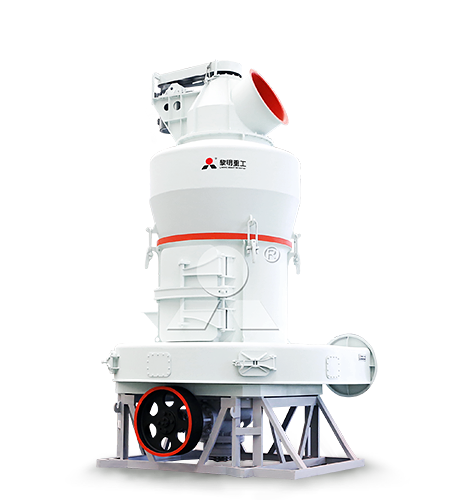
For medium-demand FGD powder projects, the MTW European Mill from Liming Heavy Industry can be selected once the required guaranteed hourly output is established. Its published capacity range is approximately 3–55 t/h, with product fineness down to 0.038 mm, allowing it to cover many medium-scale limestone preparation duties.
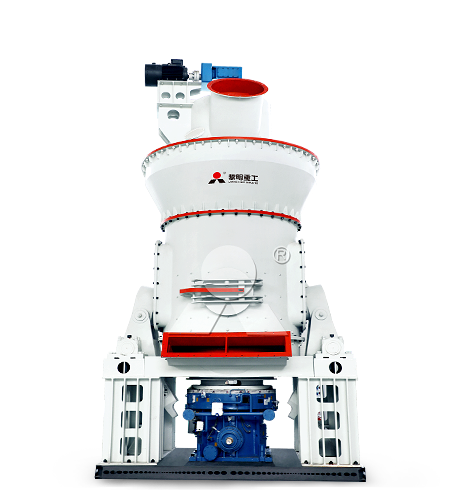
For high-demand central limestone grinding stations or large multi-unit power plants, the LM Vertical Mill from Liming Heavy Industry is suitable where a higher-capacity integrated grinding, classification, drying, and conveying arrangement is required.
Final Capacity Selection
The correct FGD limestone powder capacity is the result of a complete material-balance calculation:
Maximum SO2 load × required removal efficiency × limestone stoichiometry × purity correction × production reserve ÷ expected mill availability
Do not select a mill only from the nominal limestone consumption rate. The selected system must deliver the required output at the specified fineness, using the actual limestone source, while maintaining enough storage and production margin to protect continuous FGD operation.
Related FGD Limestone Grinding Plant


Liming Heavy Industry at bauma CONEXPO INDIA 2026 | Booth 5-C6
2026-09-07

Turnkey Raw Mill Cement Plant in Saudi Arabia: Design and Installation
2026-09-03
Cement Raw Mill Supplier in Indonesia: Cost and Configuration Analysis
2026-09-01
Liming Heavy Industry to Exhibit at the 24th Global Gypsum Conference & Exhibition in Turkey
2026-08-31
Complete Calcium Carbonate Grinding and Coating Plant Solution
2026-08-29
Complete Mineral Processing Solutions
Convenient Reliable Professional Efficient Get Your Quote
Please feel free to submit your inquiry information to us. We will contact with you as soon as possible.
Our team will contact you as soon as possible.